
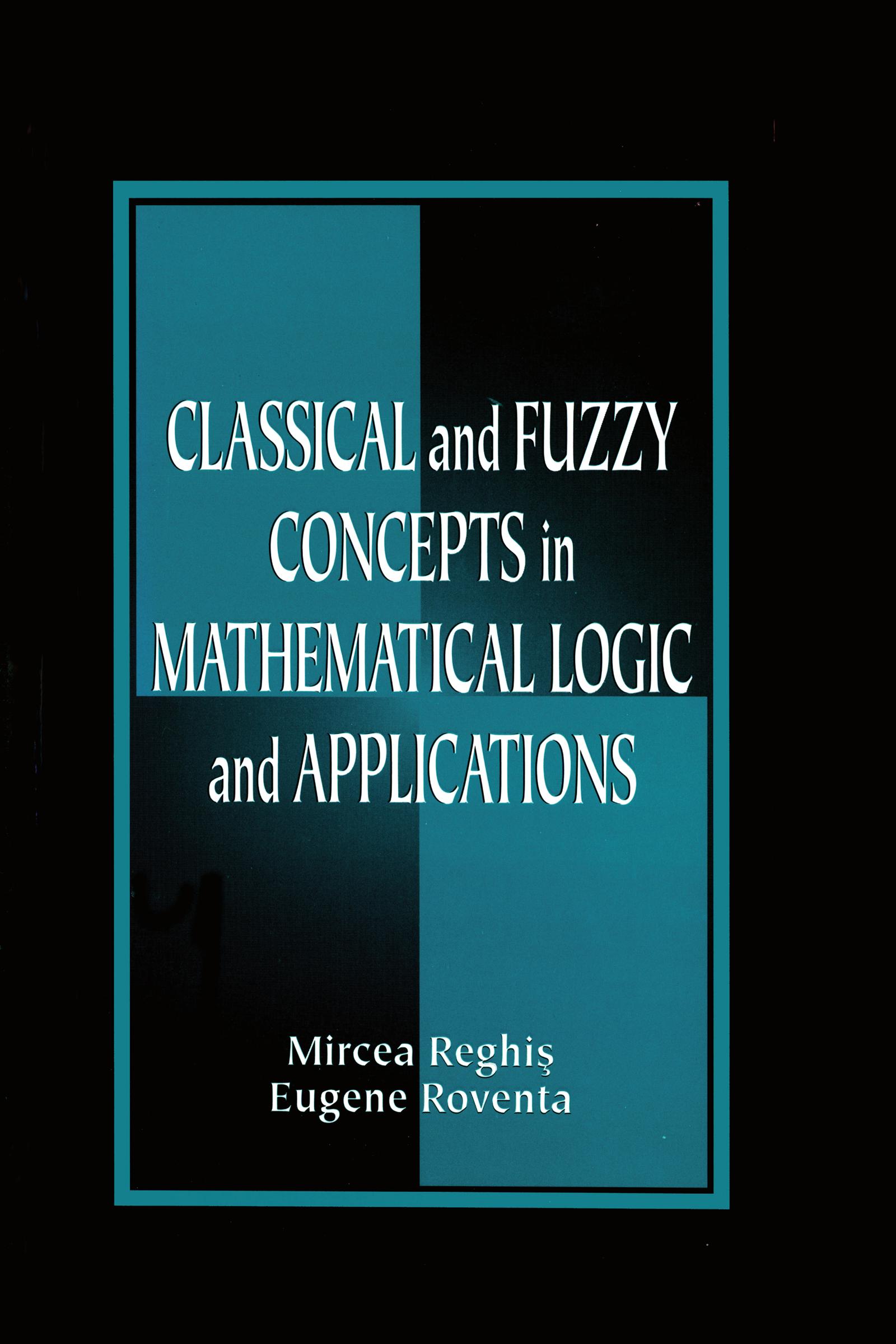
Classical and Fuzzy Concepts in Mathematical Logic and Applications provides a broad, thorough coverage of the fundamentals of two-valued logic, multivalued logic, and fuzzy logic.
Exploring the parallels between classical and fuzzy mathematical logic, the book examines the use of logic in computer science, addresses questions in automatic deduction, and describes efficient computer implementation of proof techniques.
Specific issues discussed include:
The authors consider that the teaching of logic for computer science is biased by the absence of motivations, comments, relevant and convincing examples, graphic aids, and the use of color to distinguish language and metalanguage. Classical and Fuzzy Concepts in Mathematical Logic and Applications discusses how the presence of these facts trigger a stirring, decisive insight into the understanding process. This view shapes this work, reflecting the authors' subjective balance between the scientific and pedagogic components of the textbook.
Usually, problems in logic lack relevance, creating a gap between classroom learning and applications to real-life problems. The book includes a variety of application-oriented problems at the end of almost every section, including programming problems in PROLOG III. With the possibility of carrying out proofs with PROLOG III and other software packages, readers will gain a first-hand experience and thus a deeper understanding of the idea of formal proof.
Płać wygodnie kartą, Klarną, Apple Pay lub Google Pay. Nie jesteś zadowolony? Zawsze masz 14-dniową gwarancję zwrotu pieniędzy. Więcej przeczytasz w naszych warunkach. Masz pytania? Napisz do nas na hello@memmo.org.
Memmo ułatwia naukę – gdziekolwiek jesteś na świecie. U nas znajdziesz podręczniki i sprytne narzędzia do nauki w jednym miejscu: streszczenia, quizy, podcasty i fiszki. A do tego Ted, Twój kumpel do nauki, który odpowie na wszystko, co Cię nurtuje. Ponad 50 000 studentów już tu się uczy – stworzone, byś uczył się szybciej i mniej stresował.