
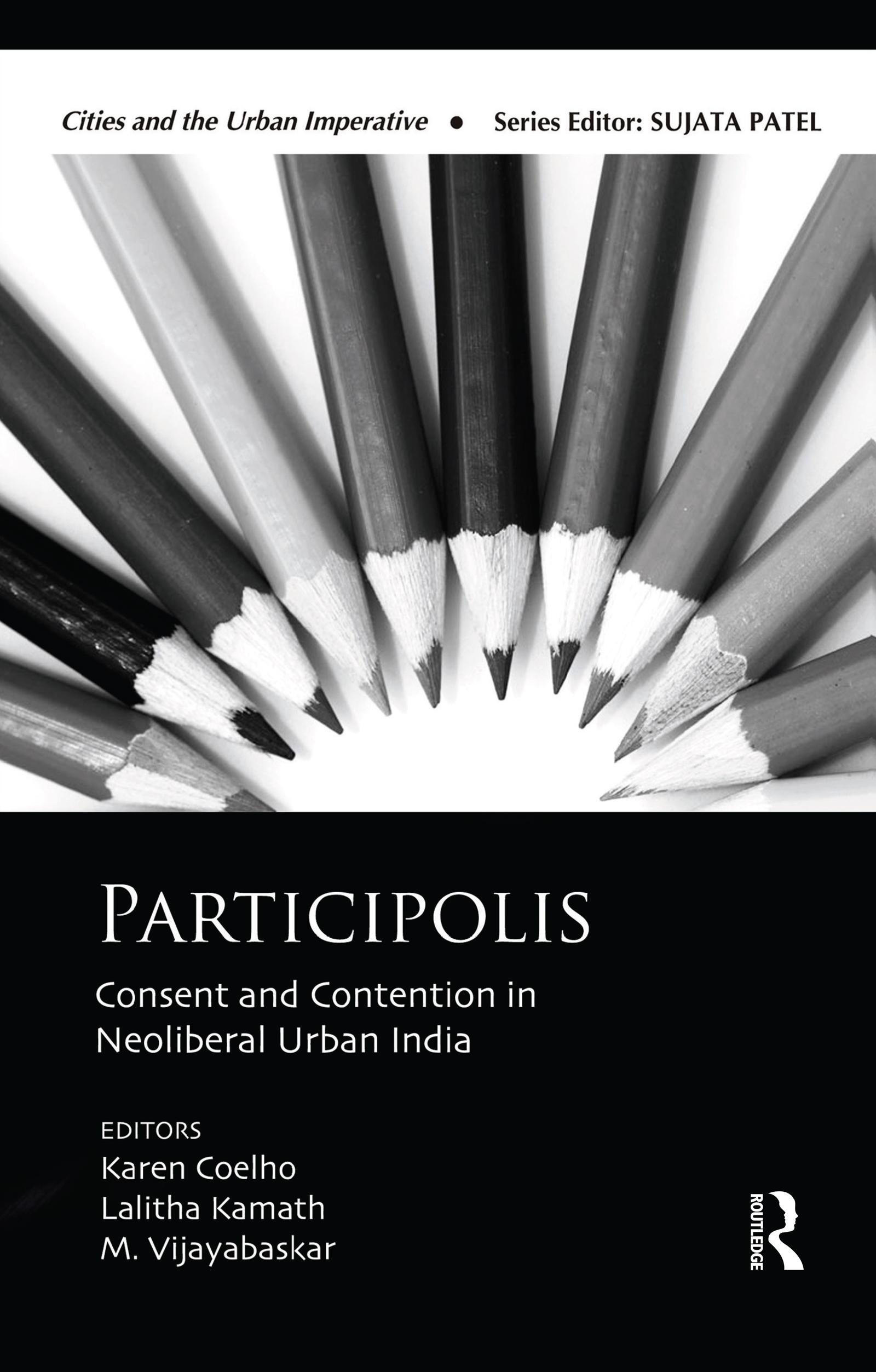
While participatory development has gained significance in urban planning and policy, it has been explored largely from the perspective of its prescriptive implementation. This book breaks new ground in critically examining the intended and unintended effects of the deployment of citizen participation and public consultation in neoliberal urban governance by the Indian state.
The book reveals how emerging formats of participation, as mandatory components of infrastructure projects, public–private partnership proposals and national urban governance policy frameworks, have embedded market-oriented reforms, promoted financialisation of cities, refashioned urban citizenship, privileged certain classes in urban governance at the expense of already marginalised ones, and thereby deepened the fragmentation of urban polities. It also shows how such deployments are rooted in the larger political economy of neoliberal reforms and ascendance of global finance, and how resultant exclusions and fractures in the urban society provoke insurgent mobilisations and subversions.
Offering a dialogue between scholars, policy-makers and activists, and drawing upon several case studies of urban development projects across sectors and cities, this volume will be useful for planners, policy-makers, academics, development professionals, social workers and activists, as well as those in urban studies, urban policy/planning, political science, sociology and development studies.
Płać wygodnie kartą, Klarną, Apple Pay lub Google Pay. Nie jesteś zadowolony? Zawsze masz 14-dniową gwarancję zwrotu pieniędzy. Więcej przeczytasz w naszych warunkach. Masz pytania? Napisz do nas na hello@memmo.org.
Memmo ułatwia naukę – gdziekolwiek jesteś na świecie. U nas znajdziesz podręczniki i sprytne narzędzia do nauki w jednym miejscu: streszczenia, quizy, podcasty i fiszki. A do tego Ted, Twój kumpel do nauki, który odpowie na wszystko, co Cię nurtuje. Ponad 50 000 studentów już tu się uczy – stworzone, byś uczył się szybciej i mniej stresował.