
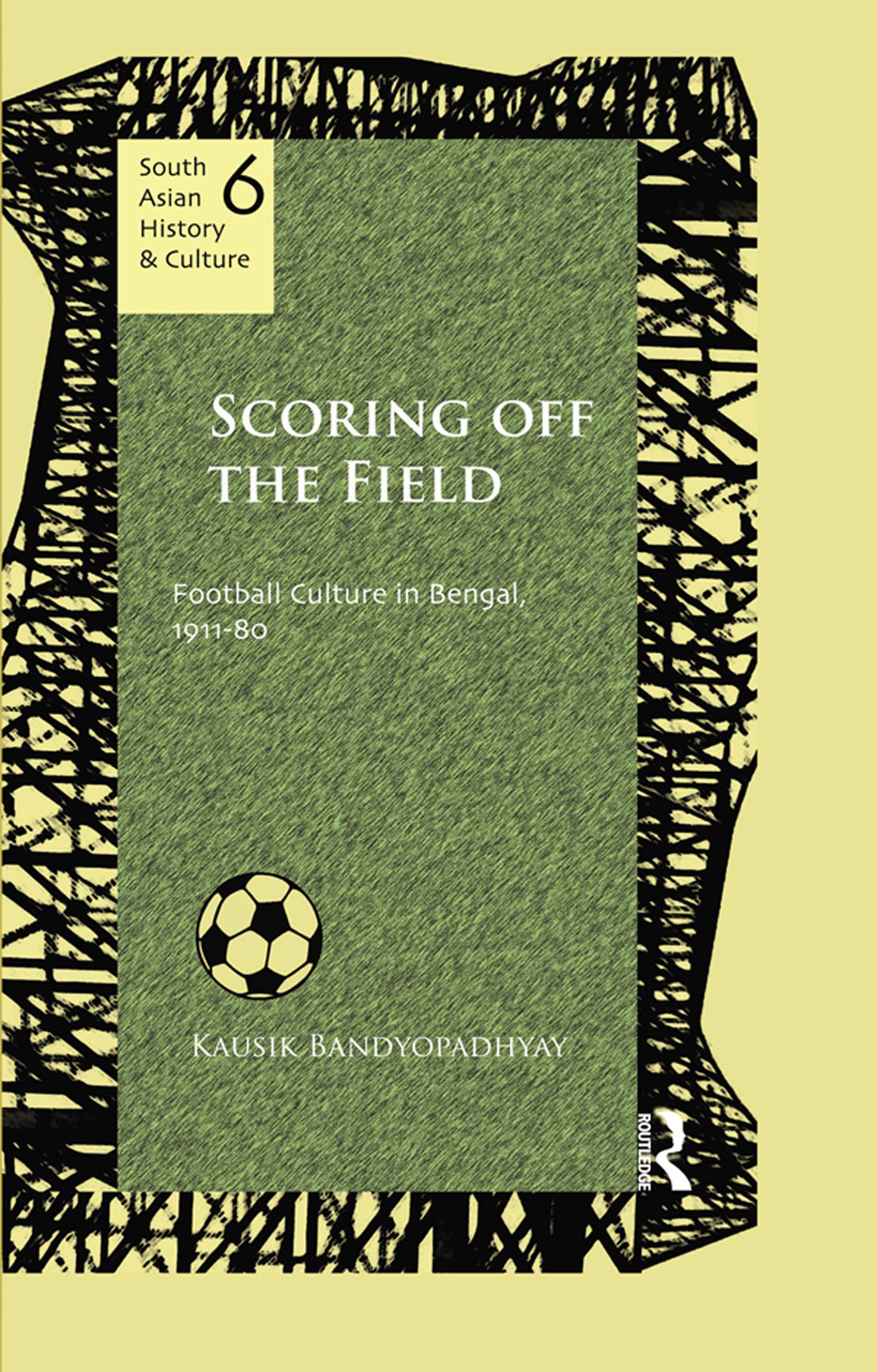
This book examines how football, as a mass spectator sport, came to represent a novel, unique cultural identity of Bengali people in terms of nation, community, region/locality and club, contributing to the continuity of everyday socio-cultural life. It explains how football became a viable popular social force with a rare emotional spontaneity and peculiar self-expressive fan culture against the background of anti-imperial nationalist movement and postcolonial political tension and social transformation. In the process, it investigates certain key questions and problems in the social history of football in Bengal, which have hitherto been ignored in the existing works on the subject.
The author offers some original arguments in treating football as a cultural phenomenon, setting it squarely in the context of Bengali politics and society. It strengthens the premise that social history of South Asian sport can be meaningfully understood only by looking beyond the sports field. The study, using sport as a lens, has tried to consider some relevant themes of social history, and brings forth important issues of political and cultural history of 20th-century Bengal. Simultaneously, it highlights the transformed role of football as an instrument of reaction, resistance and subversion. It indicates that the football field of Bengal proves to be a mirror image of what society experiences in its cultural and political field, through a series of historical projections of identity, difference and culture.
Płać wygodnie kartą, Klarną, Apple Pay lub Google Pay. Nie jesteś zadowolony? Zawsze masz 14-dniową gwarancję zwrotu pieniędzy. Więcej przeczytasz w naszych warunkach. Masz pytania? Napisz do nas na hello@memmo.org.
Memmo ułatwia naukę – gdziekolwiek jesteś na świecie. U nas znajdziesz podręczniki i sprytne narzędzia do nauki w jednym miejscu: streszczenia, quizy, podcasty i fiszki. A do tego Ted, Twój kumpel do nauki, który odpowie na wszystko, co Cię nurtuje. Ponad 50 000 studentów już tu się uczy – stworzone, byś uczył się szybciej i mniej stresował.