
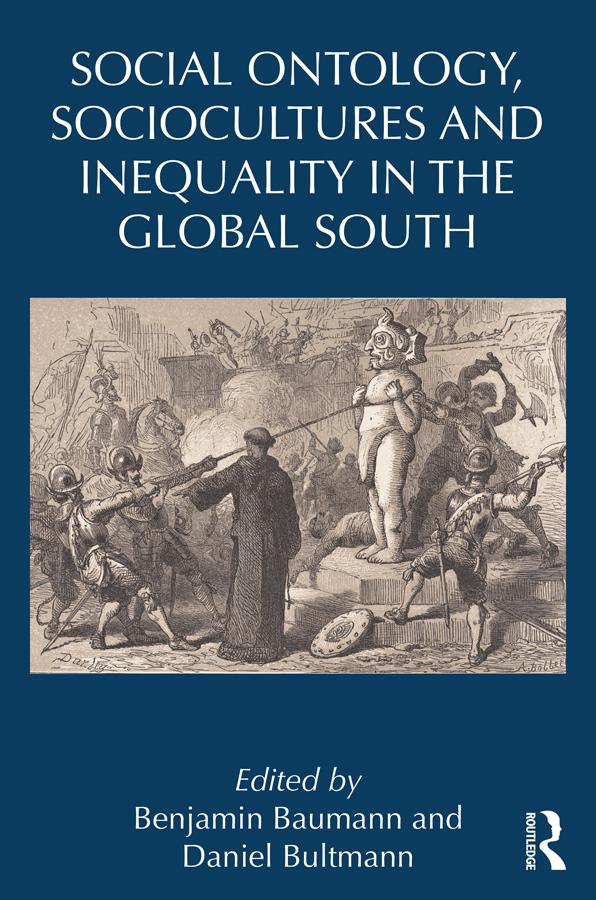
Challenging the assumption that the capitalist transformation includes a radical break with the past, this edited volume traces how historically older forms of social inequality are transformed but persist in the present to shape the social structure of contemporary societies in the global South.
Each social collective comprises an interpretation of itself – including the meaning of life, the concept of a human person, and the notion of a collective. This volume studies the interpretation that various social collectives have of themselves. This interpretation is referred to as social ontology. All chapters of the edited volume focus on the relation between social ontology and structures of inequality. They argue that each society comprises several historical layers of social ontology that correspond to layers of inequality, which are referred to as sociocultures. Thereby, the volume explains why and how structures of inequality differ between contemporary collectives in the global South, even though all of them seem to have similar structures, institutions, and economies.
The volume is aimed at academics, students and the interested public looking for a novel theorization of social inequality pertaining to social collectives in the global South.
Płać wygodnie kartą, Klarną, Apple Pay lub Google Pay. Nie jesteś zadowolony? Zawsze masz 14-dniową gwarancję zwrotu pieniędzy. Więcej przeczytasz w naszych warunkach. Masz pytania? Napisz do nas na hello@memmo.org.
Memmo ułatwia naukę – gdziekolwiek jesteś na świecie. U nas znajdziesz podręczniki i sprytne narzędzia do nauki w jednym miejscu: streszczenia, quizy, podcasty i fiszki. A do tego Ted, Twój kumpel do nauki, który odpowie na wszystko, co Cię nurtuje. Ponad 50 000 studentów już tu się uczy – stworzone, byś uczył się szybciej i mniej stresował.