
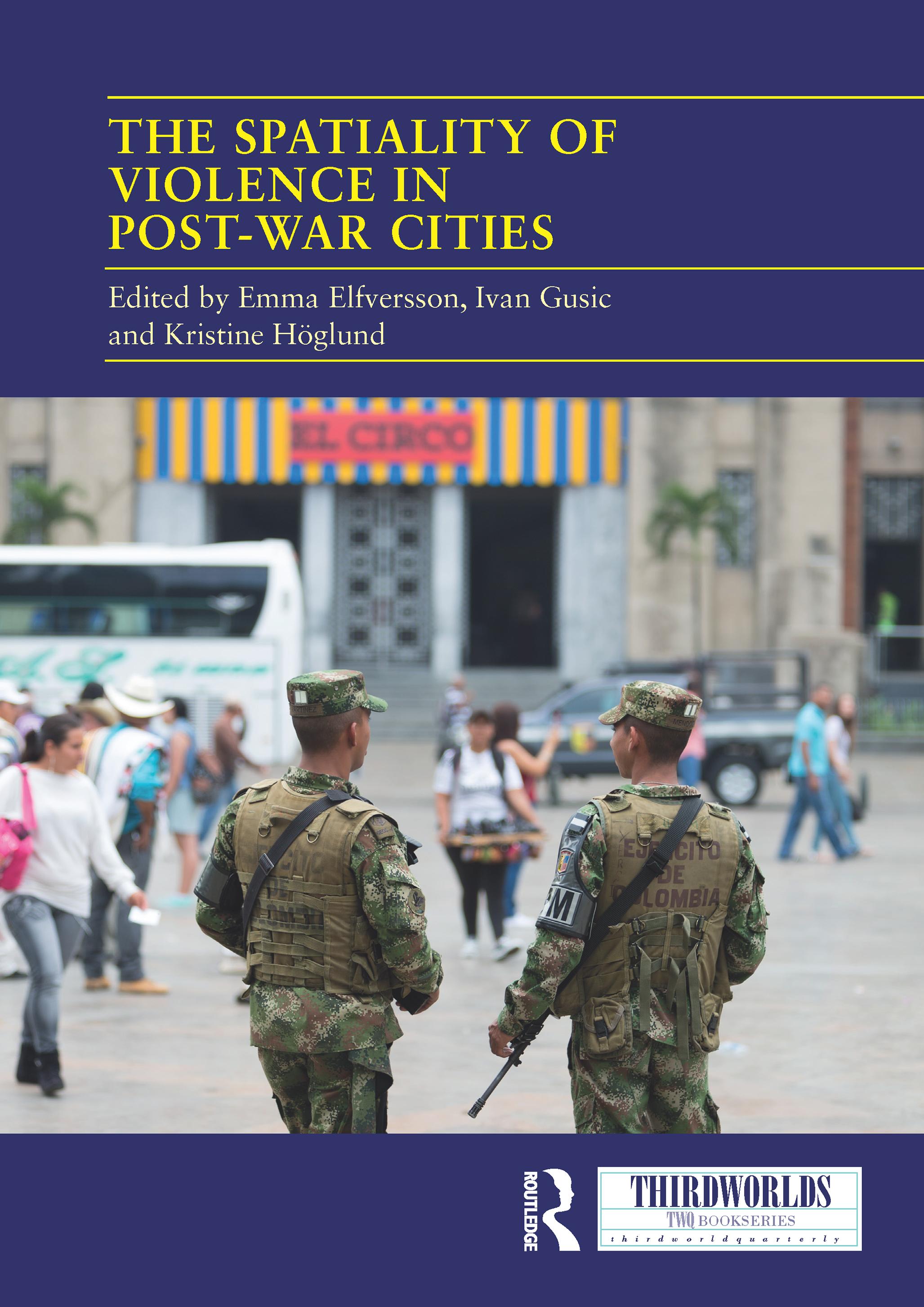
The Spatiality of Violence in Post-war Cities analyses violence in post-war cities from different perspectives and in different parts of the world, with a shared attention to space and how it affects violent dynamics.
The world is urbanising rapidly and cities are increasingly held as the most important arenas for sustainable development. Cities emerging from war are no exception, but across the globe, many post-war cities are ravaged by residual or renewed violence, which threatens progress towards peace and stability. This volume addresses why such violence happens, where and how it manifests, and how it can be prevented. It includes contributions that are informed by both post-war logics and urban particularities, that take intra-city dynamics into account, and that adopt a spatial analysis of the city. They focus on cases around the world, including Medellín (Colombia), Johannesburg (South Africa) and Mitrovica (Kosovo). The volume makes a threefold contribution to the research agenda on violence in post-war cities. First, the contributions nuance our understanding of the causes and forms of the uneven spatial distribution of violence, insecurities, and trauma within and across post-war cities. Second, the collection demonstrates how urban planning and the built environment shape and generate different forms of violence in post-war cities. Third, the contributions explore the challenges, opportunities, and potential unintended consequences of conflict resolution in violent urban settings.
Providing novel insights into the causes and dynamics of violence in post-war cities, and challenges and opportunities for violence reduction, The Spatiality of Violence in Post-war Cities will be of great interest to scholars of peace, violence, conflict and its resolution, urban studies, built environment and planning.
The chapters were originally published as a special issue of Third World Thematics.
Płać wygodnie kartą, Klarną, Apple Pay lub Google Pay. Nie jesteś zadowolony? Zawsze masz 14-dniową gwarancję zwrotu pieniędzy. Więcej przeczytasz w naszych warunkach. Masz pytania? Napisz do nas na hello@memmo.org.
Memmo ułatwia naukę – gdziekolwiek jesteś na świecie. U nas znajdziesz podręczniki i sprytne narzędzia do nauki w jednym miejscu: streszczenia, quizy, podcasty i fiszki. A do tego Ted, Twój kumpel do nauki, który odpowie na wszystko, co Cię nurtuje. Ponad 50 000 studentów już tu się uczy – stworzone, byś uczył się szybciej i mniej stresował.