
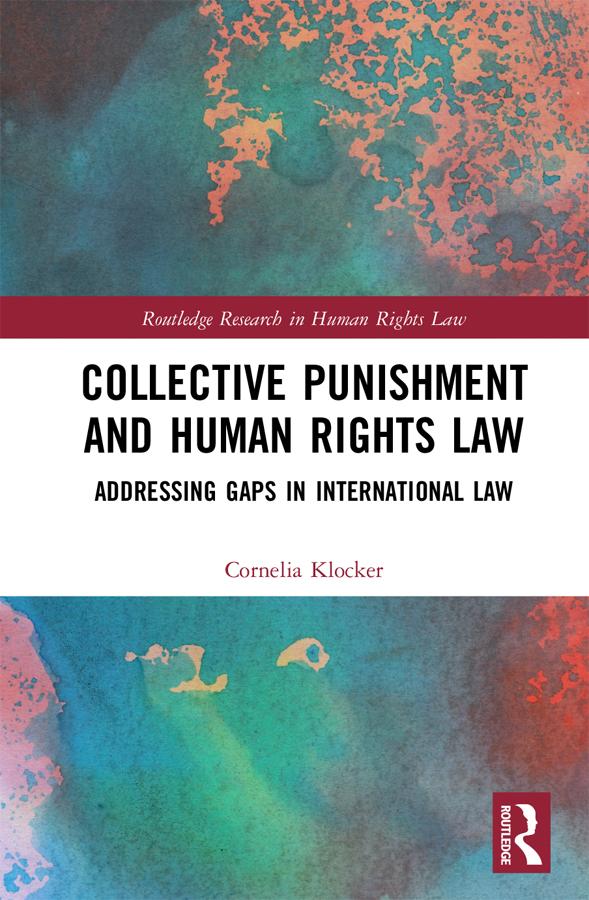
This book analyses collective punishment in the context of human rights law. Collective punishment is a concept deriving from the law of armed conflict. It describes the punishment of a group for an act allegedly committed by one of its members and is prohibited in times of armed conflict. Although the imposition of collective punishment has been witnessed in situations outside armed conflict as well, human rights instruments do not explicitly address collective punishment. Consequently, there is a genuine gap in the protection of affected groups in situations outside of or short of armed conflict. Supported by two case studies on collective punishment in the Occupied Palestinian Territories and in Chechnya, the book examines potential options to close this gap in human rights law in a way contributing to the empowerment of affected groups. This analysis centres on the European Convention on Human Rights due to its relevance to the situation in Chechnya. By questioning whether human rights instruments can encompass a prohibition of collective punishment, the book contributes to the broader academic debate on rights held by collectivities in general and on collective human rights in particular.
The book will be of interest to students, academics and policy makers in the areas of International Human Rights Law, International Humanitarian Law and International Criminal Law.
Płać wygodnie kartą, Klarną, Apple Pay lub Google Pay. Nie jesteś zadowolony? Zawsze masz 14-dniową gwarancję zwrotu pieniędzy. Więcej przeczytasz w naszych warunkach. Masz pytania? Napisz do nas na hello@memmo.org.
Memmo ułatwia naukę – gdziekolwiek jesteś na świecie. U nas znajdziesz podręczniki i sprytne narzędzia do nauki w jednym miejscu: streszczenia, quizy, podcasty i fiszki. A do tego Ted, Twój kumpel do nauki, który odpowie na wszystko, co Cię nurtuje. Ponad 50 000 studentów już tu się uczy – stworzone, byś uczył się szybciej i mniej stresował.