
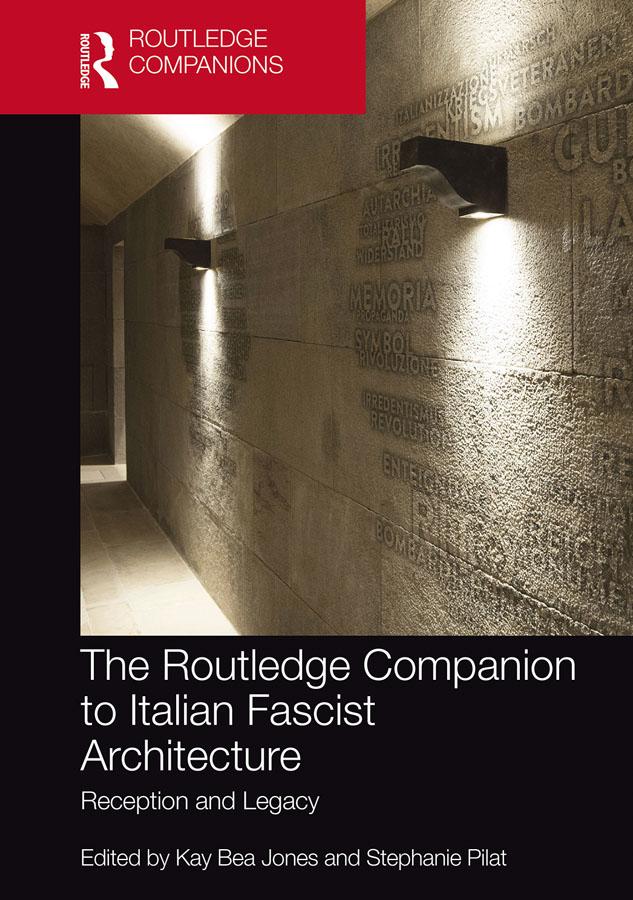
Today, nearly a century after the National Fascist Party came to power in Italy, questions about the built legacy of the regime provoke polemics among architects and scholars. Mussolini’s government constructed thousands of new buildings across the Italian Peninsula and islands and in colonial territories. From hospitals, post offices and stadia to housing, summer camps, Fascist Party Headquarters, ceremonial spaces, roads, railways and bridges, the physical traces of the regime have a presence in nearly every Italian town.
The Routledge Companion to Italian Fascist Architecture investigates what has become of the architectural and urban projects of Italian fascism, how sites have been transformed or adapted and what constitutes the meaning of these buildings and cities today. The essays include a rich array of new arguments by both senior and early career scholars from Italy and beyond. They examine the reception of fascist architecture through studies of destruction and adaptation, debates over reuse, artistic interventions and even routine daily practices, which may slowly alter collective understandings of such places. Paolo Portoghesi sheds light on the subject from his internal perspective, while Harald Bodenschatz situates Italy among period totalitarian authorities and their symbols across Europe. Section editors frame, synthesize and moderate essays that explore fascism’s afterlife; how the physical legacy of the regime has been altered and preserved and what it means now. This critical history of interpretations of fascist-era architecture and urban projects broadens our understanding of the relationships among politics, identity, memory and place.
This companion will be of interest to students and scholars in a range of fields, including Italian history, architectural history, cultural studies, visual sociology, political science and art history.
Płać wygodnie kartą, Klarną, Apple Pay lub Google Pay. Nie jesteś zadowolony? Zawsze masz 14-dniową gwarancję zwrotu pieniędzy. Więcej przeczytasz w naszych warunkach. Masz pytania? Napisz do nas na hello@memmo.org.
Memmo ułatwia naukę – gdziekolwiek jesteś na świecie. U nas znajdziesz podręczniki i sprytne narzędzia do nauki w jednym miejscu: streszczenia, quizy, podcasty i fiszki. A do tego Ted, Twój kumpel do nauki, który odpowie na wszystko, co Cię nurtuje. Ponad 50 000 studentów już tu się uczy – stworzone, byś uczył się szybciej i mniej stresował.