
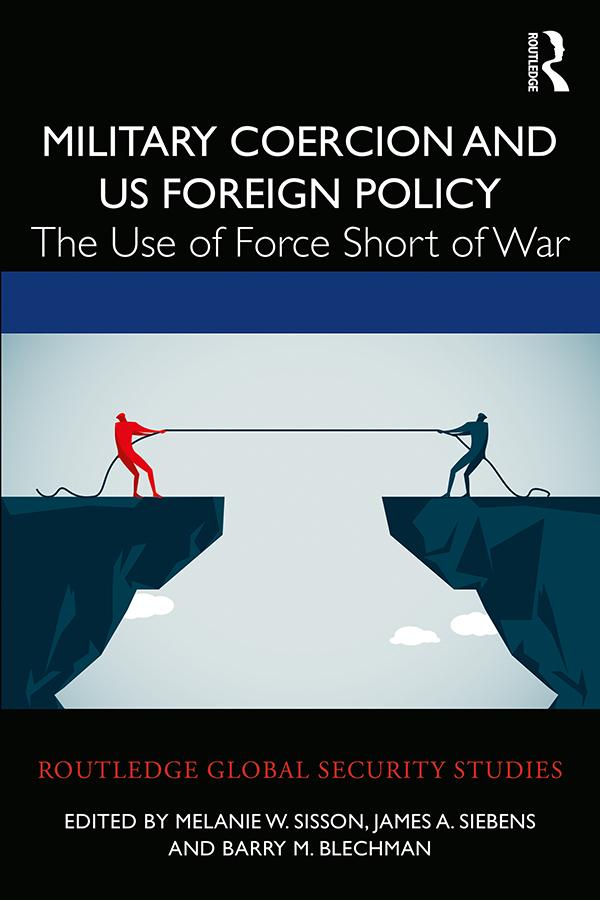
This book examines the use of military force as a coercive tool by the United States, using lessons drawn from the post-Cold War era (1991–2018).
The volume reveals that despite its status as sole superpower during the post-Cold War period, US efforts to coerce other states failed as often as they succeeded. In the coming decades, the United States will face states that are more capable and creative, willing to challenge its interests and able to take advantage of missteps and vulnerabilities. By using lessons derived from in-depth case studies and statistical analysis of an original dataset of more than 100 coercive incidents in the post-Cold War era, this book generates insight into how the US military can be used to achieve policy goals. Specifically, it provides guidance about the ways in which, and the conditions under which, the US armed forces can work in concert with economic and diplomatic elements of US power to create effective coercive strategies.
This book will be of interest to students of US national security, US foreign policy, strategic studies and International Relations in general.
Płać wygodnie kartą, Klarną, Apple Pay lub Google Pay. Nie jesteś zadowolony? Zawsze masz 14-dniową gwarancję zwrotu pieniędzy. Więcej przeczytasz w naszych warunkach. Masz pytania? Napisz do nas na hello@memmo.org.
Memmo ułatwia naukę – gdziekolwiek jesteś na świecie. U nas znajdziesz podręczniki i sprytne narzędzia do nauki w jednym miejscu: streszczenia, quizy, podcasty i fiszki. A do tego Ted, Twój kumpel do nauki, który odpowie na wszystko, co Cię nurtuje. Ponad 50 000 studentów już tu się uczy – stworzone, byś uczył się szybciej i mniej stresował.