
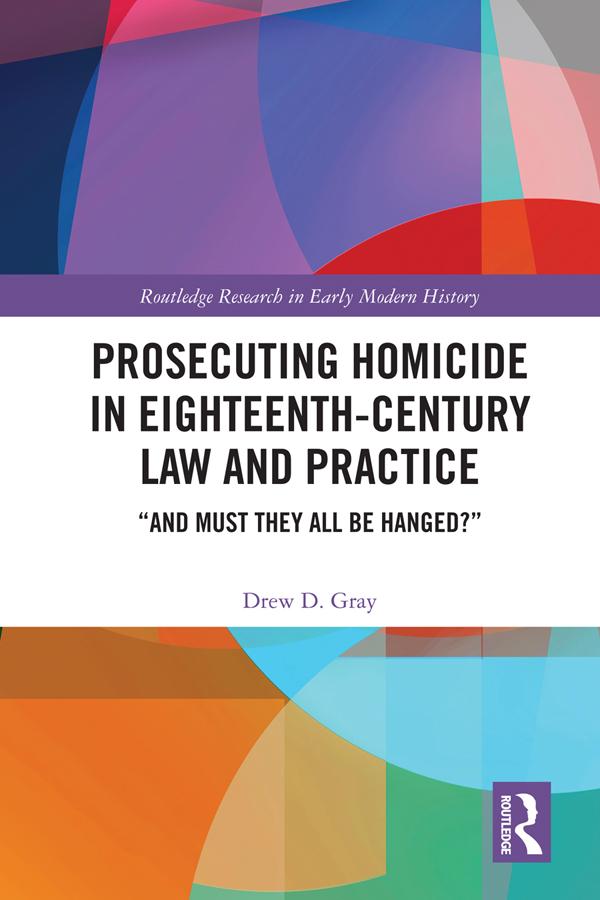
This volume uses four case studies, all with strong London connections, to analyze homicide law and the pardoning process in eighteenth-century England. Each reveals evidence of how attempts were made to negotiate a path through the justice system to avoid conviction, and so avoid a sentence of hanging. This approach allows a deep examination of the workings of the justice system using social and cultural history methodologies. The cases explore wider areas of social and cultural history in the period, such as the role of policing agents, attitudes towards sexuality and prostitution, press reporting, and popular conceptions of "honorable" behavior. They also allow an engagement with what has been identified as the gradual erosion of individual agency within the law, and the concomitant rise of the state. Investigating the nature of the pardoning process shows how important it was to have "friends in high places," and also uncovers ways in which the legal system was susceptible to accusations of corruption. Readers will find an illuminating view of eighteenth-century London through a legal lens.
Płać wygodnie kartą, Klarną, Apple Pay lub Google Pay. Nie jesteś zadowolony? Zawsze masz 14-dniową gwarancję zwrotu pieniędzy. Więcej przeczytasz w naszych warunkach. Masz pytania? Napisz do nas na hello@memmo.org.
Memmo ułatwia naukę – gdziekolwiek jesteś na świecie. U nas znajdziesz podręczniki i sprytne narzędzia do nauki w jednym miejscu: streszczenia, quizy, podcasty i fiszki. A do tego Ted, Twój kumpel do nauki, który odpowie na wszystko, co Cię nurtuje. Ponad 50 000 studentów już tu się uczy – stworzone, byś uczył się szybciej i mniej stresował.