
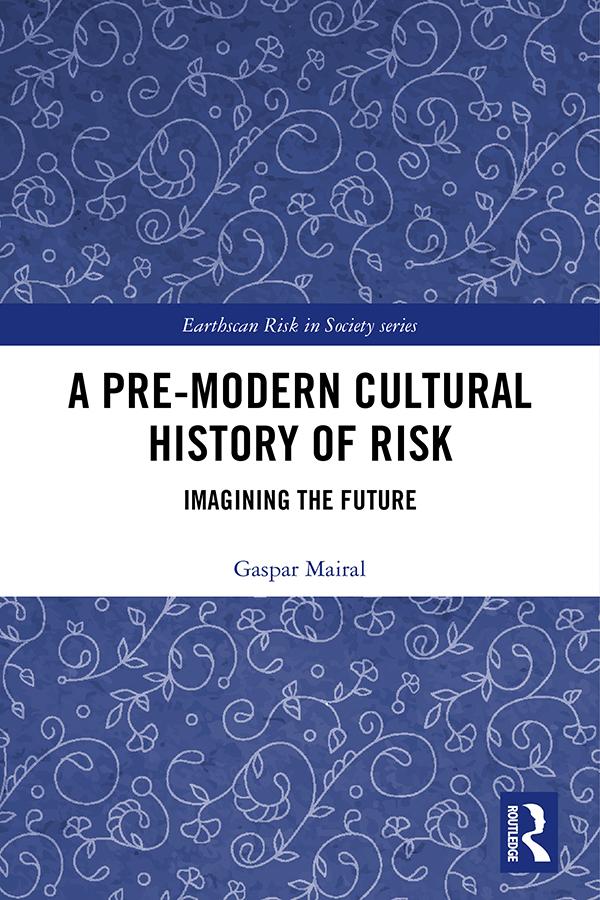
This book answers the need for a contextual, long-term and interpretative analysis of risk from original sources.
Risk has historically been a way of imagining what could happen in the future based on expert theories and predictions. This book explores this notion of "managing the future" by tracing the conceptual development of risk from its origin in Islamic Koranic theology. It follows its long voyage from mercantile law and navigation in Medieval Mediterranean and the Atlantic Ocean, to Columbus' arrival to the Indies and the Spanish exploration and colonization in the Americas. It considers the mathematical invention of probability in games of chance, the birth of journalism in Britain with Defoe’s Journal of the Plague Year, the earthquake of Lisbon in 1755 and the subsequent controversy between apocalyptic believers and enlightened philosophers. Tracking the growth and evolution of risk as a concept across various historical periods and events, Mairal highlights four key features of risk - time, knowledge, relationship and probability - and argues that risk is not based on perception as it is generally presented, but rather on knowledge accrued and developed over a vast historical time frame.
A Pre-Modern Cultural History of Risk will be of great interest to students and scholars of risk management.
Płać wygodnie kartą, Klarną, Apple Pay lub Google Pay. Nie jesteś zadowolony? Zawsze masz 14-dniową gwarancję zwrotu pieniędzy. Więcej przeczytasz w naszych warunkach. Masz pytania? Napisz do nas na hello@memmo.org.
Memmo ułatwia naukę – gdziekolwiek jesteś na świecie. U nas znajdziesz podręczniki i sprytne narzędzia do nauki w jednym miejscu: streszczenia, quizy, podcasty i fiszki. A do tego Ted, Twój kumpel do nauki, który odpowie na wszystko, co Cię nurtuje. Ponad 50 000 studentów już tu się uczy – stworzone, byś uczył się szybciej i mniej stresował.