
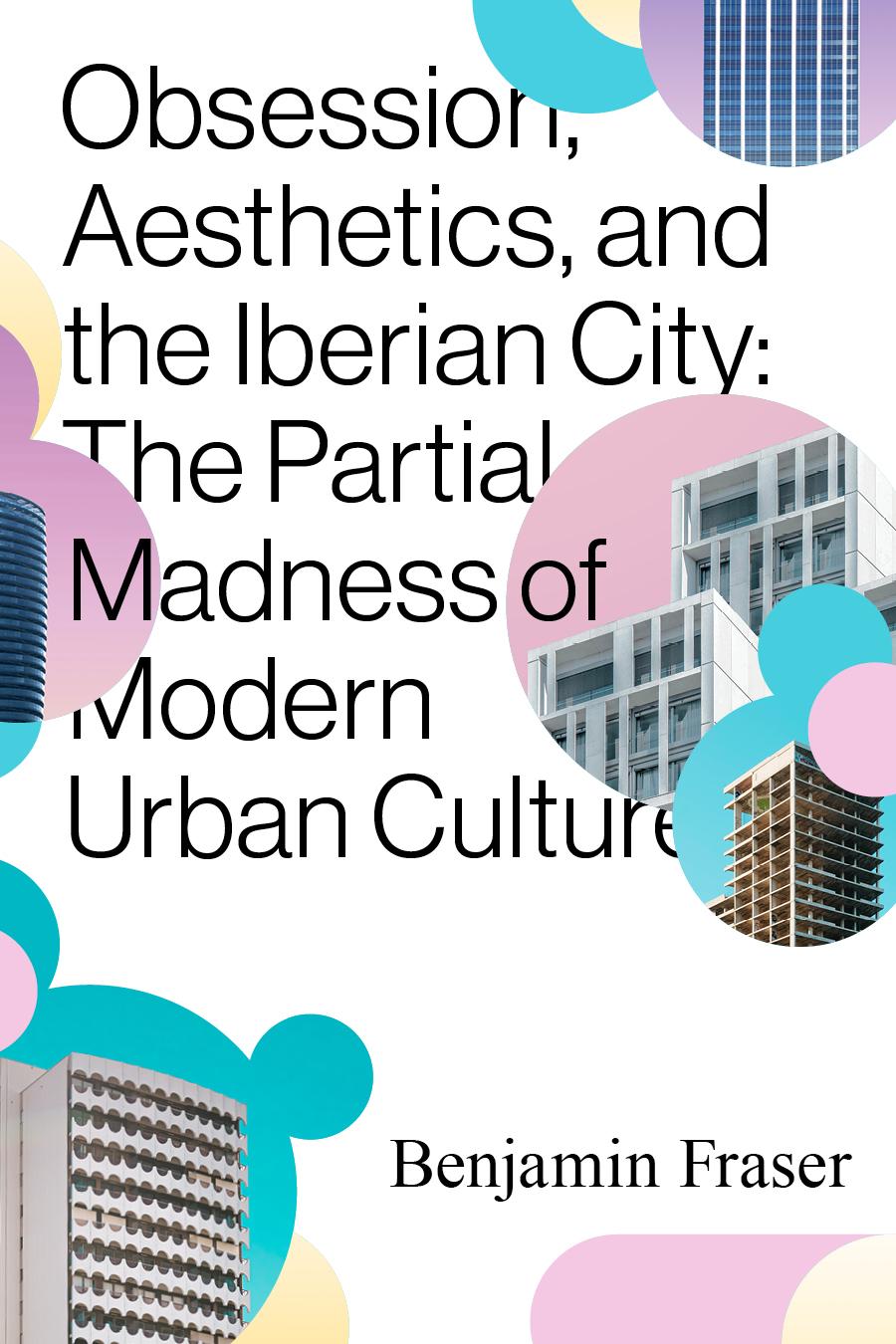
Although many depictions of the city in prose, poetry, and visual art can be found dating from earlier periods in human history, Obsession, Aesthetics, and the Iberian City emphasizes a particular phase in urban development. This is the quintessentially modern city that comes into being in the nineteenth century. In social terms, this nineteenth-century city is the product of a specialist class of planners engaged in what urban theorist Henri Lefebvre has called the bourgeois science of modern urbanism. One thinks first of the large scale and the wide boulevards of Baron Georges von Haussmann’s Paris or the geometrical planning vision of Ildefons Cerdà’s Barcelona. The modern science of urban design famously inaugurates a new way of thinking the city; urban modernity is now defined by the triumph of exchange value over use value, and the lived city is eclipsed by the planned city as it is envisioned by capitalists, builders, and speculators. Thus urban plans, architecture, literary prose and poetry, documentary cinema and fiction film, and comics art serve as windows into our modern obsession with urban aesthetics.
This book investigates the social relationships implied in our urban modernity by concentrating on four cities that are in broad strokes representative of the cultural and linguistic heterogeneity of the Iberian peninsula. Each chapter introduces but moves well beyond an identifiable urban area in a given city, noting the cultural obsession implicit in its reconstruction as well as the role of obsession in its artistic representation of the urban environment. These areas are Barcelona’s Eixample district, Madrid’s Linear City, Lisbon’s central Baixa area, and Bilbao’s Seven Streets, or Zazpikaleak. The theme of obsession—which as explored is synonymous with the concept of partial madness—provides a point of departure for understanding the interconnection of both urbanistic and artistic discourses.
This book investigates the social relationships implied in our urban modernity by concentrating on four cities that are in broad strokes representative of the cultural and linguistic heterogeneity of the Iberian peninsula. Each chapter introduces but moves well beyond an identifiable urban area in a given city, noting the cultural obsession implicit in its reconstruction as well as the role of obsession in its artistic representation of the urban environment. These areas are Barcelona’s Eixample district, Madrid’s Linear City, Lisbon’s central Baixa area, and Bilbao’s Seven Streets, or Zazpikaleak. The theme of obsession—which as explored is synonymous with the concept of partial madness—provides a point of departure for understanding the interconnection of both urbanistic and artistic discourses.
Płać wygodnie kartą, Klarną, Apple Pay lub Google Pay. Nie jesteś zadowolony? Zawsze masz 14-dniową gwarancję zwrotu pieniędzy. Więcej przeczytasz w naszych warunkach. Masz pytania? Napisz do nas na hello@memmo.org.
Memmo ułatwia naukę – gdziekolwiek jesteś na świecie. U nas znajdziesz podręczniki i sprytne narzędzia do nauki w jednym miejscu: streszczenia, quizy, podcasty i fiszki. A do tego Ted, Twój kumpel do nauki, który odpowie na wszystko, co Cię nurtuje. Ponad 50 000 studentów już tu się uczy – stworzone, byś uczył się szybciej i mniej stresował.
Może Ci się spodobać
Kup książkę0