
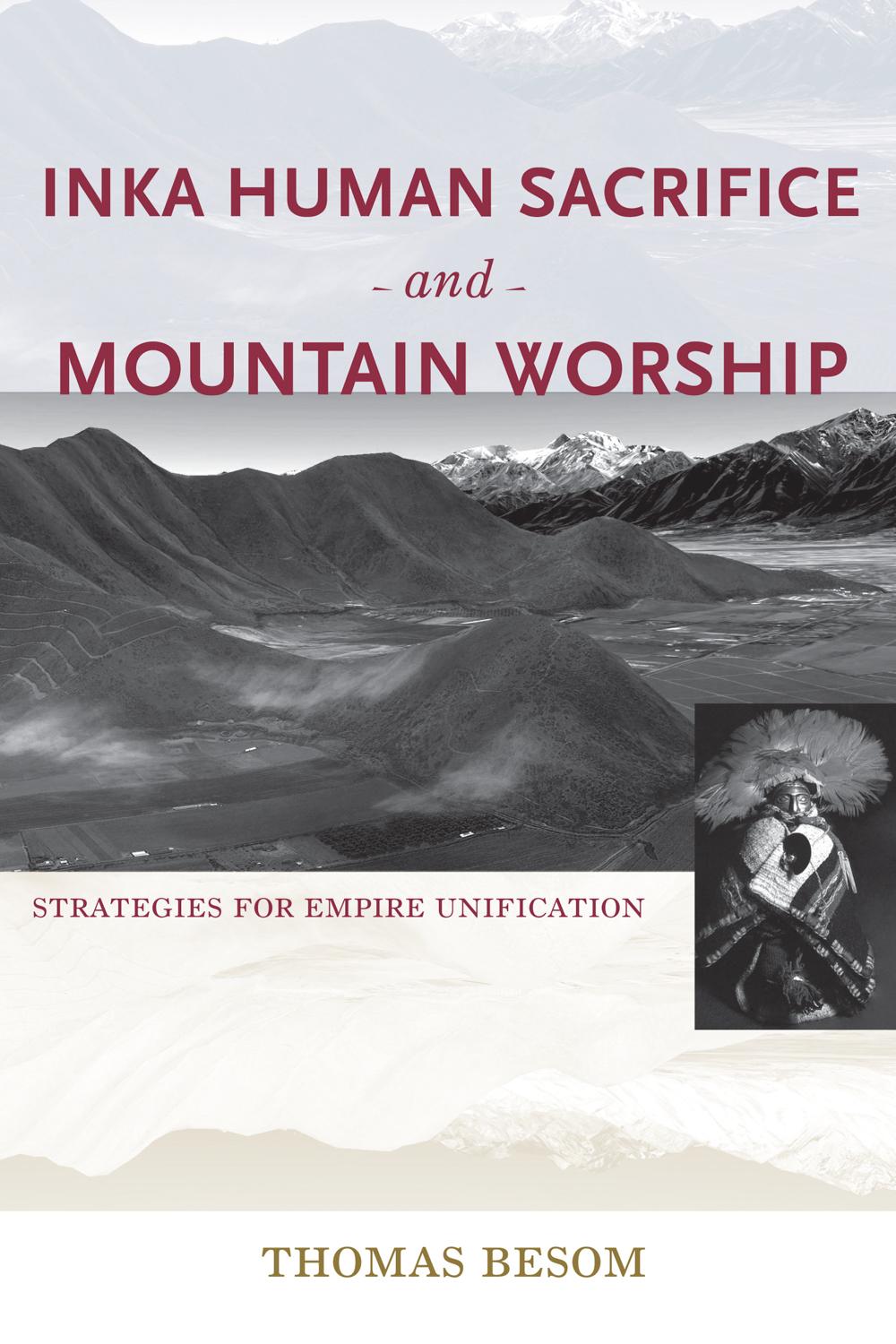
The Inka empire was the largest pre-Columbian polity in the New World. Its vast expanse, its ethnic diversity, and the fact that the empire may have been consolidated in less than a century have prompted much scholarly interest in its creation. In this study, Besom explores the ritual practices of human sacrifice and the worship of mountains, attested in both archaeological investigations and ethnohistorical sources, as tools in the establishment and preservation of political power.
Besom examines the relationship between symbols, ideology, ritual, and power to demonstrate how the Cuzqueños could have used rituals to manipulate common Andean symbols to uphold their authority over subjugated peoples. He considers ethnohistoric accounts of the categories of human sacrifice to gain insights into related rituals and motives, and reviews the ethnohistoric evidence of mountain worship to predict locations as well as motives. He also analyzes specific archaeological sites and assemblages, theorizing that they were the locations of sacrifices designed to assimilate subject peoples, bind conquered lands to the state, and/or justify the extraction of local resources.
Płać wygodnie kartą, Klarną, Apple Pay lub Google Pay. Nie jesteś zadowolony? Zawsze masz 14-dniową gwarancję zwrotu pieniędzy. Więcej przeczytasz w naszych warunkach. Masz pytania? Napisz do nas na hello@memmo.org.
Memmo ułatwia naukę – gdziekolwiek jesteś na świecie. U nas znajdziesz podręczniki i sprytne narzędzia do nauki w jednym miejscu: streszczenia, quizy, podcasty i fiszki. A do tego Ted, Twój kumpel do nauki, który odpowie na wszystko, co Cię nurtuje. Ponad 50 000 studentów już tu się uczy – stworzone, byś uczył się szybciej i mniej stresował.