
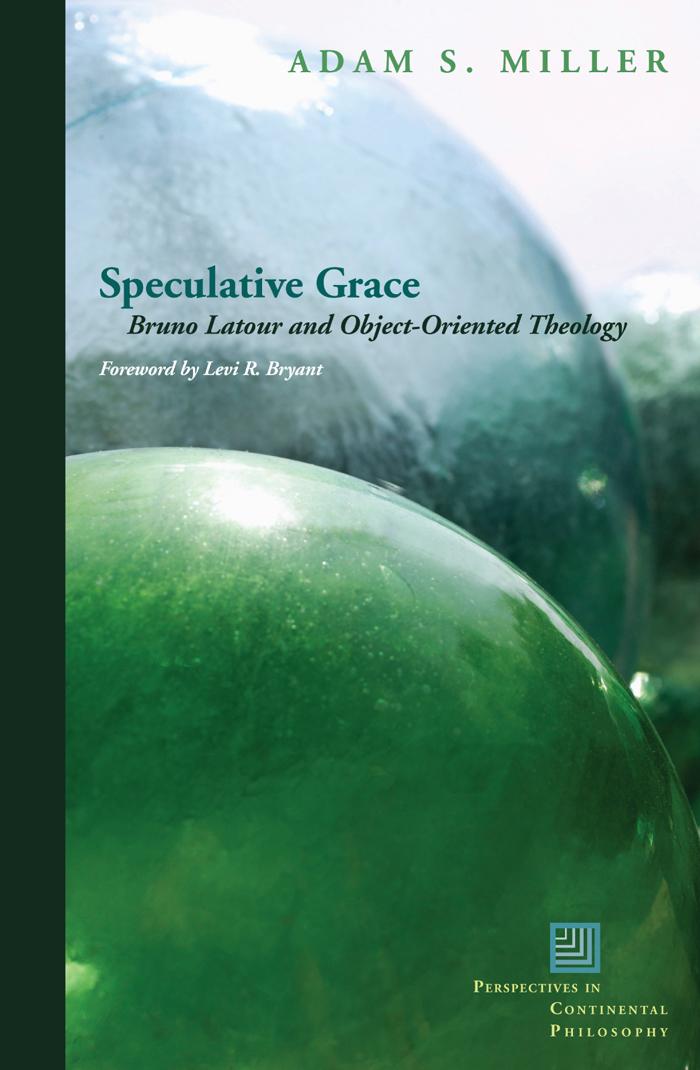
This book offers a novel account of grace framed in terms of Bruno Latour’s “principle of irreduction.” It thus models an object-oriented approach to grace, experimentally moving a traditional Christian understanding of grace out of a top-down, theistic ontology and into an agent-based, object-oriented ontology. In the process, it also provides a systematic and original account of Latour’s overall project.
The account of grace offered here redistributes the tasks assigned to science and religion. Where now the work of science is to bring into focus objects that are too distant, too resistant, and too transcendent to be visible, the business of religion is to bring into focus objects that are too near, too available, and too immanent to be visible. Where science reveals transcendent objects by correcting for our nearsightedness, religion reveals immanent objects by correcting for our farsightedness. Speculative Grace remaps the meaning of grace and examines the kinds of religious instruments and practices that, as a result, take center stage.
Płać wygodnie kartą, Klarną, Apple Pay lub Google Pay. Nie jesteś zadowolony? Zawsze masz 14-dniową gwarancję zwrotu pieniędzy. Więcej przeczytasz w naszych warunkach. Masz pytania? Napisz do nas na hello@memmo.org.
Memmo ułatwia naukę – gdziekolwiek jesteś na świecie. U nas znajdziesz podręczniki i sprytne narzędzia do nauki w jednym miejscu: streszczenia, quizy, podcasty i fiszki. A do tego Ted, Twój kumpel do nauki, który odpowie na wszystko, co Cię nurtuje. Ponad 50 000 studentów już tu się uczy – stworzone, byś uczył się szybciej i mniej stresował.