
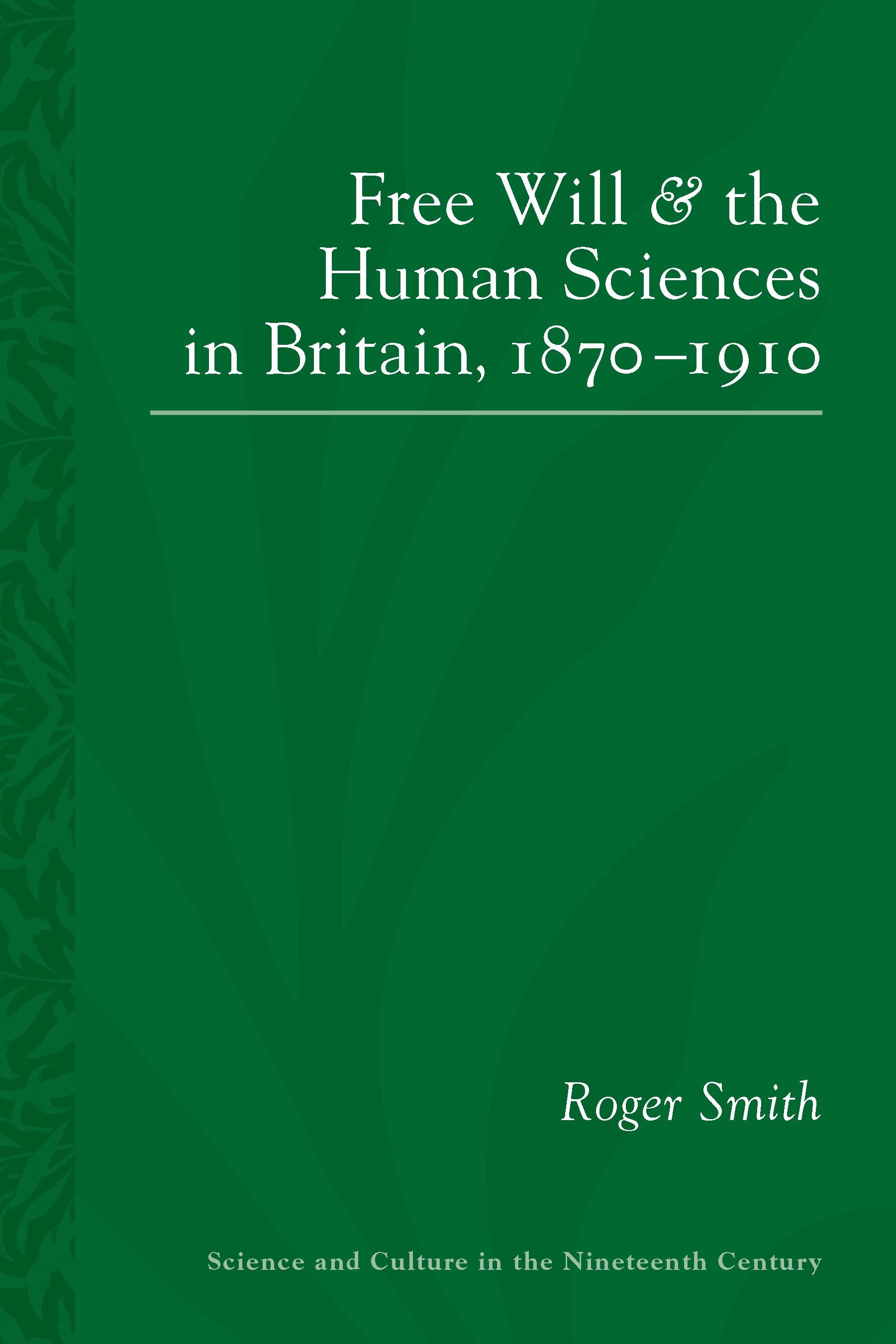
From the late nineteenth century onwards religion gave way to science as the dominant force in society. This led to a questioning of the principle of free will—if the workings of the human mind could be reduced to purely physiological explanations, then what place was there for human agency and self-improvement?
Smith takes an in-depth look at the problem of free will through the prism of different disciplines. Physiology, psychology, philosophy, evolutionary theory, ethics, history and sociology all played a part in the debates that took place. His subtly nuanced navigation through these arguments has much to contribute to our understanding of Victorian and Edwardian science and culture, as well as having relevance to current debates on the role of genes in determining behaviour.
Smith takes an in-depth look at the problem of free will through the prism of different disciplines. Physiology, psychology, philosophy, evolutionary theory, ethics, history and sociology all played a part in the debates that took place. His subtly nuanced navigation through these arguments has much to contribute to our understanding of Victorian and Edwardian science and culture, as well as having relevance to current debates on the role of genes in determining behaviour.
Kategoria: Vetenskapsteori och forskningsmetod
e-ISBN: 9780822981718
Płać wygodnie kartą, Klarną, Apple Pay lub Google Pay. Nie jesteś zadowolony? Zawsze masz 14-dniową gwarancję zwrotu pieniędzy. Więcej przeczytasz w naszych warunkach. Masz pytania? Napisz do nas na hello@memmo.org.
Memmo ułatwia naukę – gdziekolwiek jesteś na świecie. U nas znajdziesz podręczniki i sprytne narzędzia do nauki w jednym miejscu: streszczenia, quizy, podcasty i fiszki. A do tego Ted, Twój kumpel do nauki, który odpowie na wszystko, co Cię nurtuje. Ponad 50 000 studentów już tu się uczy – stworzone, byś uczył się szybciej i mniej stresował.
Może Ci się spodobać
Kup książkę0