
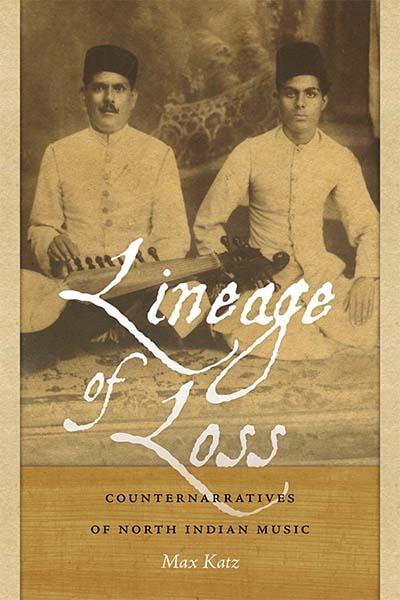
In the middle of the nineteenth century a new family of hereditary musicians emerged in the royal court of Lucknow and subsequently rose to the heights of renown throughout North India. Today this musical lineage, or ghar n, lives on in the music and memories of only a small handful of descendants and players of the family instrument, the sarod. Drawing on six years of ethnographic and archival research, and fifteen years of musical apprenticeship, Max Katz explores the oral history and written record of the Lucknow ghar n ,tracing its displacement, loss of prestige, and erasure from the collective memory. In doing so he illuminates a hidden history of ideological and social struggle in North Indian music culture, intervenes in ongoing debates over the anti-Muslim agenda of Hindustani music's reform movement, and reanimates a lost vision in which Muslim scholar-artists defined the music of the nation. An interdisciplinary, postmodern counter-history, Lineage of Loss offers a new and unsettling narrative of Hindustani music's encounter with modernity.
Płać wygodnie kartą, Klarną, Apple Pay lub Google Pay. Nie jesteś zadowolony? Zawsze masz 14-dniową gwarancję zwrotu pieniędzy. Więcej przeczytasz w naszych warunkach. Masz pytania? Napisz do nas na hello@memmo.org.
Memmo ułatwia naukę – gdziekolwiek jesteś na świecie. U nas znajdziesz podręczniki i sprytne narzędzia do nauki w jednym miejscu: streszczenia, quizy, podcasty i fiszki. A do tego Ted, Twój kumpel do nauki, który odpowie na wszystko, co Cię nurtuje. Ponad 50 000 studentów już tu się uczy – stworzone, byś uczył się szybciej i mniej stresował.