
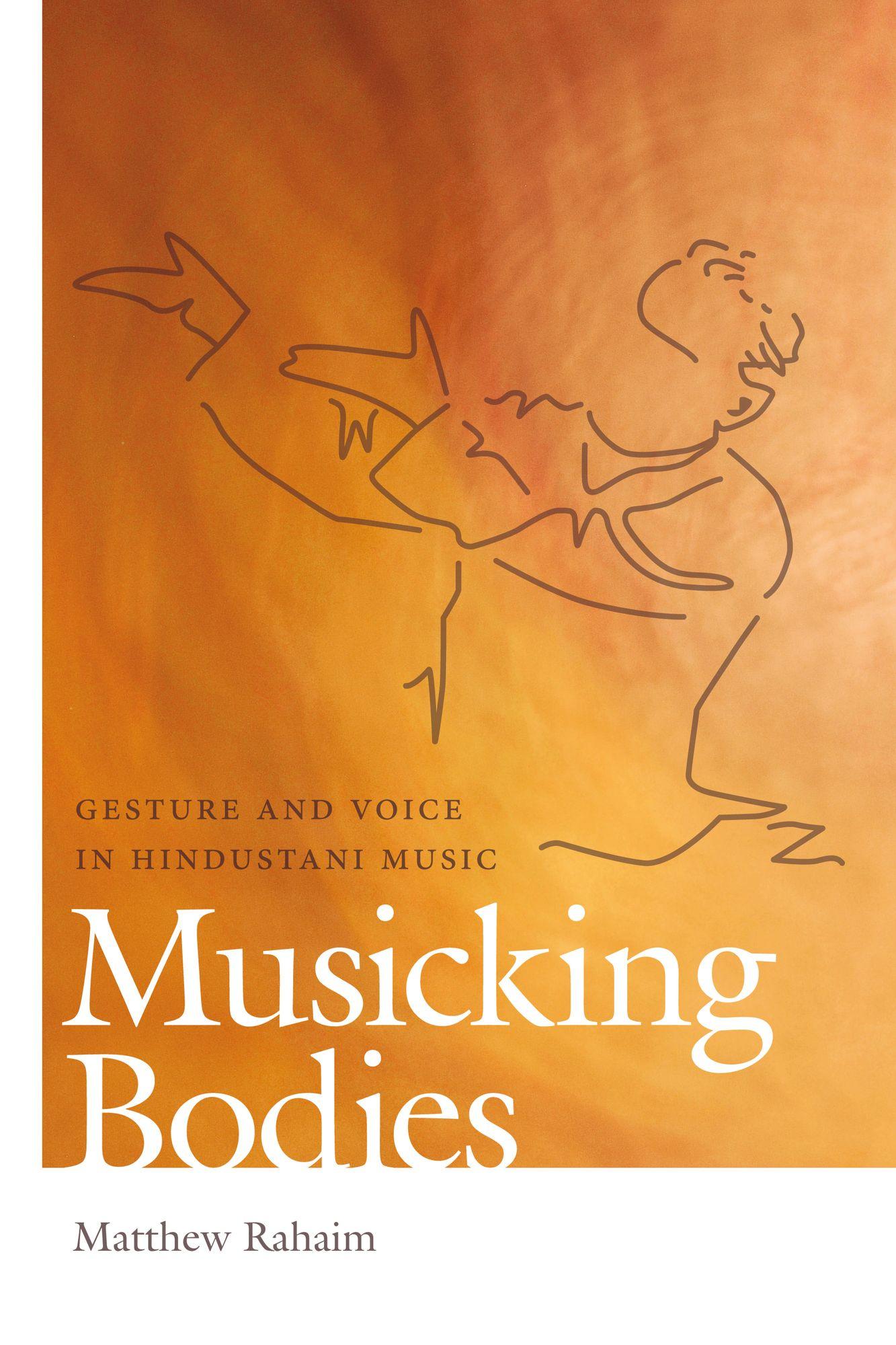
Indian vocalists trace intricate shapes with their hands while improvising melody. Although every vocalist has an idiosyncratic gestural style, students inherit ways of shaping melodic space from their teachers, and the motion of the hand and voice are always intimately connected. Though observers of Indian classical music have long commented on these gestures, Musicking Bodies is the first extended study of what singers actually do with their hands and voices. Matthew Rahaim draws on years of vocal training, ethnography, and close analysis to demonstrate the ways in which hand gesture is used alongside vocalization to manifest melody as dynamic, three-dimensional shapes. The gestures that are improvised alongside vocal improvisation embody a special kind of melodic knowledge passed down tacitly through lineages of teachers and students who not only sound similar, but who also engage with music kinesthetically according to similar aesthetic and ethical ideals. Musicking Bodies builds on the insights of phenomenology, Indian and Western music theory, and cultural studies to illuminate not only the performance of gesture, but its implications for the transmission of culture, the conception of melody, and the very nature of the musicking body.
Płać wygodnie kartą, Klarną, Apple Pay lub Google Pay. Nie jesteś zadowolony? Zawsze masz 14-dniową gwarancję zwrotu pieniędzy. Więcej przeczytasz w naszych warunkach. Masz pytania? Napisz do nas na hello@memmo.org.
Memmo ułatwia naukę – gdziekolwiek jesteś na świecie. U nas znajdziesz podręczniki i sprytne narzędzia do nauki w jednym miejscu: streszczenia, quizy, podcasty i fiszki. A do tego Ted, Twój kumpel do nauki, który odpowie na wszystko, co Cię nurtuje. Ponad 50 000 studentów już tu się uczy – stworzone, byś uczył się szybciej i mniej stresował.