
"Writing in a clear and comprehensive writing style, [the authors] show how the U.S. political, social, and economic environments make disinformation believable to large numbers of people and difficult to stop or prevent." - Library Journal, Starred Review
"Everyone, whether they work in the public sector or are private citizens, will find this book invaluable.” - Booklist, Starred Review
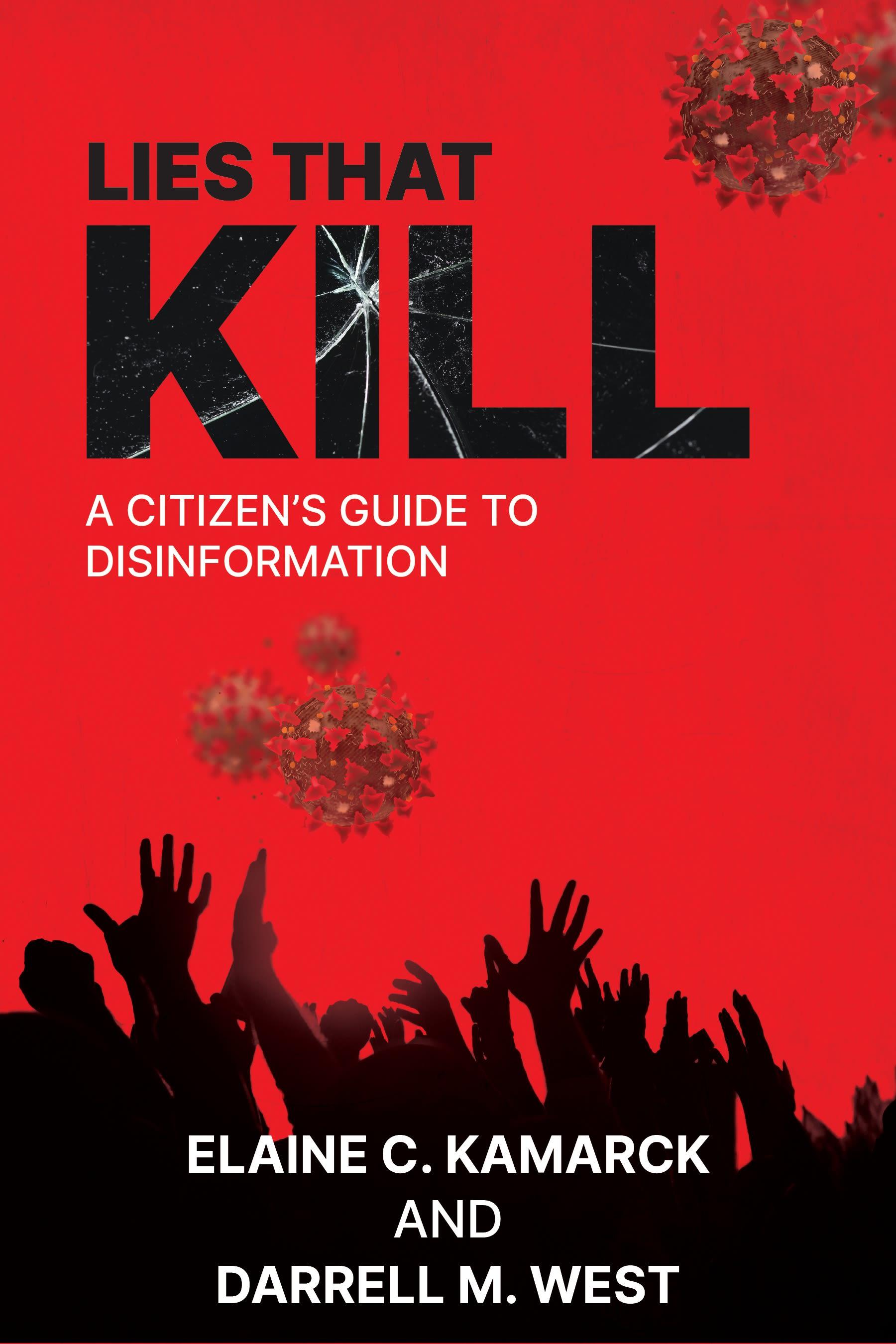
Disinformation made possible by rapid advances in cheap, digital technology, and promoted by organized networks, thrives in the toxic political environment that exists within the United States and around the world. In Lies that Kill, two noted experts take readers inside the world of disinformation campaigns to show concerned citizens how to recognize disinformation, understand it, and protect themselves and others. Using case studies of elections, climate change, public health, race, war, and governance, Elaine Kamarck and Darrell West demonstrate in plain language how our political, social, and economic environment makes disinformation believable to large numbers of people.
Karmarck and West argue that we are not doomed to live in an apocalyptic, post-truth world but instead can take actions that are consistent with long-held free speech values. Citizen education can go a long way towards making us more discerning consumers of online materials and we can reduce disinformation risks through digital literacy programs, regulation, legislation, and negotiation with other countries.
"Everyone, whether they work in the public sector or are private citizens, will find this book invaluable.” - Booklist, Starred Review
Disinformation made possible by rapid advances in cheap, digital technology, and promoted by organized networks, thrives in the toxic political environment that exists within the United States and around the world. In Lies that Kill, two noted experts take readers inside the world of disinformation campaigns to show concerned citizens how to recognize disinformation, understand it, and protect themselves and others. Using case studies of elections, climate change, public health, race, war, and governance, Elaine Kamarck and Darrell West demonstrate in plain language how our political, social, and economic environment makes disinformation believable to large numbers of people.
Karmarck and West argue that we are not doomed to live in an apocalyptic, post-truth world but instead can take actions that are consistent with long-held free speech values. Citizen education can go a long way towards making us more discerning consumers of online materials and we can reduce disinformation risks through digital literacy programs, regulation, legislation, and negotiation with other countries.
Strony: 176
Kategoria: Kriminologi
e-ISBN: 9780815740735
Waga przesyłki: 1.2 kg
Wysyłka w ciągu: 1-2 dni
Płać wygodnie kartą, Klarną, Apple Pay lub Google Pay. Nie jesteś zadowolony? Zawsze masz 14-dniową gwarancję zwrotu pieniędzy. Więcej przeczytasz w naszych warunkach. Masz pytania? Napisz do nas na hello@memmo.org.
Memmo ułatwia naukę – gdziekolwiek jesteś na świecie. U nas znajdziesz podręczniki i sprytne narzędzia do nauki w jednym miejscu: streszczenia, quizy, podcasty i fiszki. A do tego Ted, Twój kumpel do nauki, który odpowie na wszystko, co Cię nurtuje. Ponad 50 000 studentów już tu się uczy – stworzone, byś uczył się szybciej i mniej stresował.