
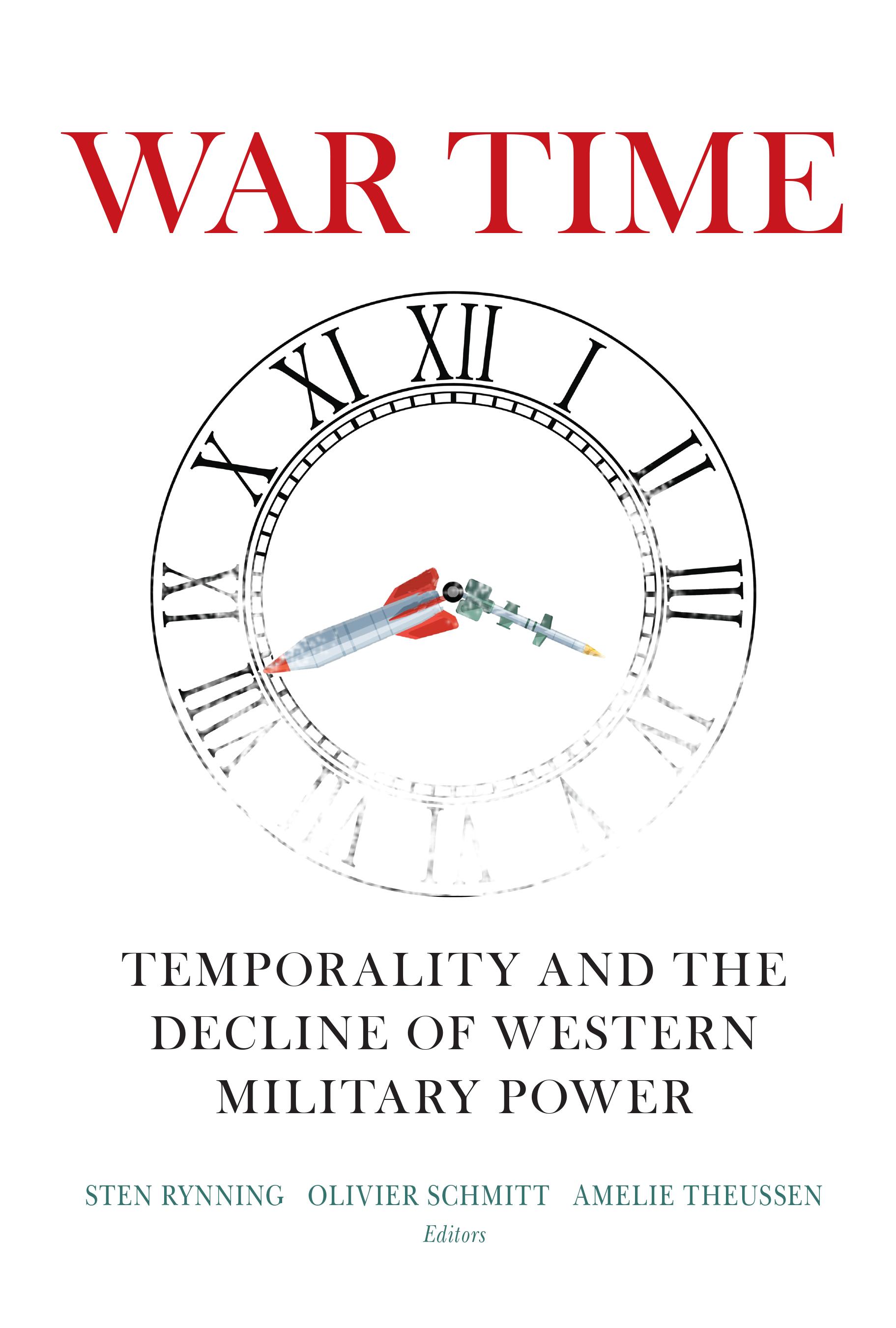
Perceptions of time contributed to recent Western military failings
The decline of the West is once again a frequent topic of speculation. Often cited as one element of the alleged decline is the succession of prolonged and unsuccessful warsmost notably those waged in recent decades by the United States. This book by three Danish military experts examines not only the validity of the speculation but also asks why the West, particularly its military effectiveness, might be perceived as in decline.
Temporality is the central concept linking a series of structural fractures that leave the West seemingly muscle-bound: overwhelmingly powerful in technology and military might but strategically fragile. This temporality, the authors say, is composed of three interrelated dimensions: trajectories, perceptions, and pace.
First, Western societies to tend view time as a linear trajectory, focusing mostly on recent and current events and leading to the framing of history as a story of rise and decline. The authors examine whether the inevitable fall already has happened, is underway, or is still in the future.
Perceptions of time also vary across cultures and periods, shaping socio-political activities, including warfare. The enemy, for example, can be perceived as belong to another time (being backward or barbarian). And war can be seen either as cyclical or exceptional, helping frame the public's willingness to accept its violent and tragic consequences.
The pace of war is another factor shaping policies and actions. Western societies emphasize speed: the shorter the war the better, even if the long-term result is unsuccessful. Ironically, one of the Western world's least successful wars also has been America's longest, in Afghanistan.
This unique book is thus a critical assessment of the evolution and future of Western military power. It contributes much-needed insight into the potential for the West's political and institutional renewal.
The decline of the West is once again a frequent topic of speculation. Often cited as one element of the alleged decline is the succession of prolonged and unsuccessful warsmost notably those waged in recent decades by the United States. This book by three Danish military experts examines not only the validity of the speculation but also asks why the West, particularly its military effectiveness, might be perceived as in decline.
Temporality is the central concept linking a series of structural fractures that leave the West seemingly muscle-bound: overwhelmingly powerful in technology and military might but strategically fragile. This temporality, the authors say, is composed of three interrelated dimensions: trajectories, perceptions, and pace.
First, Western societies to tend view time as a linear trajectory, focusing mostly on recent and current events and leading to the framing of history as a story of rise and decline. The authors examine whether the inevitable fall already has happened, is underway, or is still in the future.
Perceptions of time also vary across cultures and periods, shaping socio-political activities, including warfare. The enemy, for example, can be perceived as belong to another time (being backward or barbarian). And war can be seen either as cyclical or exceptional, helping frame the public's willingness to accept its violent and tragic consequences.
The pace of war is another factor shaping policies and actions. Western societies emphasize speed: the shorter the war the better, even if the long-term result is unsuccessful. Ironically, one of the Western world's least successful wars also has been America's longest, in Afghanistan.
This unique book is thus a critical assessment of the evolution and future of Western military power. It contributes much-needed insight into the potential for the West's political and institutional renewal.
Płać wygodnie kartą, Klarną, Apple Pay lub Google Pay. Nie jesteś zadowolony? Zawsze masz 14-dniową gwarancję zwrotu pieniędzy. Więcej przeczytasz w naszych warunkach. Masz pytania? Napisz do nas na hello@memmo.org.
Memmo ułatwia naukę – gdziekolwiek jesteś na świecie. U nas znajdziesz podręczniki i sprytne narzędzia do nauki w jednym miejscu: streszczenia, quizy, podcasty i fiszki. A do tego Ted, Twój kumpel do nauki, który odpowie na wszystko, co Cię nurtuje. Ponad 50 000 studentów już tu się uczy – stworzone, byś uczył się szybciej i mniej stresował.