
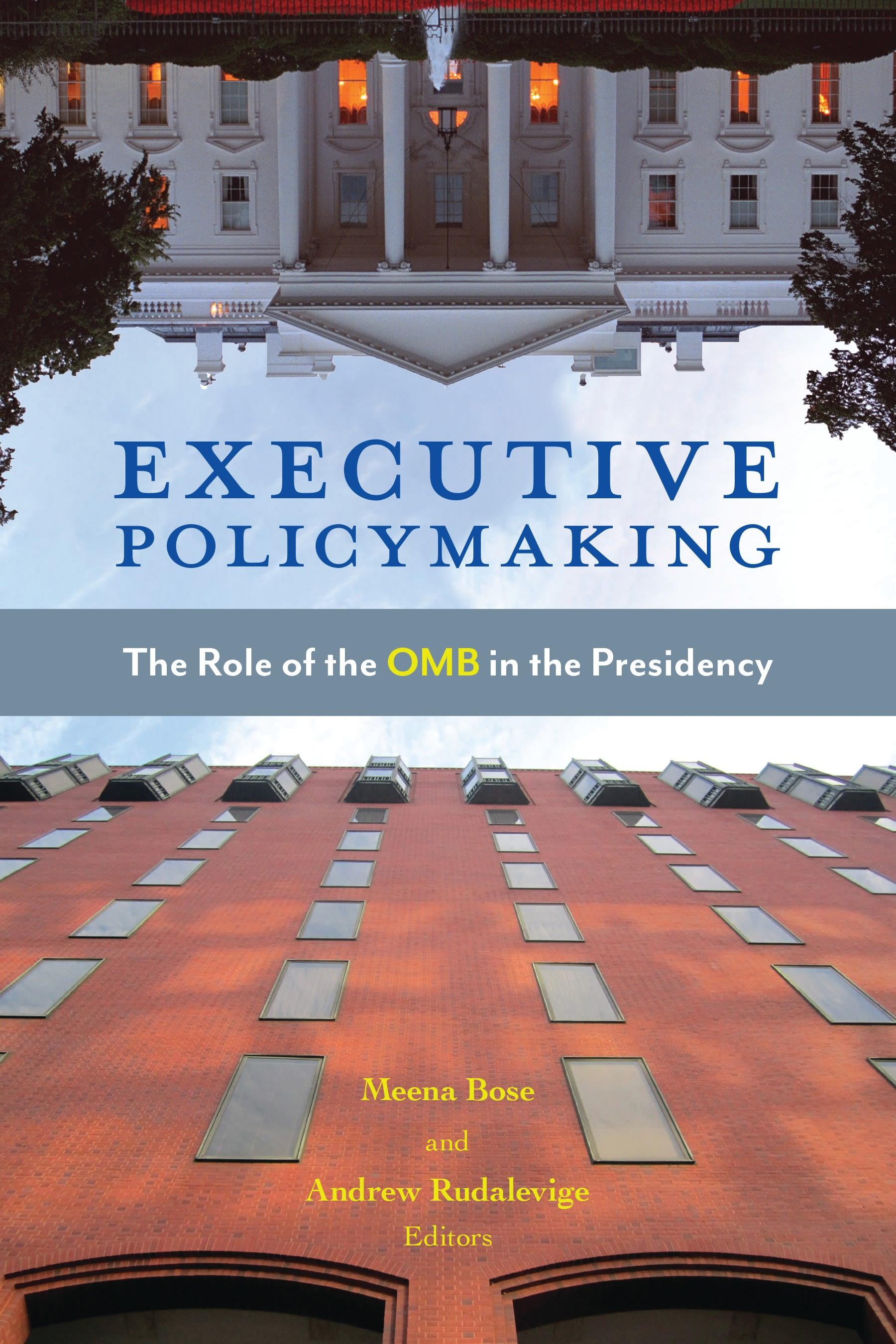
A deep look into the agency that implements the president's marching orders to the rest of the executive branch
The Office of Management and Budget (OMB) is one of the federal government's most important and powerful agencies—but it's also one of the least-known among the general public. This book describes why the office is so important and why both scholars and citizens should know more about what it does.
The predecessor to the modern OMB was founded in 1921, as the Bureau of the Budget within the Treasury Department. President Franklin D. Roosevelt moved it in 1939 into the Executive Office of the President, where it's been ever since. The office received its current name in 1970, during the Nixon administration.
For most people who know about it, the OMB's only apparent job is to supervise preparation of the president's annual budget request to Congress. That job, in itself, gives the office tremendous influence within the executive branch. But OMB has other responsibilities that give it a central role in how the federal government functions on a daily basis. OMB reviews all of the administration's legislative proposals and the president's executive orders. It oversees the development and implementation of nearly all government management initiatives. The office also analyses the costs and benefits of major government regulations, this giving it great sway over government actions that affect nearly every person and business in America.
One question facing voters in the 2020 elections will be how well the executive branch has carried out the president's promises; a major aspect of that question centers around the wider work of the OMB. This book will help members of the public, as well as scholars and other experts, answer that question.
The Office of Management and Budget (OMB) is one of the federal government's most important and powerful agencies—but it's also one of the least-known among the general public. This book describes why the office is so important and why both scholars and citizens should know more about what it does.
The predecessor to the modern OMB was founded in 1921, as the Bureau of the Budget within the Treasury Department. President Franklin D. Roosevelt moved it in 1939 into the Executive Office of the President, where it's been ever since. The office received its current name in 1970, during the Nixon administration.
For most people who know about it, the OMB's only apparent job is to supervise preparation of the president's annual budget request to Congress. That job, in itself, gives the office tremendous influence within the executive branch. But OMB has other responsibilities that give it a central role in how the federal government functions on a daily basis. OMB reviews all of the administration's legislative proposals and the president's executive orders. It oversees the development and implementation of nearly all government management initiatives. The office also analyses the costs and benefits of major government regulations, this giving it great sway over government actions that affect nearly every person and business in America.
One question facing voters in the 2020 elections will be how well the executive branch has carried out the president's promises; a major aspect of that question centers around the wider work of the OMB. This book will help members of the public, as well as scholars and other experts, answer that question.
Strony: 323
Kategoria: Statsvetenskap & Politik
e-ISBN: 9780815737964
Waga przesyłki: 1.2 kg
Wysyłka w ciągu: 1-2 dni
Płać wygodnie kartą, Klarną, Apple Pay lub Google Pay. Nie jesteś zadowolony? Zawsze masz 14-dniową gwarancję zwrotu pieniędzy. Więcej przeczytasz w naszych warunkach. Masz pytania? Napisz do nas na hello@memmo.org.
Memmo ułatwia naukę – gdziekolwiek jesteś na świecie. U nas znajdziesz podręczniki i sprytne narzędzia do nauki w jednym miejscu: streszczenia, quizy, podcasty i fiszki. A do tego Ted, Twój kumpel do nauki, który odpowie na wszystko, co Cię nurtuje. Ponad 50 000 studentów już tu się uczy – stworzone, byś uczył się szybciej i mniej stresował.