
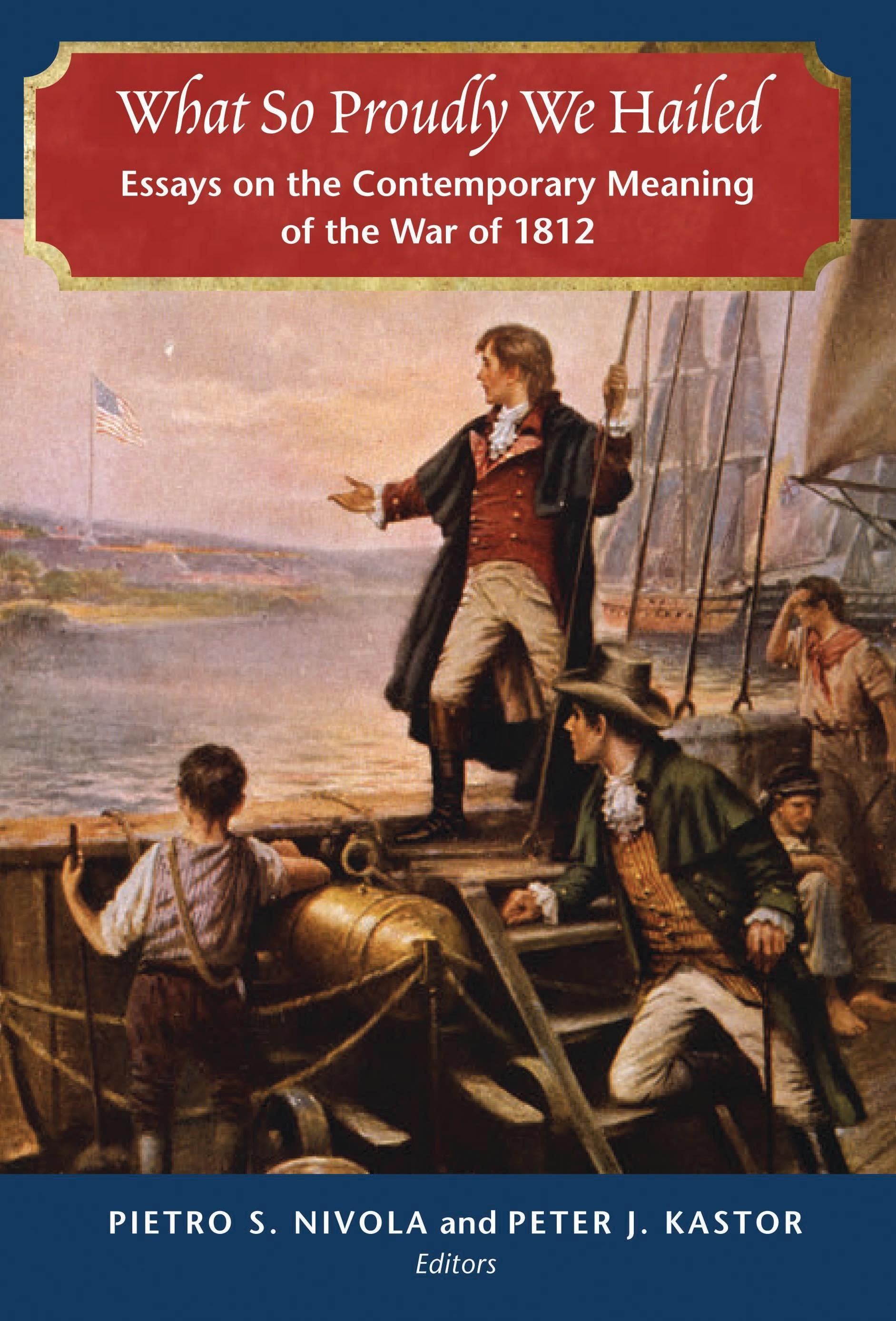
With distrust between the political parties running deep and Congress divided, the government of the United States goes to war. The war is waged without adequately preparing the means to finance it or readying suitable contingency plans to contend with its unanticipated complications. The executive branch suffers from managerial confusion and in-fighting. The military invades a foreign country, expecting to be greeted as liberators, but encounters stiff, unwelcome resistance. The conflict drags on longer than predicted. It ends rather inconclusively-or so it seems in its aftermath.
Sound familiar? This all happened two hundred years ago.
What So Proudly We Hailed looks at the War of 1812 in part through the lens of today's America. On the bicentennial of that formative yet largely forgotten period in U.S. history, this provocative book asks: What did Americans learn-and not learn-from the experience? What instructive parallels and distinctions can be drawn with more recent events? How did it shape the nation?
Exploring issues ranging from party politics to sectional schisms, distant naval battles to the burning of Washington, and citizens' civil liberties to the fate of Native Americans caught in the struggle, these essays speak to the complexity and unpredictability of a war that many assumed would be brief and straightforward. What emerges is a revealing perspective on a problematic ""war of choice""-the nation's first, but one with intriguing implications for others, including at least one in the present century.
Although the War of 1812 may have faded from modern memory, the conflict left important legacies, both in its immediate wake and in later years. In its own time, the war was transformative. To this day, however, some of the fundamental challenges that confronted U.S. policymakers two centuries ago still resonate. How much should a free society regularly invest in national defense? Should the expense be defrayed throu
Sound familiar? This all happened two hundred years ago.
What So Proudly We Hailed looks at the War of 1812 in part through the lens of today's America. On the bicentennial of that formative yet largely forgotten period in U.S. history, this provocative book asks: What did Americans learn-and not learn-from the experience? What instructive parallels and distinctions can be drawn with more recent events? How did it shape the nation?
Exploring issues ranging from party politics to sectional schisms, distant naval battles to the burning of Washington, and citizens' civil liberties to the fate of Native Americans caught in the struggle, these essays speak to the complexity and unpredictability of a war that many assumed would be brief and straightforward. What emerges is a revealing perspective on a problematic ""war of choice""-the nation's first, but one with intriguing implications for others, including at least one in the present century.
Although the War of 1812 may have faded from modern memory, the conflict left important legacies, both in its immediate wake and in later years. In its own time, the war was transformative. To this day, however, some of the fundamental challenges that confronted U.S. policymakers two centuries ago still resonate. How much should a free society regularly invest in national defense? Should the expense be defrayed throu
Płać wygodnie kartą, Klarną, Apple Pay lub Google Pay. Nie jesteś zadowolony? Zawsze masz 14-dniową gwarancję zwrotu pieniędzy. Więcej przeczytasz w naszych warunkach. Masz pytania? Napisz do nas na hello@memmo.org.
Memmo ułatwia naukę – gdziekolwiek jesteś na świecie. U nas znajdziesz podręczniki i sprytne narzędzia do nauki w jednym miejscu: streszczenia, quizy, podcasty i fiszki. A do tego Ted, Twój kumpel do nauki, który odpowie na wszystko, co Cię nurtuje. Ponad 50 000 studentów już tu się uczy – stworzone, byś uczył się szybciej i mniej stresował.