
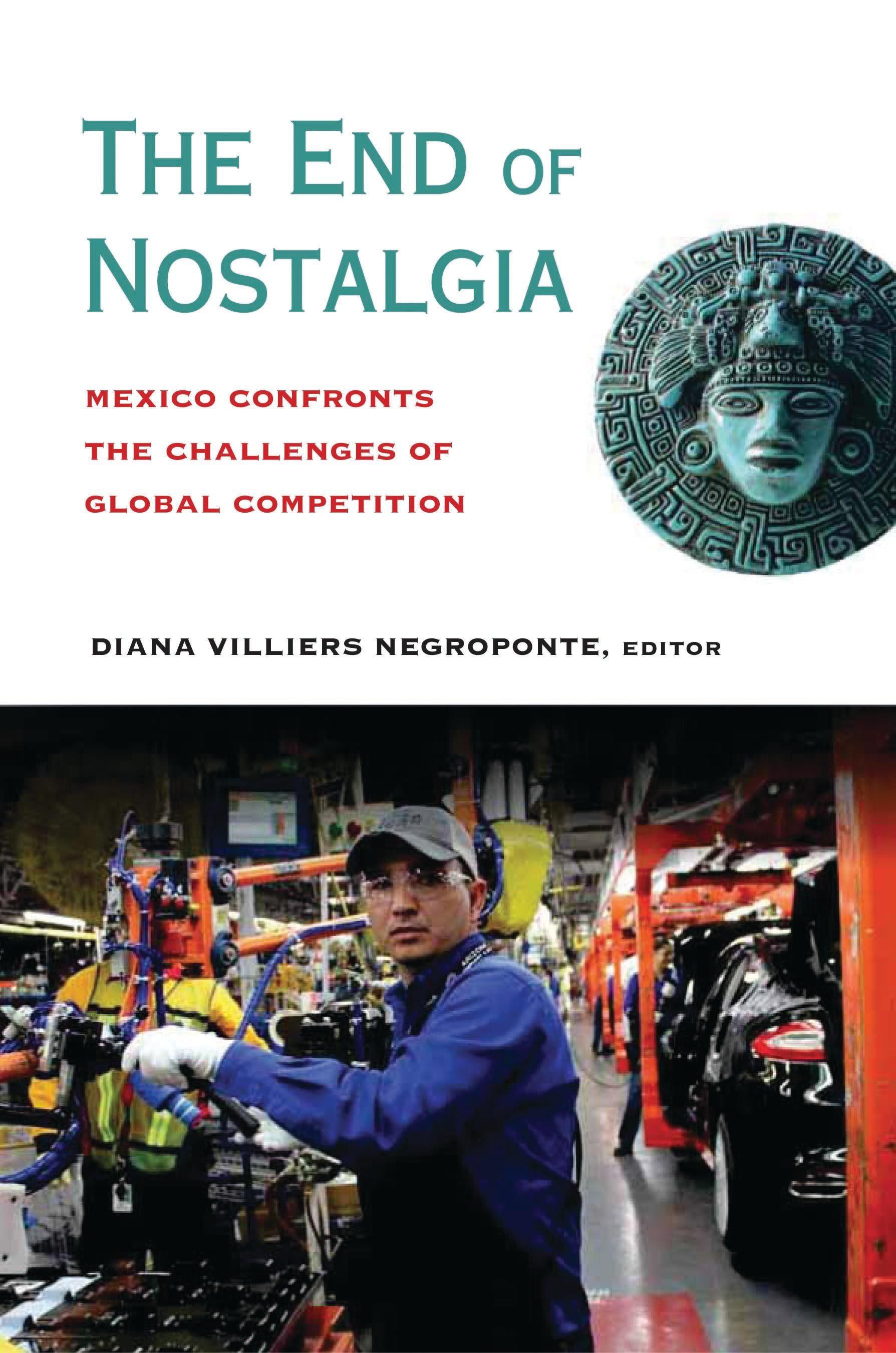
Today's Mexico is strongly determined to become a full player in the globalizing international economy. It has increased its manufacturing output in areas such as automobiles and electronics, and both corporate and government sectors would like to take greater strides toward being a full global player. But do the underlying institutional and cultural elements exist to support such an economic effort?
In The End of Nostalgia, editor Diana Villiers Negroponte and colleagues from both sides of the Rio Grande examine the path that Mexico will likely take in the near future. It remains a land in transition, from a one-party political system steeped in a colonial Spanish past toward a modern liberal democracy with open markets. What steps are necessary for this proud nation to continue its momentum toward effective participation in a highly competitive world?
Contributors:
Armando Chacón is the research director at the Mexican Institute for Competitiveness.
Arturo Franco has worked with Cementos de Mexico (CEMEX) and the World Bank. He was a Global Leadership fellow at the World Economic Forum on Latin America, 200811.
Eduardo Guerrero is a partner at Lantía Consultores in Mexico City, where he works on security assessment. He joined the Secretaría de Gobernación in December 2012.
Andrés Rozental holds the permanent rank of Eminent Ambassador of Mexico. He is president of Rozental & Asociados and is a nonresident senior fellow at the Brookings Institution.
Christopher Wilson is an associate at the Mexico Institute of the Woodrow Wilson International Center for Scholars.
Duncan Wood is a member of the Mexican National Research System and editorial adviser to Reforma newspaper. Since January 2013, he has been the director of the Mexico Institute at the Woodrow Wilson International Center for Scholars.
In The End of Nostalgia, editor Diana Villiers Negroponte and colleagues from both sides of the Rio Grande examine the path that Mexico will likely take in the near future. It remains a land in transition, from a one-party political system steeped in a colonial Spanish past toward a modern liberal democracy with open markets. What steps are necessary for this proud nation to continue its momentum toward effective participation in a highly competitive world?
Contributors:
Armando Chacón is the research director at the Mexican Institute for Competitiveness.
Arturo Franco has worked with Cementos de Mexico (CEMEX) and the World Bank. He was a Global Leadership fellow at the World Economic Forum on Latin America, 200811.
Eduardo Guerrero is a partner at Lantía Consultores in Mexico City, where he works on security assessment. He joined the Secretaría de Gobernación in December 2012.
Andrés Rozental holds the permanent rank of Eminent Ambassador of Mexico. He is president of Rozental & Asociados and is a nonresident senior fellow at the Brookings Institution.
Christopher Wilson is an associate at the Mexico Institute of the Woodrow Wilson International Center for Scholars.
Duncan Wood is a member of the Mexican National Research System and editorial adviser to Reforma newspaper. Since January 2013, he has been the director of the Mexico Institute at the Woodrow Wilson International Center for Scholars.
Strony: 208
Kategoria: Statsvetenskap & Politik
e-ISBN: 9780815722557
Waga przesyłki: 1.2 kg
Wysyłka w ciągu: 1-2 dni
Płać wygodnie kartą, Klarną, Apple Pay lub Google Pay. Nie jesteś zadowolony? Zawsze masz 14-dniową gwarancję zwrotu pieniędzy. Więcej przeczytasz w naszych warunkach. Masz pytania? Napisz do nas na hello@memmo.org.
Memmo ułatwia naukę – gdziekolwiek jesteś na świecie. U nas znajdziesz podręczniki i sprytne narzędzia do nauki w jednym miejscu: streszczenia, quizy, podcasty i fiszki. A do tego Ted, Twój kumpel do nauki, który odpowie na wszystko, co Cię nurtuje. Ponad 50 000 studentów już tu się uczy – stworzone, byś uczył się szybciej i mniej stresował.