
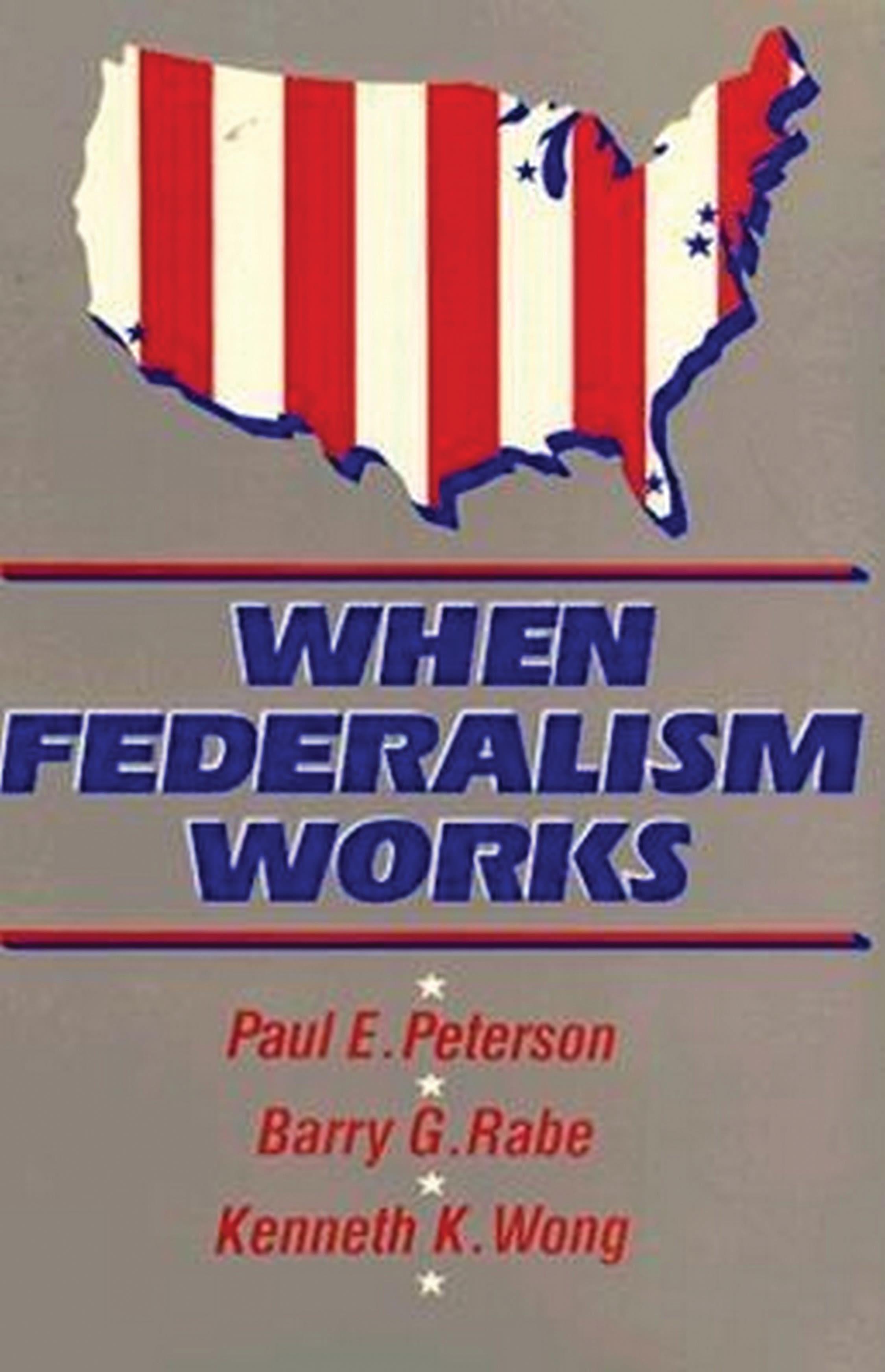
Twenty years ago cooperative federalism, in the form of federal grant-in-aid programs administered by state and local governments, was applauded almost without reservation as the best means of helping the handicapped, the educationally disadvantaged, the poor, and other groups with special needs. More recently these same programs have been criticized for excessive regulations and red tape, bureaucratic ineptitude, and high cost. The criticisms have been used to justify efforts to curb federal domestic spending and terminate many grants-in-aid.
In When Federalism Works, Paul E. Peterson, Barry G. Rabe, and Kenneth K. Wong examine the new conventional wisdom about federal grants. Through documentary research and hundreds of interviews with local, state, and federal administrators and elected officials, they consider the implementation and operation of federal programs for education, health care, and housing in four urban areas to learn which programs worked, when, and why. Why did rent subsidy programs encounter seemingly endless difficulties, while special education was a notable success? Why did compensatory education fare better in Milwaukee than in Baltimore? Among the factors the authors find significant are the extent to which a program is directed toward groups in need, the political and economic circumstances of the area in which it is implemented, and the degree of professionalism among those who administer it at all levels of government.
When Federalism Works provides a solid introduction to the most important grant-in-aid programs of the past twenty years and a thoughtful assessment of where they might be going.
In When Federalism Works, Paul E. Peterson, Barry G. Rabe, and Kenneth K. Wong examine the new conventional wisdom about federal grants. Through documentary research and hundreds of interviews with local, state, and federal administrators and elected officials, they consider the implementation and operation of federal programs for education, health care, and housing in four urban areas to learn which programs worked, when, and why. Why did rent subsidy programs encounter seemingly endless difficulties, while special education was a notable success? Why did compensatory education fare better in Milwaukee than in Baltimore? Among the factors the authors find significant are the extent to which a program is directed toward groups in need, the political and economic circumstances of the area in which it is implemented, and the degree of professionalism among those who administer it at all levels of government.
When Federalism Works provides a solid introduction to the most important grant-in-aid programs of the past twenty years and a thoughtful assessment of where they might be going.
Strony: 245
Kategoria: Statsvetenskap & Politik
e-ISBN: 9780815720492
Waga przesyłki: 1.2 kg
Wysyłka w ciągu: 1-2 dni
Płać wygodnie kartą, Klarną, Apple Pay lub Google Pay. Nie jesteś zadowolony? Zawsze masz 14-dniową gwarancję zwrotu pieniędzy. Więcej przeczytasz w naszych warunkach. Masz pytania? Napisz do nas na hello@memmo.org.
Memmo ułatwia naukę – gdziekolwiek jesteś na świecie. U nas znajdziesz podręczniki i sprytne narzędzia do nauki w jednym miejscu: streszczenia, quizy, podcasty i fiszki. A do tego Ted, Twój kumpel do nauki, który odpowie na wszystko, co Cię nurtuje. Ponad 50 000 studentów już tu się uczy – stworzone, byś uczył się szybciej i mniej stresował.