
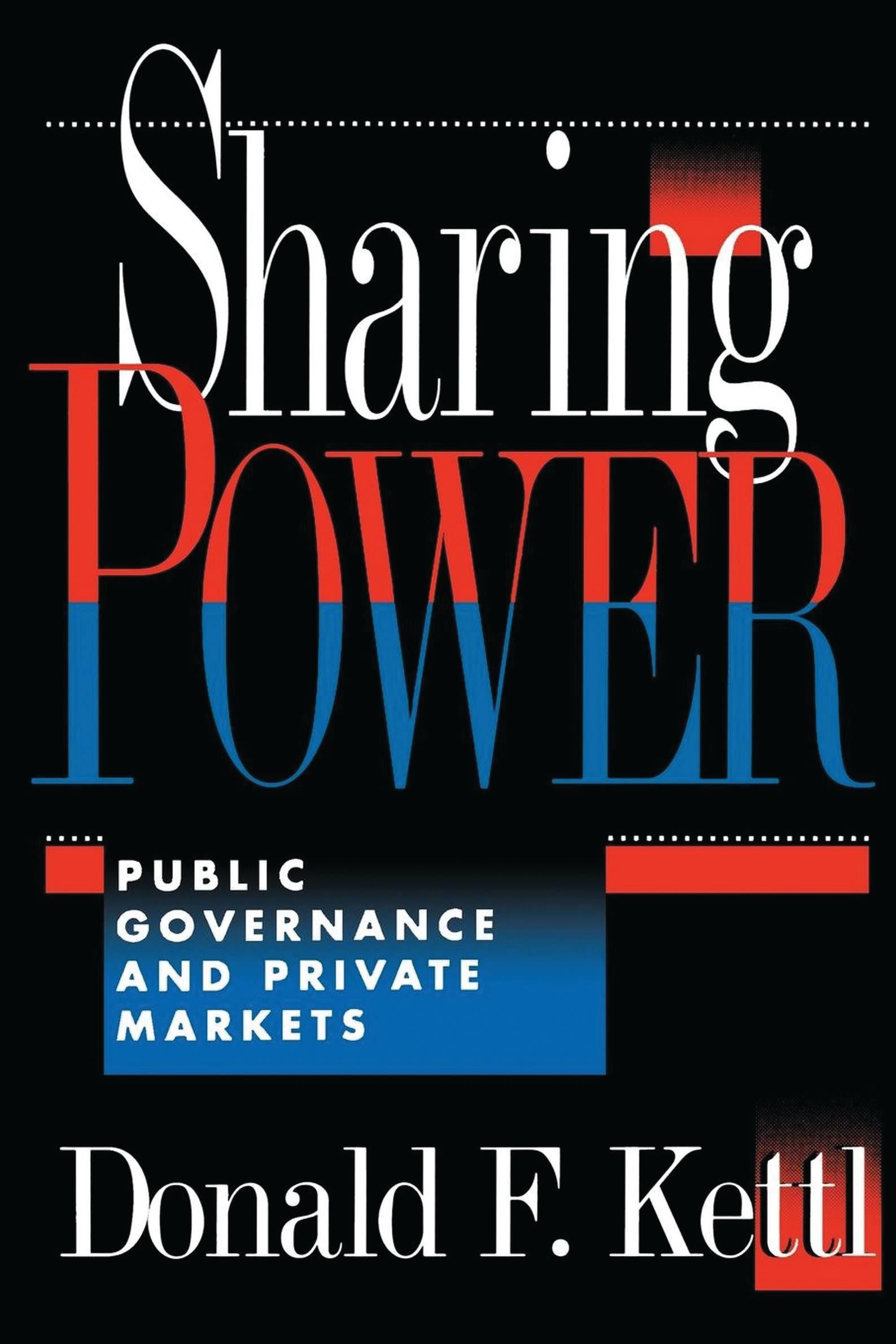
In the flush of enthusiasm to make government work better, reformers from both left and right have urged government to turn as many functions as possible over to the private sector and to allow market competition instill efficiency and choice. In fact, government has been doing just this for years: every major policy initiative launched since World War II has been managed by public-private partnerships. Yet such privatization has not solved government's problems. While there have been some positive results, thee has been far less success than advocates of market competition have promised.
In a searching examination of why the ""competition prescription"" has not worked well, Donald F. Kettl finds that government has largely been a poor judge of private markets. Because government rarely operates in truly competitive markets contracting out has not so much solved the problems of inefficiency, but has aggravated them. Government has often not proved to be an intelligent consumer of the goods and services it has purchased. Kettl provides specific recommendations as to how government can become a ""smart buyer,"" knowing what it wants and judging better what it has bought.
Through detailed case studies, Kettl shows that as market imperfections increase, so do problems in governance and management. He examines the A-76 program for buying goods and services, the FTS-2000 telecommunications system, the Superfund program, the Department of Energy's production of nuclear weapons, and contracting out by state and local governments. He argues that government must be more aggressive in managing contracts if it is to build successful partnerships with outside contractors.
Kettl maintains that the answer is not more government, but a smarter one, which requires strong political leadership to refocus the bureaucracy's mission and to change the bureaucratic culture.
In a searching examination of why the ""competition prescription"" has not worked well, Donald F. Kettl finds that government has largely been a poor judge of private markets. Because government rarely operates in truly competitive markets contracting out has not so much solved the problems of inefficiency, but has aggravated them. Government has often not proved to be an intelligent consumer of the goods and services it has purchased. Kettl provides specific recommendations as to how government can become a ""smart buyer,"" knowing what it wants and judging better what it has bought.
Through detailed case studies, Kettl shows that as market imperfections increase, so do problems in governance and management. He examines the A-76 program for buying goods and services, the FTS-2000 telecommunications system, the Superfund program, the Department of Energy's production of nuclear weapons, and contracting out by state and local governments. He argues that government must be more aggressive in managing contracts if it is to build successful partnerships with outside contractors.
Kettl maintains that the answer is not more government, but a smarter one, which requires strong political leadership to refocus the bureaucracy's mission and to change the bureaucratic culture.
Strony: 234
Kategoria: Statsvetenskap & Politik
e-ISBN: 9780815720065
Waga przesyłki: 1.2 kg
Wysyłka w ciągu: 1-2 dni
Płać wygodnie kartą, Klarną, Apple Pay lub Google Pay. Nie jesteś zadowolony? Zawsze masz 14-dniową gwarancję zwrotu pieniędzy. Więcej przeczytasz w naszych warunkach. Masz pytania? Napisz do nas na hello@memmo.org.
Memmo ułatwia naukę – gdziekolwiek jesteś na świecie. U nas znajdziesz podręczniki i sprytne narzędzia do nauki w jednym miejscu: streszczenia, quizy, podcasty i fiszki. A do tego Ted, Twój kumpel do nauki, który odpowie na wszystko, co Cię nurtuje. Ponad 50 000 studentów już tu się uczy – stworzone, byś uczył się szybciej i mniej stresował.