
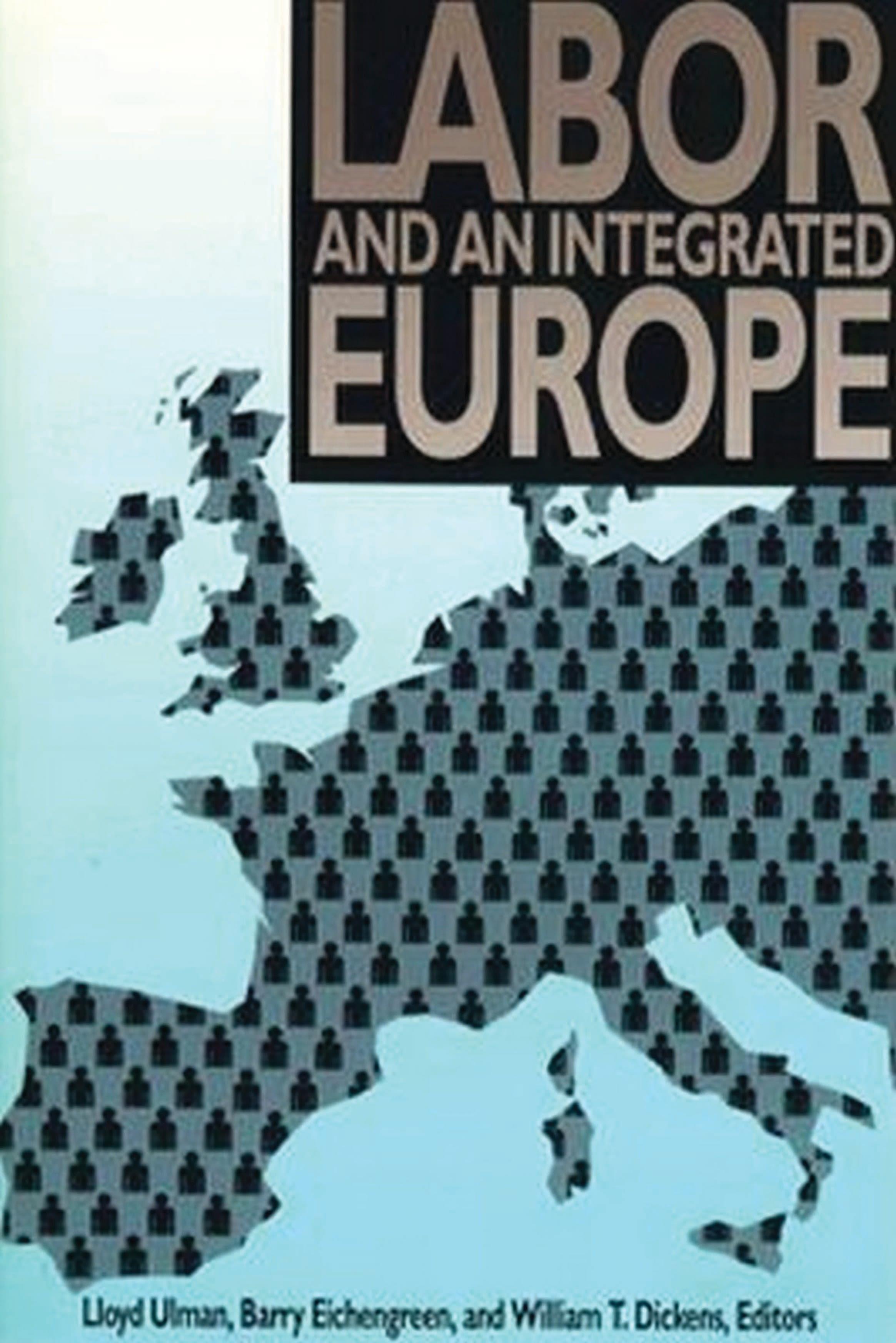
As the European Community moves toward full integration of its members' economies, one of the most far-reaching changes will be in the European labor market. Nontariff barriers to trade between the member countries will be removed, and workers will become free to seek employment anywhere in the Community. As these changes take place, individual markets stand to lose their national identities while workers and employers face profound challenges.
In this book, a group of leading labor economists and social scientists address an array of concerns about economic integration and provide insight into labor's likely response. They identify the challenges of the Single Market Program and explore the implications of western European integration for European industrial relations, European labor mobility, and economies and labor markets in the rest of the world.
The contributors assess the impact of economic unification on European trade unions, wage-bargaining, work rules, training programs, and benefits. They draw on U.S. experiences in the centralization and more recent decentralization of the work force, consider the German system of industrial relations as a model for power sharing between workers and managers, and explore current efforts of labor market restructuring and privatization in central and eastern Europe. They address such questions as: Will pension and health insurance arrangements constrain worker mobility? Will cross-country wage differences within the EC narrow? And will exchange rates and monetary unification exacerbate unemployment problems? They also examine the impact of unification on immigration policy, capital markets, and trade.
Labor and an Integrated Europe provides a much needed background for developing a coherent plan that deals with these crucial labor issues.
In this book, a group of leading labor economists and social scientists address an array of concerns about economic integration and provide insight into labor's likely response. They identify the challenges of the Single Market Program and explore the implications of western European integration for European industrial relations, European labor mobility, and economies and labor markets in the rest of the world.
The contributors assess the impact of economic unification on European trade unions, wage-bargaining, work rules, training programs, and benefits. They draw on U.S. experiences in the centralization and more recent decentralization of the work force, consider the German system of industrial relations as a model for power sharing between workers and managers, and explore current efforts of labor market restructuring and privatization in central and eastern Europe. They address such questions as: Will pension and health insurance arrangements constrain worker mobility? Will cross-country wage differences within the EC narrow? And will exchange rates and monetary unification exacerbate unemployment problems? They also examine the impact of unification on immigration policy, capital markets, and trade.
Labor and an Integrated Europe provides a much needed background for developing a coherent plan that deals with these crucial labor issues.
Strony: 295
Kategoria: Ekonomi & Utveckling
e-ISBN: 9780815716839
Waga przesyłki: 1.2 kg
Wysyłka w ciągu: 1-2 dni
Płać wygodnie kartą, Klarną, Apple Pay lub Google Pay. Nie jesteś zadowolony? Zawsze masz 14-dniową gwarancję zwrotu pieniędzy. Więcej przeczytasz w naszych warunkach. Masz pytania? Napisz do nas na hello@memmo.org.
Memmo ułatwia naukę – gdziekolwiek jesteś na świecie. U nas znajdziesz podręczniki i sprytne narzędzia do nauki w jednym miejscu: streszczenia, quizy, podcasty i fiszki. A do tego Ted, Twój kumpel do nauki, który odpowie na wszystko, co Cię nurtuje. Ponad 50 000 studentów już tu się uczy – stworzone, byś uczył się szybciej i mniej stresował.