
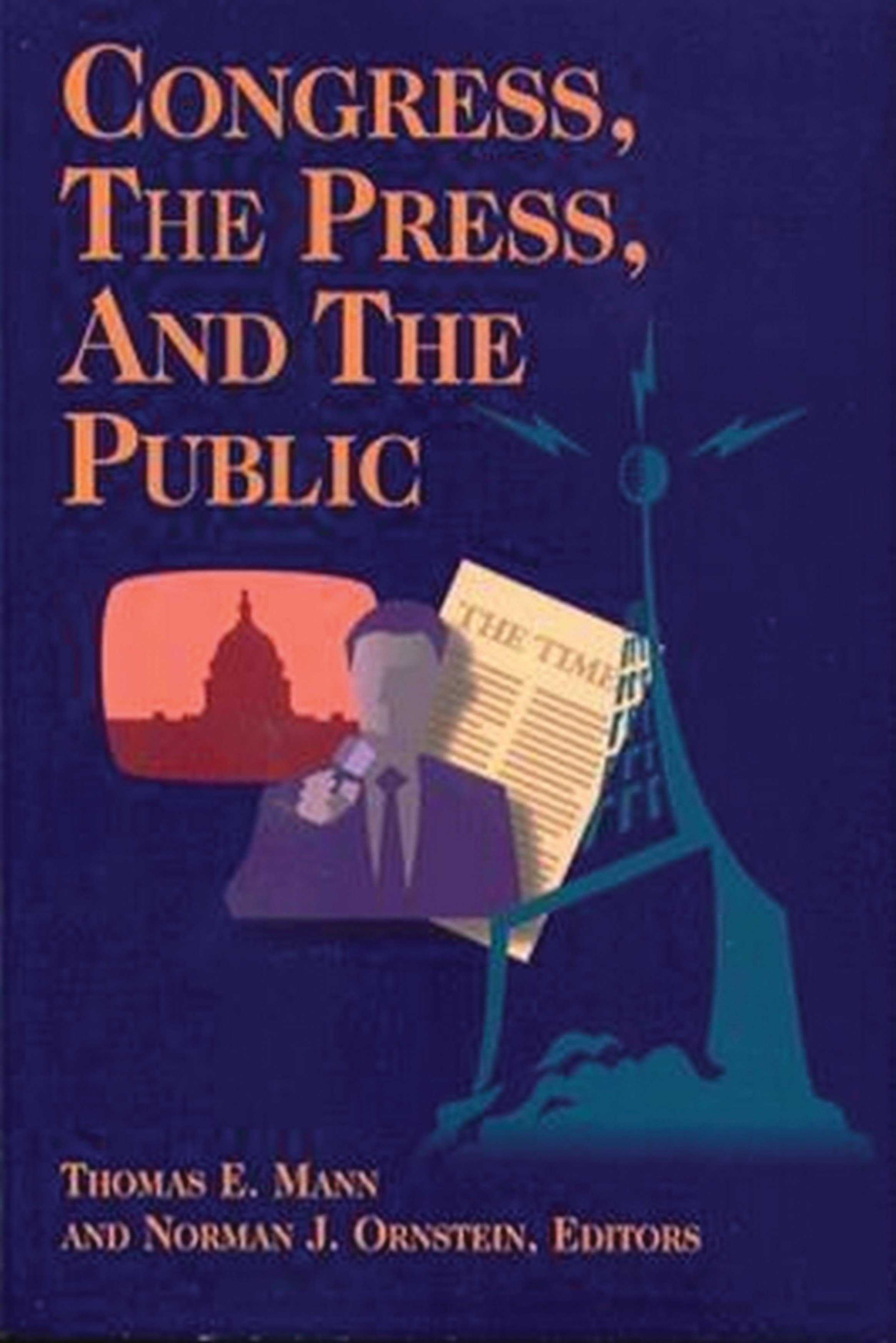
In recent years Congress has been in a state of siege. The healthy skepticism that had long characterized public attitudes toward Congress degenerated into corrosive cynicism. The reservoir of support among political elites appears to have collapsed as well. Part of the explanation for this growing public hostility lies in objective conditions: stagnant wages, huge budget deficits, sustained divided government, scandals and deadlock on Capitol Hill. But another important factor may be how Congress is presented to and interpreted for the broader public.
This book explores the connections between Congress, the press, and the public. Public opinion scholars analyze historical data to discern trends in and sources of public hostility toward Congress. Media specialists examine patterns of congressional coverage in national print and television news and attitudes toward Congress among producers, editors, and reporters. And students of Congress explore the tools and techniques leaders and rank-and-file members use in presenting themselves and their institution to the public. The book concludes by assessing the role the media plays in presenting Congress to the public and what the media and Congress might do to improve public understanding.
The contributors are Herb Asher and Michael Barr, Ohio State University; Karlyn Bowman and Kimberly Coursen, the American Enterprise Institute; Ronald D. Elving, Congressional Quarterly; Stephen Hess, Brookings; Karl Kurtz, National Conference of State Legislatures; Everett Carll Ladd, The Roper Center; Robert Lichter, Center for Media and Public Policy; and Mark J. Rozell, Mary Washington College.
This book is the third in a series by the Renewing Congress Project, a joint effort of the American Enterprise Institute and the Brookings Institution. The previous volumes are Renewing Congress: A First Report and Renewing Congress: A Second Report.
This book explores the connections between Congress, the press, and the public. Public opinion scholars analyze historical data to discern trends in and sources of public hostility toward Congress. Media specialists examine patterns of congressional coverage in national print and television news and attitudes toward Congress among producers, editors, and reporters. And students of Congress explore the tools and techniques leaders and rank-and-file members use in presenting themselves and their institution to the public. The book concludes by assessing the role the media plays in presenting Congress to the public and what the media and Congress might do to improve public understanding.
The contributors are Herb Asher and Michael Barr, Ohio State University; Karlyn Bowman and Kimberly Coursen, the American Enterprise Institute; Ronald D. Elving, Congressional Quarterly; Stephen Hess, Brookings; Karl Kurtz, National Conference of State Legislatures; Everett Carll Ladd, The Roper Center; Robert Lichter, Center for Media and Public Policy; and Mark J. Rozell, Mary Washington College.
This book is the third in a series by the Renewing Congress Project, a joint effort of the American Enterprise Institute and the Brookings Institution. The previous volumes are Renewing Congress: A First Report and Renewing Congress: A Second Report.
Strony: 220
Kategoria: Statsvetenskap & Politik
e-ISBN: 9780815708049
Waga przesyłki: 1.2 kg
Wysyłka w ciągu: 1-2 dni
Płać wygodnie kartą, Klarną, Apple Pay lub Google Pay. Nie jesteś zadowolony? Zawsze masz 14-dniową gwarancję zwrotu pieniędzy. Więcej przeczytasz w naszych warunkach. Masz pytania? Napisz do nas na hello@memmo.org.
Memmo ułatwia naukę – gdziekolwiek jesteś na świecie. U nas znajdziesz podręczniki i sprytne narzędzia do nauki w jednym miejscu: streszczenia, quizy, podcasty i fiszki. A do tego Ted, Twój kumpel do nauki, który odpowie na wszystko, co Cię nurtuje. Ponad 50 000 studentów już tu się uczy – stworzone, byś uczył się szybciej i mniej stresował.