
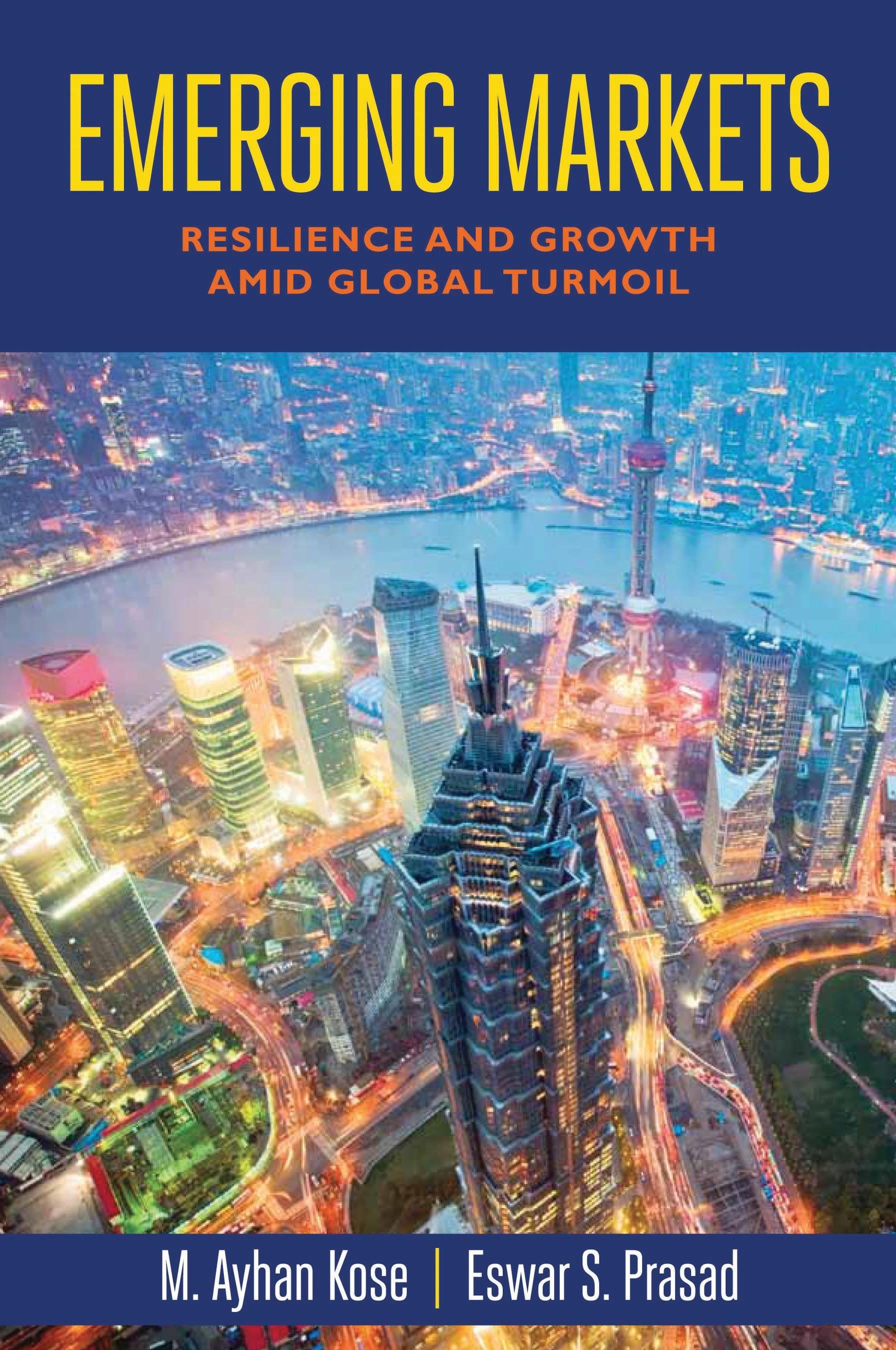
Emerging market economies (EMEs) have become the darlings of international investors and the focus of enormous attention in academic, media, and policy circles. M. Ayhan Kose and Eswar Prasad present the definitive account of the evolution of EMEs and use the lens of the global financial crisis to evaluate their strengths and weaknesses.
Led by a set of large and dynamic countriesincluding Brazil, China, India, and RussiaEMEs have become a dominant presence in the world economy. They now account for a substantial share of world output and have been a major driver of global growth during the past decade. They are significant players in international trade and financial flows and are beginning to exert rising clout in global policy debates. However, the financial crisis of 200709 and the worldwide recession that followed cast a pall over the notion that EMEs had become self-reliant and ""decoupled"" from demand conditions in and financial flows from advanced countries.
Kose and Prasad, prominent experts on emerging market economies and globalization, draw on their extensive research to assess the resilience of EMEs in the face of the global financial crisis. Their analysis shows that EMEs, as a group, weathered the crisis much better than the advanced countries, and most of these economies have bounced back rapidly from the global recession. The authors track down the reasons for this resilience and explain why some countries in this group have done better than others. Based on this analysis, they draw lessons for the durability and sustainability of these economies' long-term growth. This book is important reading for anyone trying to anticipate the future growth of emerging markets or contemplating business opportunities in these economies.
Led by a set of large and dynamic countriesincluding Brazil, China, India, and RussiaEMEs have become a dominant presence in the world economy. They now account for a substantial share of world output and have been a major driver of global growth during the past decade. They are significant players in international trade and financial flows and are beginning to exert rising clout in global policy debates. However, the financial crisis of 200709 and the worldwide recession that followed cast a pall over the notion that EMEs had become self-reliant and ""decoupled"" from demand conditions in and financial flows from advanced countries.
Kose and Prasad, prominent experts on emerging market economies and globalization, draw on their extensive research to assess the resilience of EMEs in the face of the global financial crisis. Their analysis shows that EMEs, as a group, weathered the crisis much better than the advanced countries, and most of these economies have bounced back rapidly from the global recession. The authors track down the reasons for this resilience and explain why some countries in this group have done better than others. Based on this analysis, they draw lessons for the durability and sustainability of these economies' long-term growth. This book is important reading for anyone trying to anticipate the future growth of emerging markets or contemplating business opportunities in these economies.
Płać wygodnie kartą, Klarną, Apple Pay lub Google Pay. Nie jesteś zadowolony? Zawsze masz 14-dniową gwarancję zwrotu pieniędzy. Więcej przeczytasz w naszych warunkach. Masz pytania? Napisz do nas na hello@memmo.org.
Memmo ułatwia naukę – gdziekolwiek jesteś na świecie. U nas znajdziesz podręczniki i sprytne narzędzia do nauki w jednym miejscu: streszczenia, quizy, podcasty i fiszki. A do tego Ted, Twój kumpel do nauki, który odpowie na wszystko, co Cię nurtuje. Ponad 50 000 studentów już tu się uczy – stworzone, byś uczył się szybciej i mniej stresował.