
2012 American Bar Association Gavel Award Honorable Mention for Books
2012 Scribes Book Silver Medal Award presented by the American Society of Legal Writers
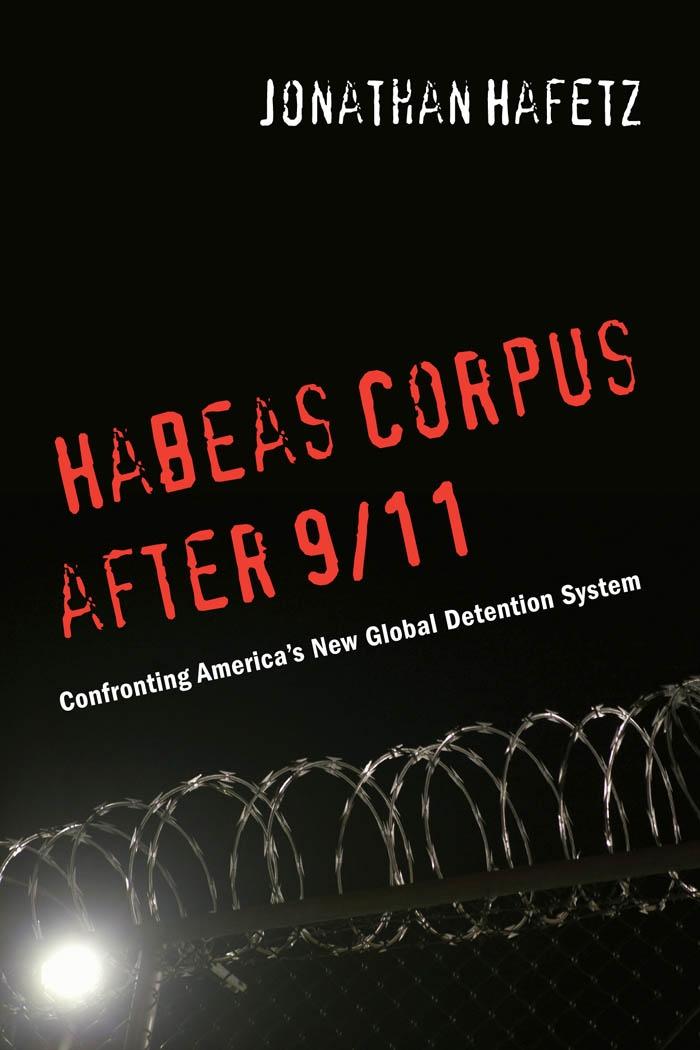
The U.S. detention center at Guantánamo Bay has long been synonymous with torture, secrecy, and the abuse of executive power. It has come to epitomize lawlessness and has sparked protracted legal battles and political debate. For too long, however, Guantánamo has been viewed in isolation and has overshadowed a larger, interconnected global detention system that includes other military prisons such as Bagram Air Base in Afghanistan, secret CIA jails, and the transfer of prisoners to other countries for torture. Guantánamo is simply—and alarmingly—the most visible example of a much larger prison system designed to operate outside the law.
Habeas Corpus after 9/11 examines the rise of the U.S.-run global detention system that emerged after 9/11 and the efforts to challenge it through habeas corpus (a petition to appear in court to claim unlawful imprisonment). Habeas expert and litigator Jonathan Hafetz gives us an insider’s view of the detention of “enemy combatants” and an accessible explanation of the complex forces that keep these systems running.
In the age of terrorism, some argue that habeas corpus is impractical and unwise. Hafetz advocates that it remains the single most important check against arbitrary and unlawful detention, torture, and the abuse of executive power.
Płać wygodnie kartą, Klarną, Apple Pay lub Google Pay. Nie jesteś zadowolony? Zawsze masz 14-dniową gwarancję zwrotu pieniędzy. Więcej przeczytasz w naszych warunkach. Masz pytania? Napisz do nas na hello@memmo.org.
Memmo ułatwia naukę – gdziekolwiek jesteś na świecie. U nas znajdziesz podręczniki i sprytne narzędzia do nauki w jednym miejscu: streszczenia, quizy, podcasty i fiszki. A do tego Ted, Twój kumpel do nauki, który odpowie na wszystko, co Cię nurtuje. Ponad 50 000 studentów już tu się uczy – stworzone, byś uczył się szybciej i mniej stresował.