
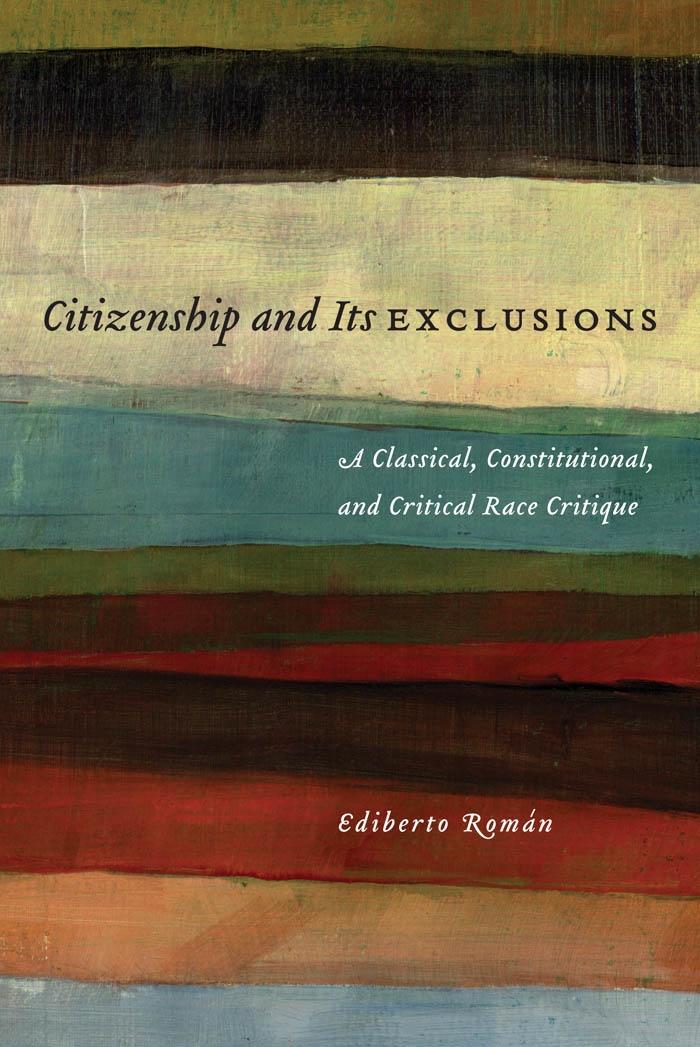
Citizenship is generally viewed as the most desired legal status an individual can attain, invoking the belief that citizens hold full inclusion in a society, and can exercise and be protected by the Constitution. Yet this membership has historically been exclusive and illusive for many, and in Citizenship and Its Exclusions, Ediberto Román offers a sweeping, interdisciplinary analysis of citizenship’s contradictions.
Román offers an exploration of citizenship that spans from antiquity to the present, and crosses disciplines from history to political philosophy to law, including constitutional and critical race theories. Beginning with Greek and Roman writings on citizenship, he moves on to late-medieval and Renaissance Europe, then early Modern Western law, and culminates his analysis with an explanation of how past precedents have influenced U.S. law and policy regulating the citizenship status of indigenous and territorial island people, as well as how different levels of membership have created a de facto subordinate citizenship status for many members of American society, often lumped together as the “underclass.”
Płać wygodnie kartą, Klarną, Apple Pay lub Google Pay. Nie jesteś zadowolony? Zawsze masz 14-dniową gwarancję zwrotu pieniędzy. Więcej przeczytasz w naszych warunkach. Masz pytania? Napisz do nas na hello@memmo.org.
Memmo ułatwia naukę – gdziekolwiek jesteś na świecie. U nas znajdziesz podręczniki i sprytne narzędzia do nauki w jednym miejscu: streszczenia, quizy, podcasty i fiszki. A do tego Ted, Twój kumpel do nauki, który odpowie na wszystko, co Cię nurtuje. Ponad 50 000 studentów już tu się uczy – stworzone, byś uczył się szybciej i mniej stresował.