
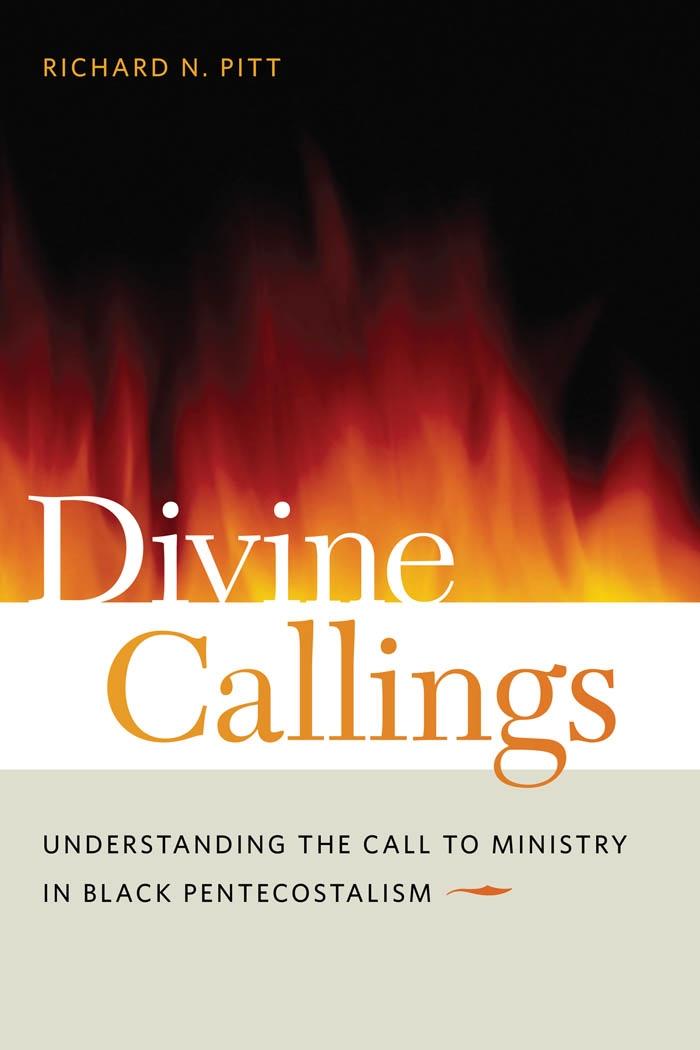
One of the unique aspects of the religious profession is the high percentage of those who claim to be “called by God” to do their work. This call is particularly important within African American Christian traditions. Divine Callings offers a rare sociological examination of this markedly understudied phenomenon within black ministry.
Richard N. Pitt draws on over 100 in-depth interviews with Black Pentecostal ministers in the Church of God in Christ—both those ordained and licensed and those aspiring—to examine how these men and women experience and pursue “the call.” Viewing divine calling as much as a social process as it is a spiritual one, Pitt delves into the personal stories of these individuals to explore their work as active agents in the process of fulfilling their calling.
In some cases, those called cannot find pastoral work due to gender discrimination, lack of clergy positions, and educational deficiencies. Pitt looks specifically at how those who have not obtained clergy positions understand their call, exploring the influences of psychological experience, the congregational acceptance of their call, and their response to the training process. He emphasizes how those called reconceptualize clericalism in terms of who can be called, how that call has to be certified, and what those called are meant to do, offering insight into how social actors adjust to structural constraints.
Płać wygodnie kartą, Klarną, Apple Pay lub Google Pay. Nie jesteś zadowolony? Zawsze masz 14-dniową gwarancję zwrotu pieniędzy. Więcej przeczytasz w naszych warunkach. Masz pytania? Napisz do nas na hello@memmo.org.
Memmo ułatwia naukę – gdziekolwiek jesteś na świecie. U nas znajdziesz podręczniki i sprytne narzędzia do nauki w jednym miejscu: streszczenia, quizy, podcasty i fiszki. A do tego Ted, Twój kumpel do nauki, który odpowie na wszystko, co Cię nurtuje. Ponad 50 000 studentów już tu się uczy – stworzone, byś uczył się szybciej i mniej stresował.