
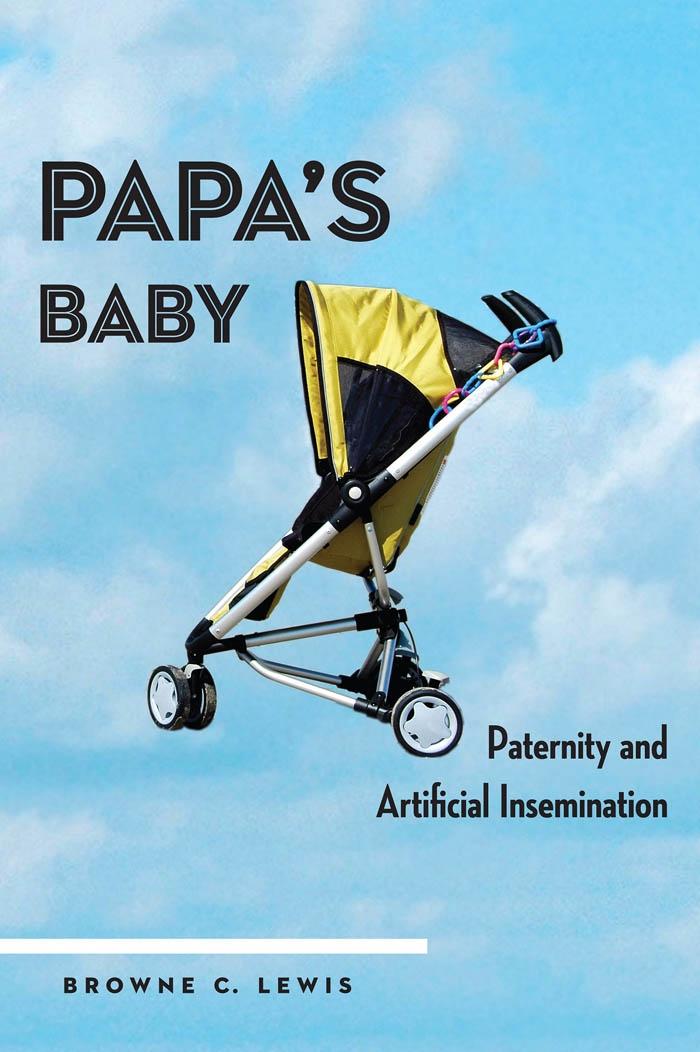
When a child is conceived from sexual intercourse between a married, heterosexual couple, the child has a legal father and mother. Whatever may happen thereafter, the child’s parents are legally bound to provide for their child, and if they don’t, they’re held accountable by law. But what about children created by artificial insemination? When it comes to paternity, the law is full of gray areas, resulting in many cases where children have no legal fathers.
In Papa’s Baby, Browne C. Lewis argues that the courts should take steps to insure that all children have at least two legal parents. Additionally, state legislatures should recognize that more than one class of fathers may exist and allocate paternal responsibility based, again, upon the best interest of the child. Lewis supplements her argument with concrete methods for dealing with different types of cases, including anonymous and non-anonymous sperm donors, married and unmarried women, and lesbian couples. In so doing, she first establishes different types of paternity, and then draws on these to create an expanded definition of paternity.
Płać wygodnie kartą, Klarną, Apple Pay lub Google Pay. Nie jesteś zadowolony? Zawsze masz 14-dniową gwarancję zwrotu pieniędzy. Więcej przeczytasz w naszych warunkach. Masz pytania? Napisz do nas na hello@memmo.org.
Memmo ułatwia naukę – gdziekolwiek jesteś na świecie. U nas znajdziesz podręczniki i sprytne narzędzia do nauki w jednym miejscu: streszczenia, quizy, podcasty i fiszki. A do tego Ted, Twój kumpel do nauki, który odpowie na wszystko, co Cię nurtuje. Ponad 50 000 studentów już tu się uczy – stworzone, byś uczył się szybciej i mniej stresował.