
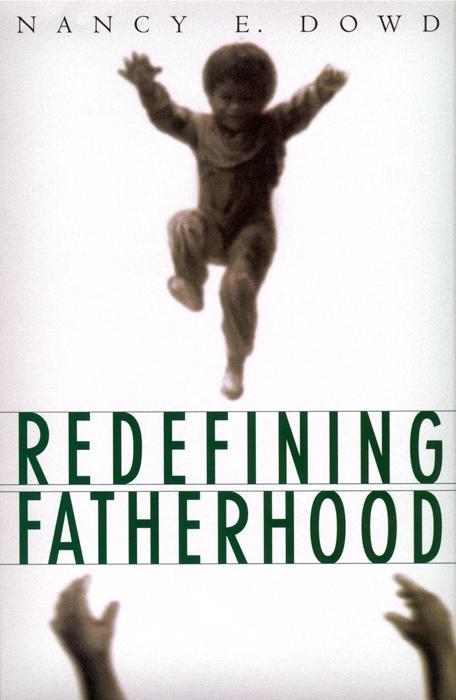
Most fathers parent less than most mothers. Those fathers who do parent equally or more so than mothers are poorly supported by our society. For children this means a loss of adult care, as well as an ongoing and sharply defined differentiation between fathers and mothers. Fathers are not present in children's lives to a significant degree, if at all, or when they are present, they are often rendered socially invisible. For many men, their parenthood is defined as biological or economic, while a minority of men struggle against the presumption that they are not caregivers.
In Redefining Fatherhood, Nancy Dowd argues that this skewed social pattern is mirrored and supported by law. Dowd makes the case for reenvisioning fatherhood away from genes and dollars, and toward nurture. Integrating economic, social and legal aspects of fathering, she makes the case for focusing on social, nurturing behavior as the core meaning of fatherhood. In this nuanced and complex analysis, she explores the barriers to redefinition, including concepts of masculinity, the interconnections between fathers and mothers, male violence and homophobia.
Redefining Fatherhood offers a progressive view on how men, and society at large, can change understandings and practices of fatherhood.
Płać wygodnie kartą, Klarną, Apple Pay lub Google Pay. Nie jesteś zadowolony? Zawsze masz 14-dniową gwarancję zwrotu pieniędzy. Więcej przeczytasz w naszych warunkach. Masz pytania? Napisz do nas na hello@memmo.org.
Memmo ułatwia naukę – gdziekolwiek jesteś na świecie. U nas znajdziesz podręczniki i sprytne narzędzia do nauki w jednym miejscu: streszczenia, quizy, podcasty i fiszki. A do tego Ted, Twój kumpel do nauki, który odpowie na wszystko, co Cię nurtuje. Ponad 50 000 studentów już tu się uczy – stworzone, byś uczył się szybciej i mniej stresował.