
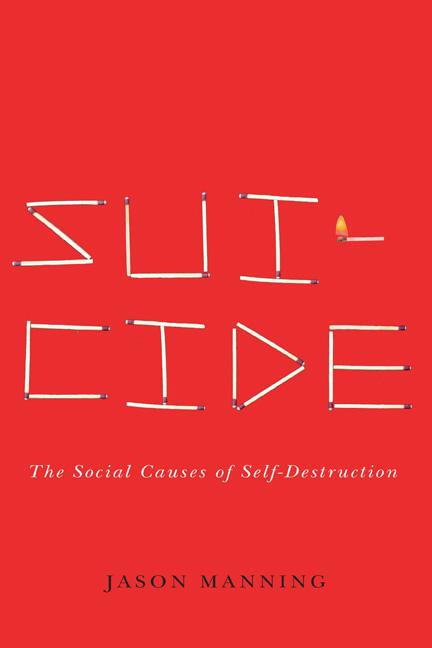
The conventional approach to suicide is psychiatric: ask the average person why people kill themselves, and they will likely cite depression. But this approach fails to recognize suicide’s social causes. People kill themselves because of breakups and divorces, because of lost jobs and ruined finances, because of public humiliations and the threat of arrest. While some psychological approaches address external stressors, this comprehensive study is the first to systematically examine suicide as a social behavior with social catalysts.
Drawing on Donald Black’s theories of conflict management and pure sociology, Suicide presents a new theory of the social conditions that compel an aggrieved person to turn to self-destruction. Interpersonal conflict plays a central but underappreciated role in the incidence of suicide. Examining a wide range of cross-cultural cases, Jason Manning argues that suicide arises from increased inequality and decreasing intimacy, and that conflicts are more likely to become suicidal when they occur in a context of social inferiority. As suicide rates continue to rise around the world, this timely new theory can help clinicians, scholars, and members of the general public to explain and predict patterns of self-destructive behavior.
Płać wygodnie kartą, Klarną, Apple Pay lub Google Pay. Nie jesteś zadowolony? Zawsze masz 14-dniową gwarancję zwrotu pieniędzy. Więcej przeczytasz w naszych warunkach. Masz pytania? Napisz do nas na hello@memmo.org.
Memmo ułatwia naukę – gdziekolwiek jesteś na świecie. U nas znajdziesz podręczniki i sprytne narzędzia do nauki w jednym miejscu: streszczenia, quizy, podcasty i fiszki. A do tego Ted, Twój kumpel do nauki, który odpowie na wszystko, co Cię nurtuje. Ponad 50 000 studentów już tu się uczy – stworzone, byś uczył się szybciej i mniej stresował.