
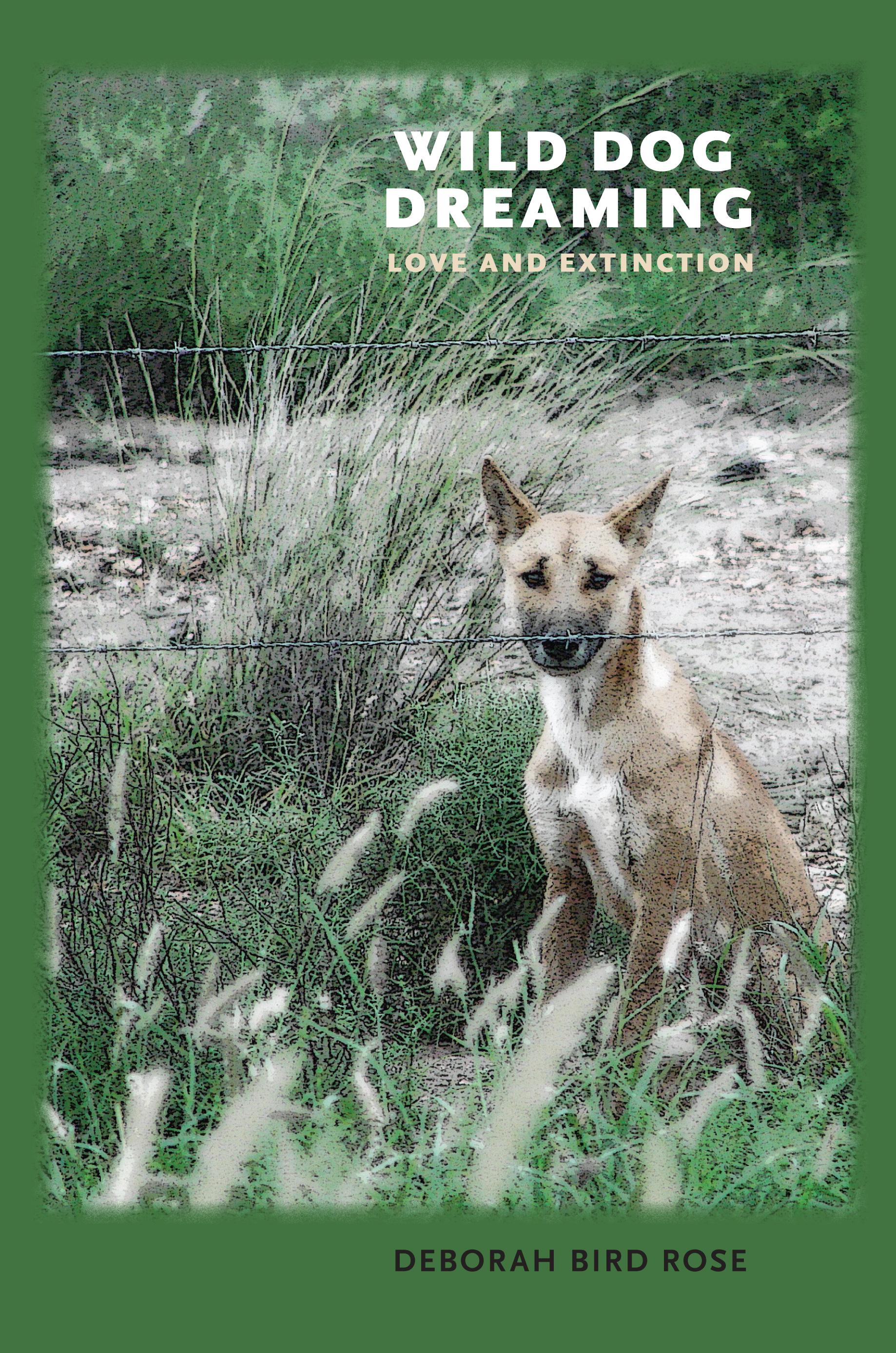
We are living in the midst of the Earth’s sixth great extinction event, the first one caused by a single species: our own. In Wild Dog Dreaming, Deborah Bird Rose explores what constitutes an ethical relationship with nonhuman others in this era of loss. She asks, Who are we, as a species? How do we fit into the Earth’s systems? Amidst so much change, how do we find our way into new stories to guide us? Rose explores these questions in the form of a dialogue between science and the humanities. Drawing on her conversations with Aboriginal people, for whom questions of extinction are up-close and very personal, Rose develops a mode of exposition that is dialogical, philosophical, and open-ended.
An inspiration for Rose—and a touchstone throughout her book—is the endangered dingo of Australia. The dingo is not the first animal to face extinction, but its story is particularly disturbing because the threat to its future is being actively engineered by humans. The brazenness with which the dingo is being wiped out sheds valuable, and chilling, light on the likely fate of countless other animal and plant species.
"People save what they love," observed Michael Soulé, the great conservation biologist. We must ask whether we, as humans, are capable of loving—and therefore capable of caring for—the animals and plants that are disappearing in a cascade of extinctions. Wild Dog Dreaming engages this question, and the result is a bold account of the entangled ethics of love, contingency, and desire.
Płać wygodnie kartą, Klarną, Apple Pay lub Google Pay. Nie jesteś zadowolony? Zawsze masz 14-dniową gwarancję zwrotu pieniędzy. Więcej przeczytasz w naszych warunkach. Masz pytania? Napisz do nas na hello@memmo.org.
Memmo ułatwia naukę – gdziekolwiek jesteś na świecie. U nas znajdziesz podręczniki i sprytne narzędzia do nauki w jednym miejscu: streszczenia, quizy, podcasty i fiszki. A do tego Ted, Twój kumpel do nauki, który odpowie na wszystko, co Cię nurtuje. Ponad 50 000 studentów już tu się uczy – stworzone, byś uczył się szybciej i mniej stresował.