
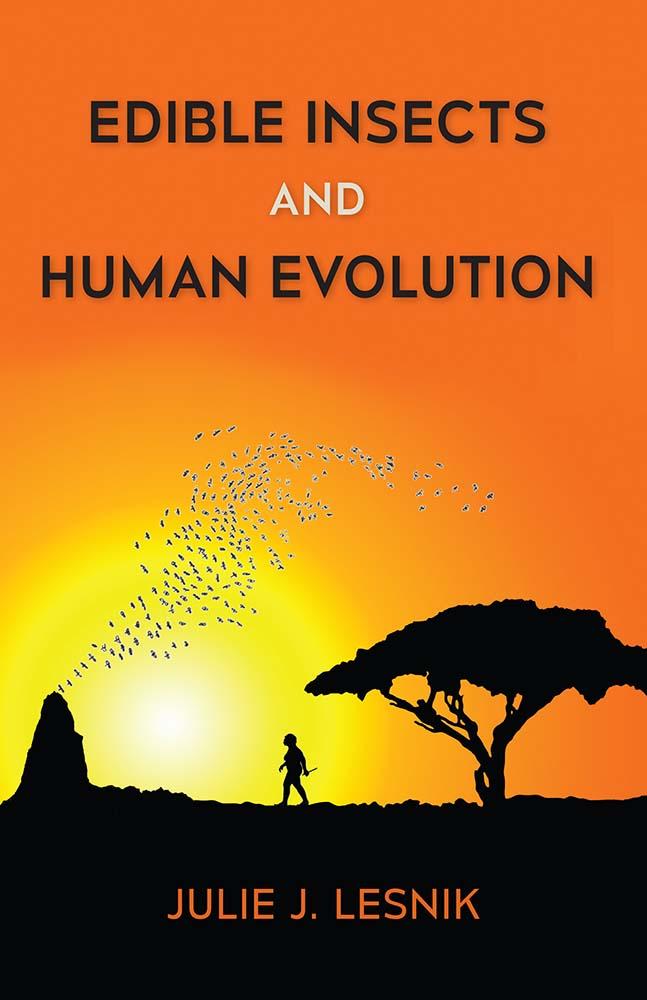
Researchers who study ancient human diets tend to focus on meat eating because the practice of butchery is very apparent in the archaeological record. In this volume, Julie Lesnik highlights a different food source, tracing evidence that humans and their hominin ancestors also consumed insects throughout the entire course of human evolution.
Lesnik combines primatology, sociocultural anthropology, reproductive physiology, and paleoanthropology to examine the role of insects in the diets of hunter-gatherers and our nonhuman primate cousins. She posits that women would likely spend more time foraging for and eating insects than men, arguing that this pattern is important to note because women are too often ignored in reconstructions of ancient human behavior. Because of the abundance of insects and the low risk of acquiring them, insects were a reliable food source that mothers used to feed their families over the past five million years.
Although they are consumed worldwide to this day, insects are not usually considered food in Western societies. Tying together ancient history with our modern lives, Lesnik points out that insects are highly nutritious and a very sustainable protein alternative. She believes that if we accept that edible insects are a part of the human legacy, we may have new conversations about what is good to eat—both in past diets and for the future of food.
Płać wygodnie kartą, Klarną, Apple Pay lub Google Pay. Nie jesteś zadowolony? Zawsze masz 14-dniową gwarancję zwrotu pieniędzy. Więcej przeczytasz w naszych warunkach. Masz pytania? Napisz do nas na hello@memmo.org.
Memmo ułatwia naukę – gdziekolwiek jesteś na świecie. U nas znajdziesz podręczniki i sprytne narzędzia do nauki w jednym miejscu: streszczenia, quizy, podcasty i fiszki. A do tego Ted, Twój kumpel do nauki, który odpowie na wszystko, co Cię nurtuje. Ponad 50 000 studentów już tu się uczy – stworzone, byś uczył się szybciej i mniej stresował.
Może Ci się spodobać
Kup książkę0