
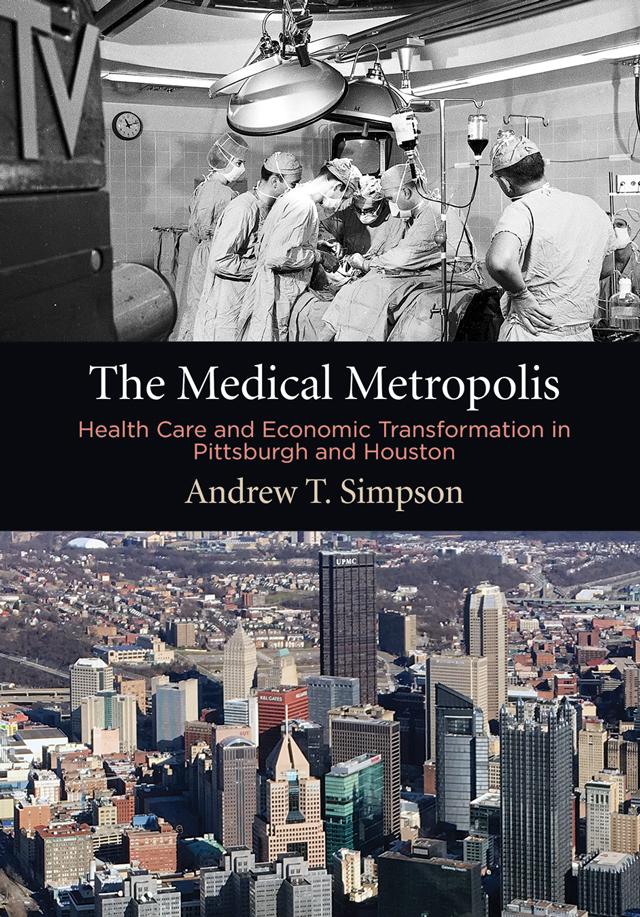
In 2008, the University of Pittsburgh Medical Centers (UPMC) hoisted its logo atop the U.S. Steel Building in downtown Pittsburgh, symbolically declaring that the era of big steel had been replaced by the era of big medicine for this once industrial city. More than 1,200 miles to the south, a similar sense of optimism pervaded the public discourse around the relationship between health care and the future of Houston's economy. While traditional Texas industries like oil and natural gas still played a critical role, the presence of the massive Texas Medical Center, billed as "the largest medical complex in the world," had helped to rebrand the city as a site for biomedical innovation and ensured its stability during the financial crisis of the mid-2000s.
Taking Pittsburgh and Houston as case studies, The Medical Metropolis offers the first comparative, historical account of how big medicine transformed American cities in the postindustrial era. Andrew T. Simpson explores how the hospital-civic relationship, in which medical centers embraced a business-oriented model, remade the deindustrialized city into the "medical metropolis." From the 1940s to the present, the changing business of American health care reshaped American cities into sites for cutting-edge biomedical and clinical research, medical education, and innovative health business practices. This transformation relied on local policy and economic decisions as well as broad and homogenizing national forces, including HMOs, biotechnology programs, and hospital privatization. Today, the medical metropolis is considered by some as a triumph of innovation and revitalization and by others as a symbol of the excesses of capitalism and the inequality still pervading American society.
Płać wygodnie kartą, Klarną, Apple Pay lub Google Pay. Nie jesteś zadowolony? Zawsze masz 14-dniową gwarancję zwrotu pieniędzy. Więcej przeczytasz w naszych warunkach. Masz pytania? Napisz do nas na hello@memmo.org.
Memmo ułatwia naukę – gdziekolwiek jesteś na świecie. U nas znajdziesz podręczniki i sprytne narzędzia do nauki w jednym miejscu: streszczenia, quizy, podcasty i fiszki. A do tego Ted, Twój kumpel do nauki, który odpowie na wszystko, co Cię nurtuje. Ponad 50 000 studentów już tu się uczy – stworzone, byś uczył się szybciej i mniej stresował.