
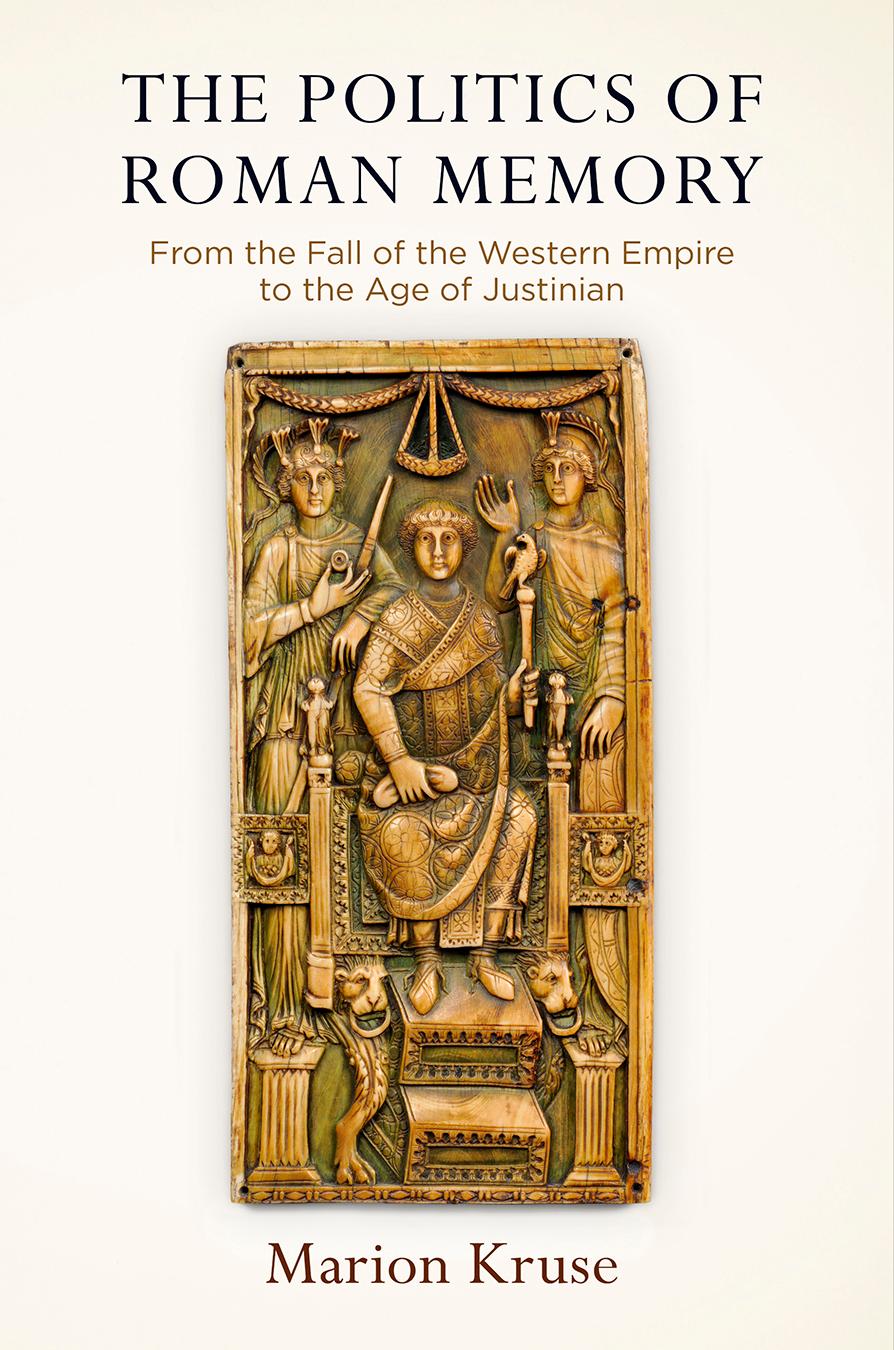
What did it mean to be Roman after the fall of the western Roman empire in 476, and what were the implications of new formulations of Roman identity for the inhabitants of both east and west? How could an empire be Roman when it was, in fact, at war with Rome? How did these issues motivate and shape historical constructions of Constantinople as the New Rome? And how did the idea that a Roman empire could fall influence political rhetoric in Constantinople? In The Politics of Roman Memory, Marion Kruse visits and revisits these questions to explore the process by which the emperors, historians, jurists, antiquarians, and poets of the eastern Roman empire employed both history and mythologized versions of the same to reimagine themselves not merely as Romans but as the only Romans worthy of the name.
The Politics of Roman Memory challenges conventional narratives of the transformation of the classical world, the supremacy of Christian identity in late antiquity, and the low literary merit of writers in this period. Kruse reconstructs a coherent intellectual movement in Constantinople that redefined Romanness in a Constantinopolitan idiom through the manipulation of Roman historical memory. Debates over the historical parameters of Romanness drew the attention of figures as diverse as Zosimos—long dismissed as a cranky pagan outlier, but here rehabilitated—and the emperor Justinian, as well as the major authors of Justinian's reign, such as Prokopios, Ioannes Lydos, and Jordanes. Finally, by examining the narratives embedded in Justinian's laws, Kruse demonstrates the importance of historical memory to the construction of imperial authority.
Płać wygodnie kartą, Klarną, Apple Pay lub Google Pay. Nie jesteś zadowolony? Zawsze masz 14-dniową gwarancję zwrotu pieniędzy. Więcej przeczytasz w naszych warunkach. Masz pytania? Napisz do nas na hello@memmo.org.
Memmo ułatwia naukę – gdziekolwiek jesteś na świecie. U nas znajdziesz podręczniki i sprytne narzędzia do nauki w jednym miejscu: streszczenia, quizy, podcasty i fiszki. A do tego Ted, Twój kumpel do nauki, który odpowie na wszystko, co Cię nurtuje. Ponad 50 000 studentów już tu się uczy – stworzone, byś uczył się szybciej i mniej stresował.