
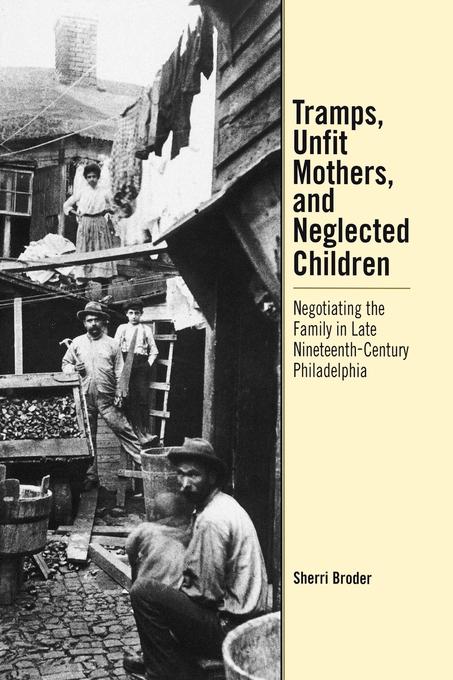
In late Victorian America few issues held the public's attention more closely than the allegedly unnatural family life of the urban poor. In Tramps, Unfit Mothers, and Neglected Children, Sherri Broder brings new insight to the powerful depictions of the urban poor that circulated in newspapers and novels, public debate and private correspondence, including the irresponsible tramp, the "fallen" single mother, and the neglected child. Broder considers how these representations contributed to debates over the nature of family life and focuses on the ways different historical actors—social reformers, labor activists, and ordinary laboring people—made use of the available cultural narratives about family, gender, and sexuality to comprehend changes in turn-of-the-century America.
In the decades after the Civil War, Philadelphia was an important center of charity, child protection, and labor reform. Drawing on the rich records of the Pennsylvania Society to Protect Children from Cruelty, Broder assesses the intentions and consequences of reform efforts devoted to women and children at the turn of the century. Her research provides an eloquent study of how the terms used by social workers and their clients to discuss the condition of poverty continue to have a profound influence on social policies and develops a complex historical perspective on how social policy and representations of poor families have been and remain mutually influential.
Płać wygodnie kartą, Klarną, Apple Pay lub Google Pay. Nie jesteś zadowolony? Zawsze masz 14-dniową gwarancję zwrotu pieniędzy. Więcej przeczytasz w naszych warunkach. Masz pytania? Napisz do nas na hello@memmo.org.
Memmo ułatwia naukę – gdziekolwiek jesteś na świecie. U nas znajdziesz podręczniki i sprytne narzędzia do nauki w jednym miejscu: streszczenia, quizy, podcasty i fiszki. A do tego Ted, Twój kumpel do nauki, który odpowie na wszystko, co Cię nurtuje. Ponad 50 000 studentów już tu się uczy – stworzone, byś uczył się szybciej i mniej stresował.