
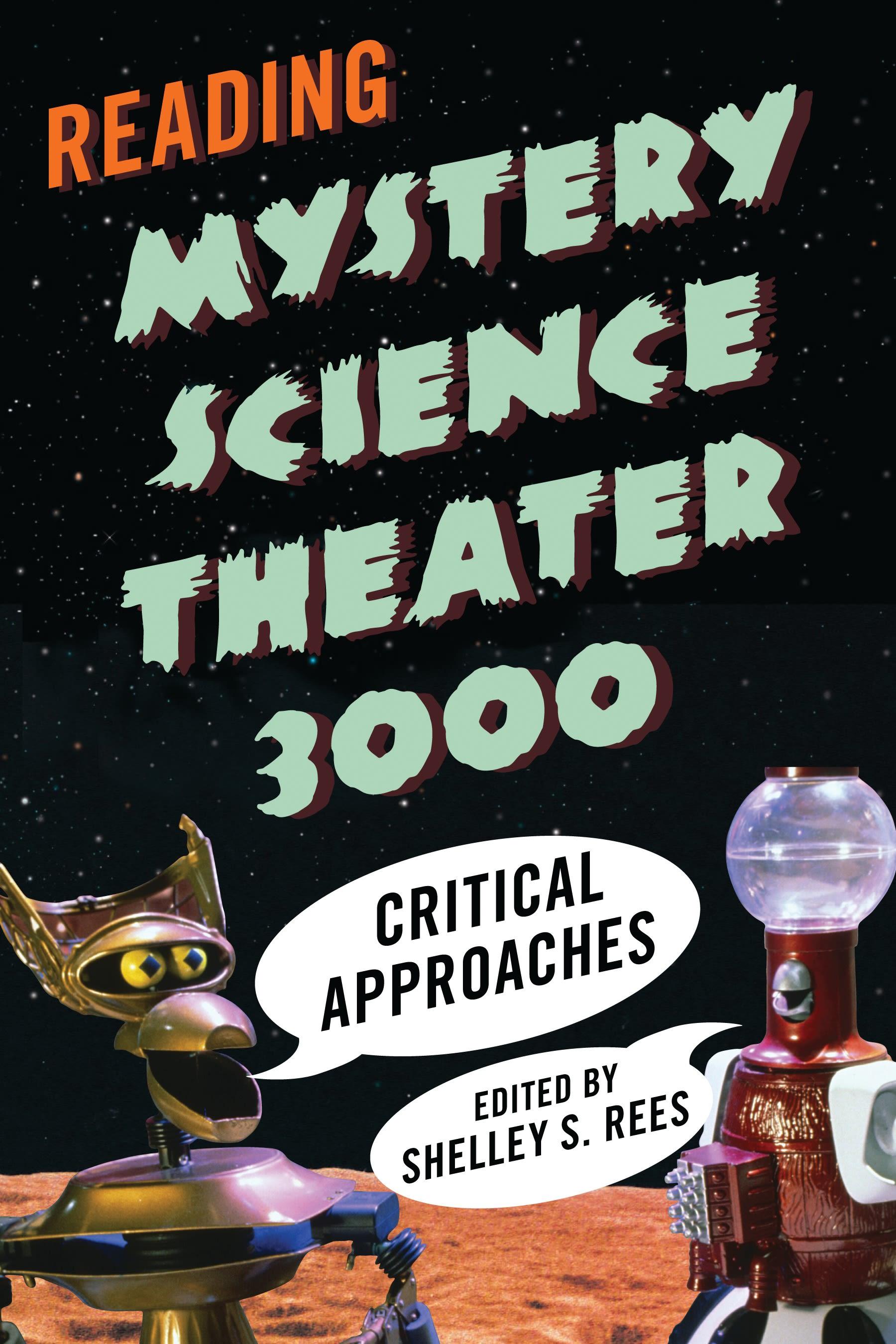
First broadcast in the not too distant past on a television station in Minnesota, Mystery Science Theater 3000 soon grew out of its humble beginnings and found a new home on cable television. This simple show about a man and two robots forced to watch bad movies became a cult classic, and episodes of the series continue to be packaged in DVD collections to this day. Before its final run, the show received Emmy nominations and a Peabody award for Television excellence, and in 2007, Time magazine declared MST3K one of “The 100 Best Shows of All-Time.”
In Reading Mystery Science Theater 3000: Critical Approaches, Shelley S. Rees presents a collection of essays that examines the complex relationship between narrative and audience constructed by this baffling but beloved television show. Invoking literary theory, cultural criticism, pedagogy, feminist criticism, humor theory, rhetorical analysis, and film and media studies, these essays affirm the show’s narrative and rhetorical intricacy. The first section, “Rhetoric and the Empowered Audience,” addresses MST3K’s function as an exercise in rhetorical resistance. Part Two, “Mystery Science Theater 3000 and Genre,” analyzes MST3K through distinct generic traditions, including humor studies, traditional science fiction tropes, and the B-movie. Finally, the third section addresses postmodern and intertextual readings of the show.
By providing an academic treatment of an iconic television phenomenon, these essays argue that Mystery Science Theater 3000 is worthy of serious scholarly attention. Though aimed at a discerning readership of academics, this collection will also appeal to the intellectual nature of the show’s well-educated audience.
In Reading Mystery Science Theater 3000: Critical Approaches, Shelley S. Rees presents a collection of essays that examines the complex relationship between narrative and audience constructed by this baffling but beloved television show. Invoking literary theory, cultural criticism, pedagogy, feminist criticism, humor theory, rhetorical analysis, and film and media studies, these essays affirm the show’s narrative and rhetorical intricacy. The first section, “Rhetoric and the Empowered Audience,” addresses MST3K’s function as an exercise in rhetorical resistance. Part Two, “Mystery Science Theater 3000 and Genre,” analyzes MST3K through distinct generic traditions, including humor studies, traditional science fiction tropes, and the B-movie. Finally, the third section addresses postmodern and intertextual readings of the show.
By providing an academic treatment of an iconic television phenomenon, these essays argue that Mystery Science Theater 3000 is worthy of serious scholarly attention. Though aimed at a discerning readership of academics, this collection will also appeal to the intellectual nature of the show’s well-educated audience.
Płać wygodnie kartą, Klarną, Apple Pay lub Google Pay. Nie jesteś zadowolony? Zawsze masz 14-dniową gwarancję zwrotu pieniędzy. Więcej przeczytasz w naszych warunkach. Masz pytania? Napisz do nas na hello@memmo.org.
Memmo ułatwia naukę – gdziekolwiek jesteś na świecie. U nas znajdziesz podręczniki i sprytne narzędzia do nauki w jednym miejscu: streszczenia, quizy, podcasty i fiszki. A do tego Ted, Twój kumpel do nauki, który odpowie na wszystko, co Cię nurtuje. Ponad 50 000 studentów już tu się uczy – stworzone, byś uczył się szybciej i mniej stresował.