
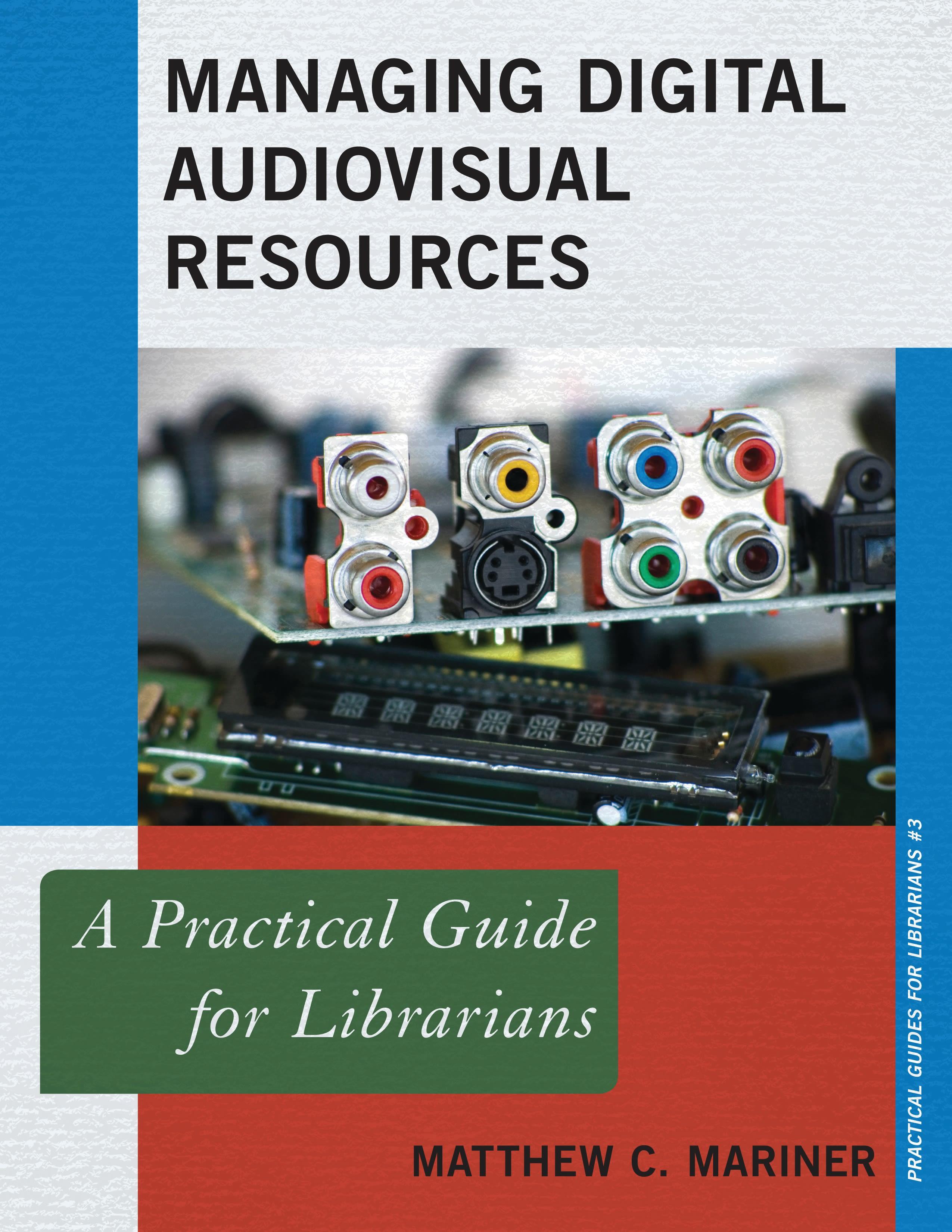
The demand from library users for audiovisual materials and remote access combined with the unceasing deterioration and inaccessibility of many audiovisual formats requires libraries to adapt their collections to meet current and future demands. While this changing landscape of digitization and resource management may seem daunting, it represents an opportunity to bolster a library’s relevancy and competitiveness.
Managing Digital Audiovisual Resources fills a gap as a single concise guide for real world basics, broad concepts, and practical needs from technologies to collections to promotion. The easy-to-read book is geared towards the ongoing management of digital audiovisual resources, presenting real world scenarios and ways to think through balancing all of the many factors and needs for these collections, dealing with limited resources, materials with different levels of significance, materials facing different levels of preservation risk, factors for decision making, and resources for other options.
The book takes a procedural and example-rich approach to the management of digital audiovisual resources. It covers:
the selection of resources for digitization; how to managedigitization of physical audiovisual collections; how to select the best platforms for preservation and presentation; and, how to market collections once they are accessible.Among other useful features, this guide will provide readers with:
Illustrated digitization workflows; Comprehensive lists and illustrated descriptions of equipment and formats;Real-world case studies;Common U.S. copyright situations; andResources for further study and assistance.
Managing Digital Audiovisual Resources fills a gap as a single concise guide for real world basics, broad concepts, and practical needs from technologies to collections to promotion. The easy-to-read book is geared towards the ongoing management of digital audiovisual resources, presenting real world scenarios and ways to think through balancing all of the many factors and needs for these collections, dealing with limited resources, materials with different levels of significance, materials facing different levels of preservation risk, factors for decision making, and resources for other options.
The book takes a procedural and example-rich approach to the management of digital audiovisual resources. It covers:
the selection of resources for digitization; how to managedigitization of physical audiovisual collections; how to select the best platforms for preservation and presentation; and, how to market collections once they are accessible.Among other useful features, this guide will provide readers with:
Illustrated digitization workflows; Comprehensive lists and illustrated descriptions of equipment and formats;Real-world case studies;Common U.S. copyright situations; andResources for further study and assistance.
Płać wygodnie kartą, Klarną, Apple Pay lub Google Pay. Nie jesteś zadowolony? Zawsze masz 14-dniową gwarancję zwrotu pieniędzy. Więcej przeczytasz w naszych warunkach. Masz pytania? Napisz do nas na hello@memmo.org.
Memmo ułatwia naukę – gdziekolwiek jesteś na świecie. U nas znajdziesz podręczniki i sprytne narzędzia do nauki w jednym miejscu: streszczenia, quizy, podcasty i fiszki. A do tego Ted, Twój kumpel do nauki, który odpowie na wszystko, co Cię nurtuje. Ponad 50 000 studentów już tu się uczy – stworzone, byś uczył się szybciej i mniej stresował.