
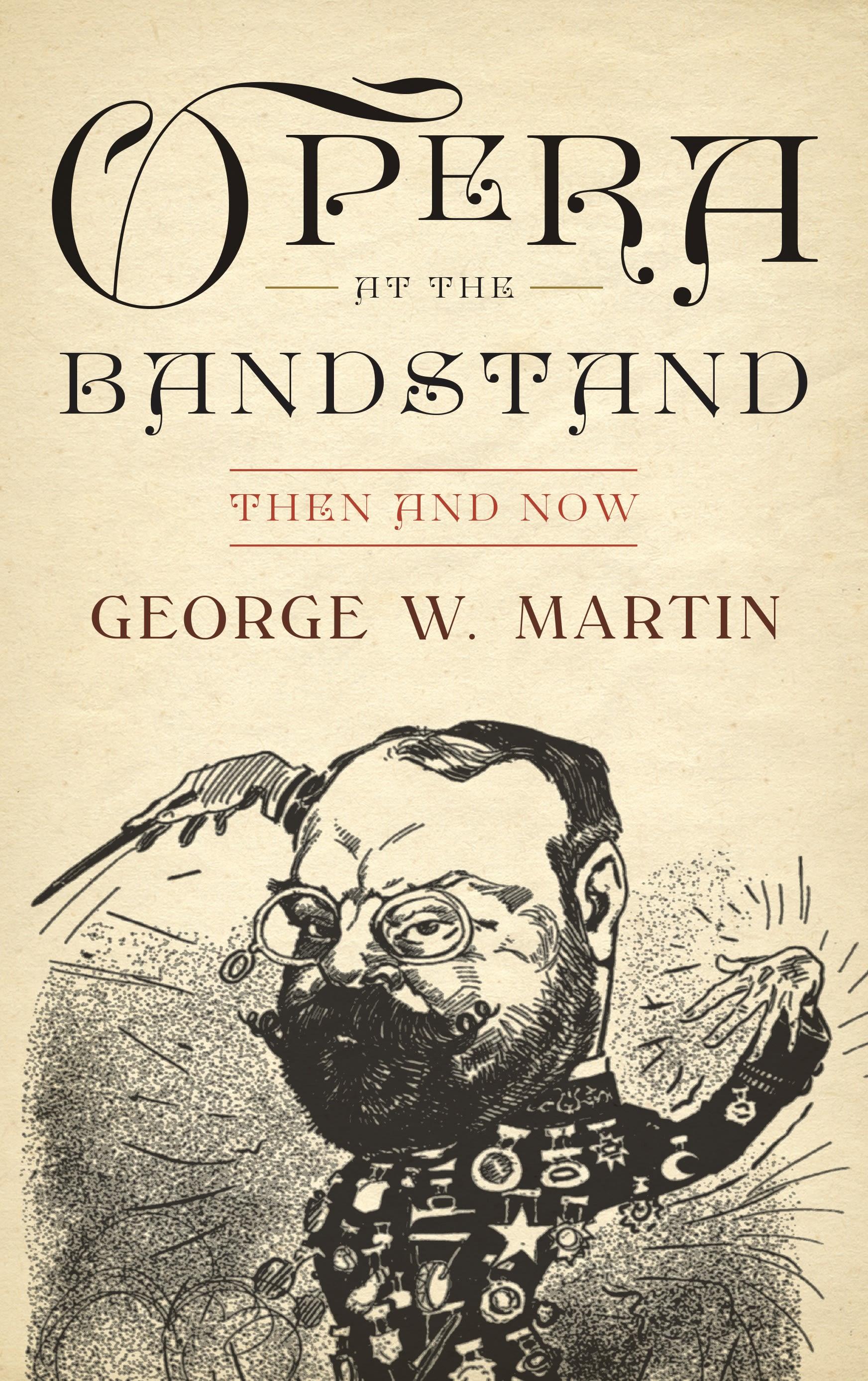
In Opera at the Bandstand: Then and Now, George W. Martin surveys the role of concert bands during the nineteenth and early twentieth centuries in making contemporary opera popular. He also chronicles how in part they lost their audience in the second half of the twentieth century by abandoning operatic repertory.
Martin begins with the Dodworth bands in New York City from the 1850s and moves to the American tour of French conductor and composer Louis Antoine Jullien, bandmaster Patrick S. Gilmore’s jubilee festivals, the era of John Philip Sousa from 1892 to 1932, performances of the Goldman Band of New York City from 1920 to 2005, and finally the wind ensembles sparked by Frederick Fennell. He illustrates the degree to which operatic material comprised these bands’ overall repertory and provides detailed programs in the appendixes.
Opera at the Bandstand describes how the technological advancements sweeping the country, such as radio, automobiles, recordings, television, and air conditioning, along with changes in demographics, affected the country’s musical life. It will appeal to bandmasters and their players, as well as those with an interest in American history, music, popular culture, and opera.
Martin begins with the Dodworth bands in New York City from the 1850s and moves to the American tour of French conductor and composer Louis Antoine Jullien, bandmaster Patrick S. Gilmore’s jubilee festivals, the era of John Philip Sousa from 1892 to 1932, performances of the Goldman Band of New York City from 1920 to 2005, and finally the wind ensembles sparked by Frederick Fennell. He illustrates the degree to which operatic material comprised these bands’ overall repertory and provides detailed programs in the appendixes.
Opera at the Bandstand describes how the technological advancements sweeping the country, such as radio, automobiles, recordings, television, and air conditioning, along with changes in demographics, affected the country’s musical life. It will appeal to bandmasters and their players, as well as those with an interest in American history, music, popular culture, and opera.
Płać wygodnie kartą, Klarną, Apple Pay lub Google Pay. Nie jesteś zadowolony? Zawsze masz 14-dniową gwarancję zwrotu pieniędzy. Więcej przeczytasz w naszych warunkach. Masz pytania? Napisz do nas na hello@memmo.org.
Memmo ułatwia naukę – gdziekolwiek jesteś na świecie. U nas znajdziesz podręczniki i sprytne narzędzia do nauki w jednym miejscu: streszczenia, quizy, podcasty i fiszki. A do tego Ted, Twój kumpel do nauki, który odpowie na wszystko, co Cię nurtuje. Ponad 50 000 studentów już tu się uczy – stworzone, byś uczył się szybciej i mniej stresował.