
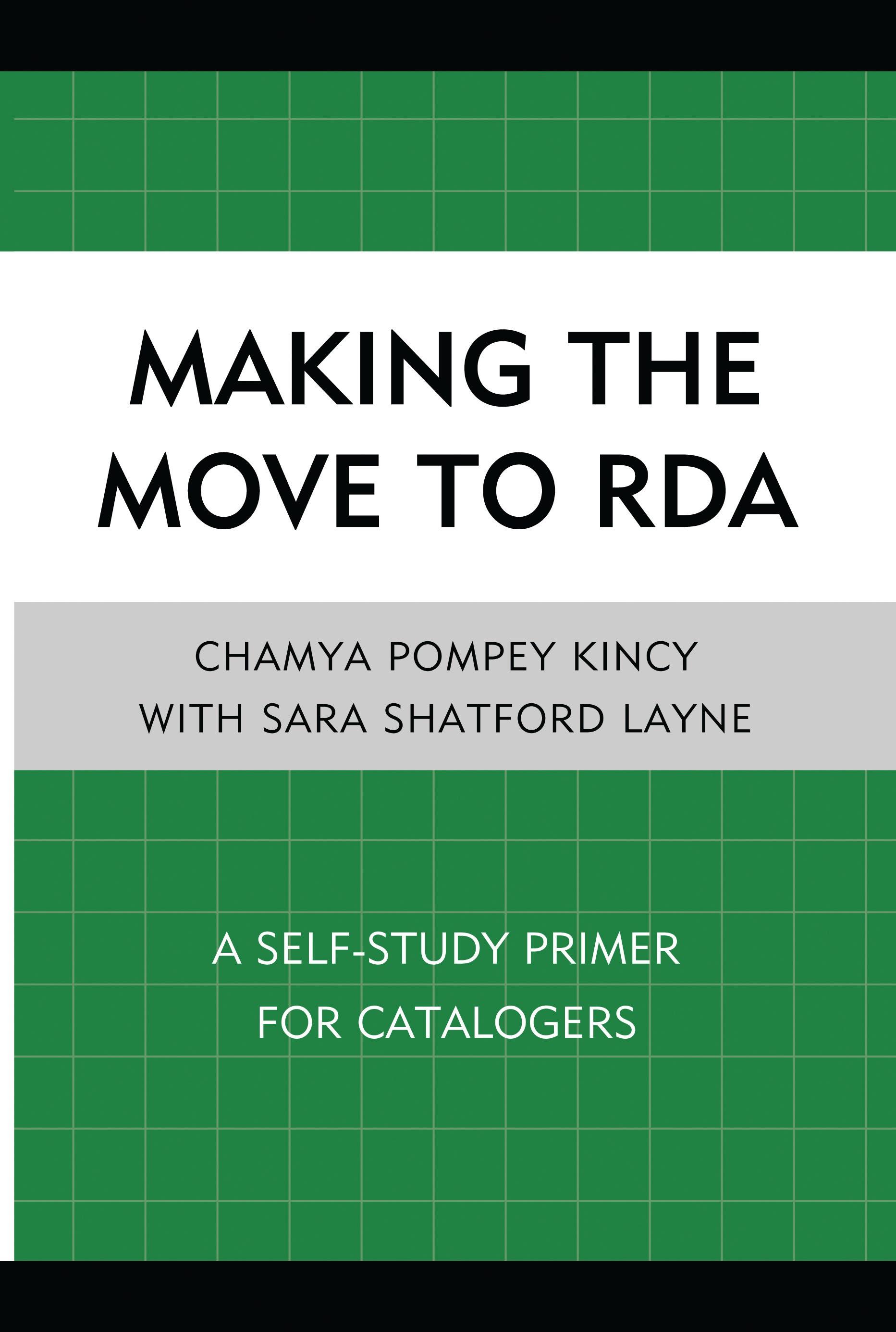
Making the Move to RDA: A Self-Study Primer for Catalogers is aimed at catalogers working in the MARC environment who currently create records using AACR2 and need to transition to using the new standard, Resource Description and Access (RDA). Since both RDA’s structure and content differ from AACR2 in many respects, this primer details the development and rationale for RDA as well as its intended goals, principles, and objectives. It then explains RDA’s theoretical underpinnings—collectively known as the FRBR Family of Models.
Framing the text along these lines provides readers the context for understanding the similarities and differences between AACR2 and RDA, both in terms of content and structure. With this foundation in place, the book takes the reader on a survey of RDA elements used to describe bibliographic and authority records and demonstrates how the MARC code has been expanded to accommodate new elements. Finally, it leads the reader field-by-field through MARC bibliographic records for book and non-book resources as well as through authority records for works, expressions, persons, families, and corporate bodies, describing the similarities and differences between AACR2 and RDA for each field.
Examples are provided throughout the text to help the reader visualize the concepts presented.
Framing the text along these lines provides readers the context for understanding the similarities and differences between AACR2 and RDA, both in terms of content and structure. With this foundation in place, the book takes the reader on a survey of RDA elements used to describe bibliographic and authority records and demonstrates how the MARC code has been expanded to accommodate new elements. Finally, it leads the reader field-by-field through MARC bibliographic records for book and non-book resources as well as through authority records for works, expressions, persons, families, and corporate bodies, describing the similarities and differences between AACR2 and RDA for each field.
Examples are provided throughout the text to help the reader visualize the concepts presented.
Strony: 346
Kategoria: Samhällsvetenskap
e-ISBN: 9780810887701
Waga przesyłki: 1.2 kg
Wysyłka w ciągu: 1-2 dni
Płać wygodnie kartą, Klarną, Apple Pay lub Google Pay. Nie jesteś zadowolony? Zawsze masz 14-dniową gwarancję zwrotu pieniędzy. Więcej przeczytasz w naszych warunkach. Masz pytania? Napisz do nas na hello@memmo.org.
Memmo ułatwia naukę – gdziekolwiek jesteś na świecie. U nas znajdziesz podręczniki i sprytne narzędzia do nauki w jednym miejscu: streszczenia, quizy, podcasty i fiszki. A do tego Ted, Twój kumpel do nauki, który odpowie na wszystko, co Cię nurtuje. Ponad 50 000 studentów już tu się uczy – stworzone, byś uczył się szybciej i mniej stresował.