
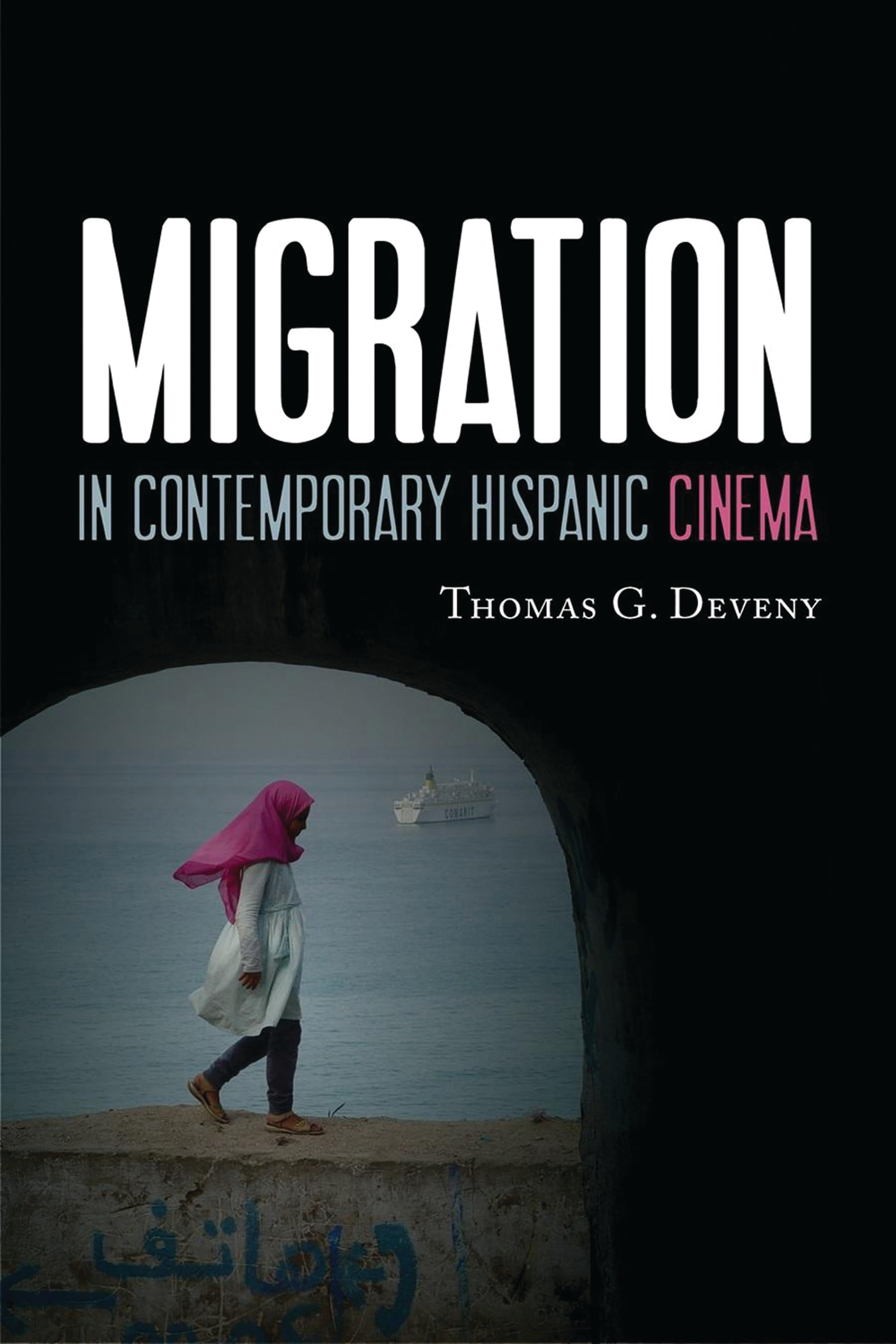
Immigration is an important and much-discussed topic throughout the world, and its depiction on screen helps shape the way we perceive this issue. In Migration in Contemporary Hispanic Cinema, Thomas G. Deveny looks at film and immigration with a global perspective, examining emigration and immigration films from Spain, Mexico, Argentina, Central America, and the Hispanic Caribbean.
In this volume, Deveny approaches each movie with a close textual analysis, keeping in mind the sociological theories regarding migration, as well as incorporating criticism on the film. Recurring themes, such as the depiction of the “Other,” individual identity, and social and cultural contextualization (stereotypes, rejection, acceptance, and change) are identified and discussed. Films such as Flowers from Another World, Return to Hansala, El Camino, 14 Kilometers, María Full of Grace, and others are carefully studied. Additional chapters analyze films about Colombian “mules” coming to the United States and Uruguayan prostitutes in Spain, and the final chapter examines Al otro Lado (To the Other Side), a film with narratives involving three nationalities and three destinations, thus showing the global nature of the phenomenon.
Through the analyses of immigration and emigration depictions in film, this book enables readers to comprehend the universal nature of migration. Like the films it analyzes, Migration in Contemporary Hispanic Cinema will provide a deeper understanding of people who leave their homeland for a better life.
In this volume, Deveny approaches each movie with a close textual analysis, keeping in mind the sociological theories regarding migration, as well as incorporating criticism on the film. Recurring themes, such as the depiction of the “Other,” individual identity, and social and cultural contextualization (stereotypes, rejection, acceptance, and change) are identified and discussed. Films such as Flowers from Another World, Return to Hansala, El Camino, 14 Kilometers, María Full of Grace, and others are carefully studied. Additional chapters analyze films about Colombian “mules” coming to the United States and Uruguayan prostitutes in Spain, and the final chapter examines Al otro Lado (To the Other Side), a film with narratives involving three nationalities and three destinations, thus showing the global nature of the phenomenon.
Through the analyses of immigration and emigration depictions in film, this book enables readers to comprehend the universal nature of migration. Like the films it analyzes, Migration in Contemporary Hispanic Cinema will provide a deeper understanding of people who leave their homeland for a better life.
Płać wygodnie kartą, Klarną, Apple Pay lub Google Pay. Nie jesteś zadowolony? Zawsze masz 14-dniową gwarancję zwrotu pieniędzy. Więcej przeczytasz w naszych warunkach. Masz pytania? Napisz do nas na hello@memmo.org.
Memmo ułatwia naukę – gdziekolwiek jesteś na świecie. U nas znajdziesz podręczniki i sprytne narzędzia do nauki w jednym miejscu: streszczenia, quizy, podcasty i fiszki. A do tego Ted, Twój kumpel do nauki, który odpowie na wszystko, co Cię nurtuje. Ponad 50 000 studentów już tu się uczy – stworzone, byś uczył się szybciej i mniej stresował.