
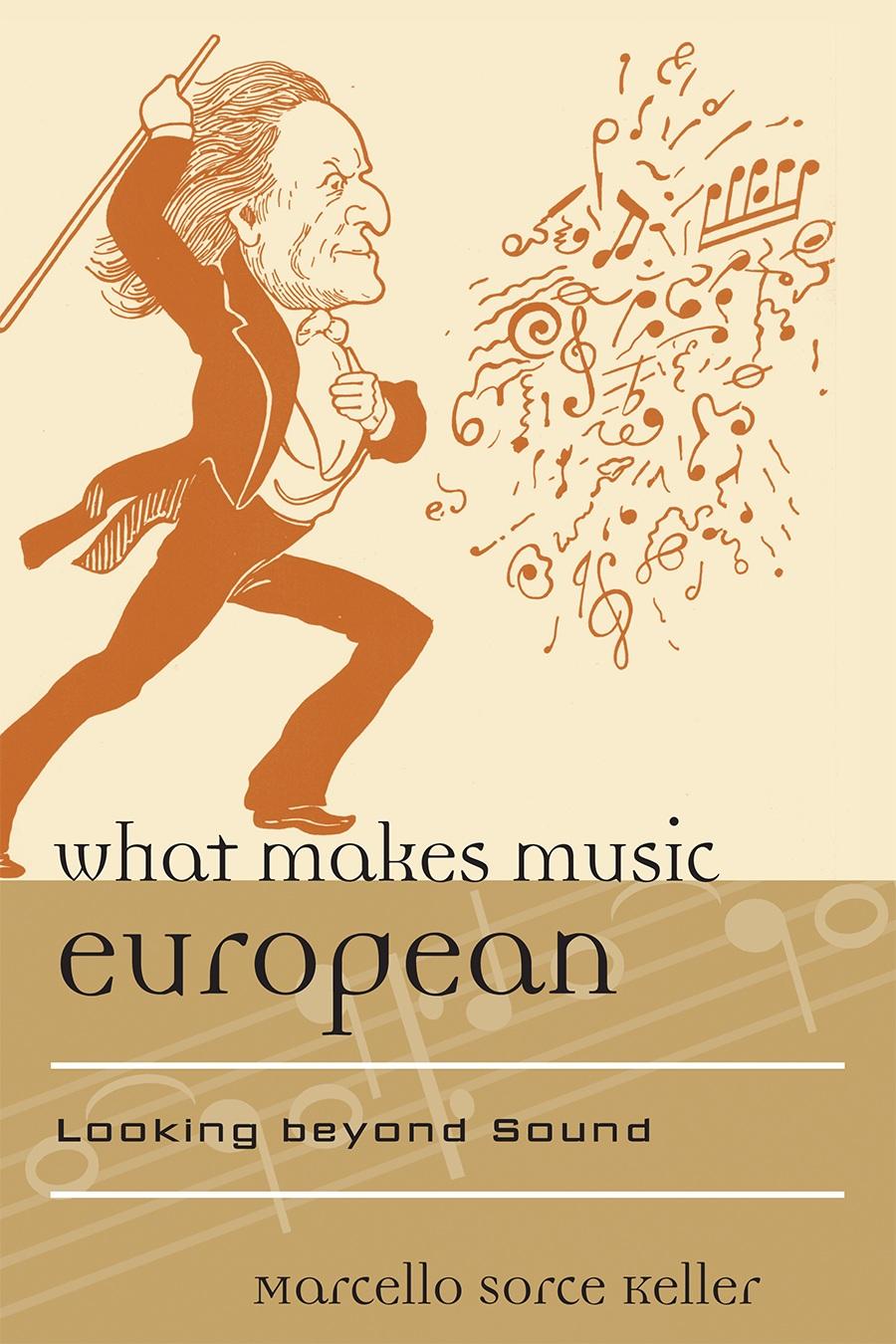
We seldom consider how much we mistakenly presume in hewing to definitions of music that differ dramatically from the standpoint of other cultures. In What Makes Music European, Marcello Sorce Keller examines the limitations of accepted wisdom about the concept of music in Euro-Western culture. His investigations of the conclusions reached by music researchers of the past several decades considerably upsets the concepts relied upon by the concert-going public. Sorce Keller insightfully asks: Who makes the music? Should music be original, and how much can it be? Why do people identify with songs, pieces, styles, and repertoire? Why is music so ideological? Why do we misunderstand the music of different times and places, and why do we enjoy doing so? He also explores the juxtaposition of economy, society, and music making, as well as the concept of "illegal harmonies."
In What Makes Music European, Sorce Keller addresses the little-discussed matters that are essential to an understanding of how music intersects with the life of so many people. Readers are offered an approach for thinking about music that depends as much on its history as on the concepts and attitudes of the social sciences. What Makes Music European concisely demonstrates, to those familiar with Western music, how peculiar Euro-Western concepts of music appear from a cross-cultural perspective. At the same time, it encourages ethnomusicologists to apply their knowledge to Western music and explain to its public how much of what listeners take for granted is, at the very least, highly debatable.
In What Makes Music European, Sorce Keller addresses the little-discussed matters that are essential to an understanding of how music intersects with the life of so many people. Readers are offered an approach for thinking about music that depends as much on its history as on the concepts and attitudes of the social sciences. What Makes Music European concisely demonstrates, to those familiar with Western music, how peculiar Euro-Western concepts of music appear from a cross-cultural perspective. At the same time, it encourages ethnomusicologists to apply their knowledge to Western music and explain to its public how much of what listeners take for granted is, at the very least, highly debatable.
Strony: 336
Kategoria: Musikvetenskap
e-ISBN: 9780810876736
Waga przesyłki: 1.2 kg
Wysyłka w ciągu: 1-2 dni
Płać wygodnie kartą, Klarną, Apple Pay lub Google Pay. Nie jesteś zadowolony? Zawsze masz 14-dniową gwarancję zwrotu pieniędzy. Więcej przeczytasz w naszych warunkach. Masz pytania? Napisz do nas na hello@memmo.org.
Memmo ułatwia naukę – gdziekolwiek jesteś na świecie. U nas znajdziesz podręczniki i sprytne narzędzia do nauki w jednym miejscu: streszczenia, quizy, podcasty i fiszki. A do tego Ted, Twój kumpel do nauki, który odpowie na wszystko, co Cię nurtuje. Ponad 50 000 studentów już tu się uczy – stworzone, byś uczył się szybciej i mniej stresował.