
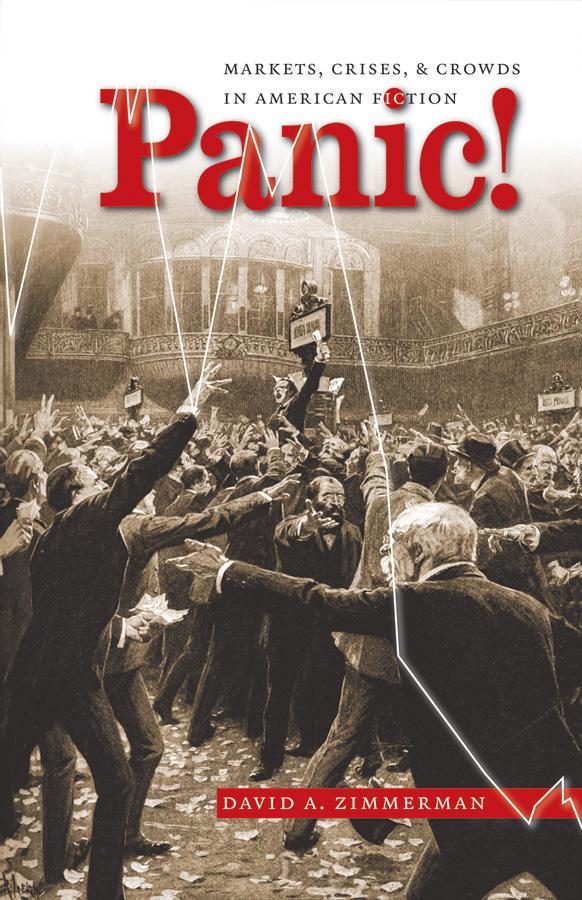
During the economic depression of the 1890s and the speculative frenzy of the following decade, Wall Street, high finance, and market crises assumed unprecedented visibility in the United States. Fiction writers published scores of novels in the period that explored this new cultural phenomenon. In Panic!, David A. Zimmerman studies how American novelists and their readers imagined — and in one case, incited — market crashes and financial panics.
Panic! examines how Americans' attitudes toward securities markets, popular investment, and financial catastrophe were entangled with their conceptions of gender, class, crowds, corporations, and history. Zimmerman investigates how writers turned to mob psychology, psychic investigations, and conspiracy discourse to understand not only how financial markets worked, but also how mass acts of financial reading, including novel reading, could trigger economic disaster and cultural chaos. In addition, Zimmerman shows how, by concentrating on markets in crisis, novelists were able to explore the limits of fiction’s aesthetic, economic, and ethical capacities. With readings of canonical as well as lesser-known novelists, Zimmerman provides an original and wide-ranging analysis of the relation between fiction and financial modernity.
Panic! examines how Americans' attitudes toward securities markets, popular investment, and financial catastrophe were entangled with their conceptions of gender, class, crowds, corporations, and history. Zimmerman investigates how writers turned to mob psychology, psychic investigations, and conspiracy discourse to understand not only how financial markets worked, but also how mass acts of financial reading, including novel reading, could trigger economic disaster and cultural chaos. In addition, Zimmerman shows how, by concentrating on markets in crisis, novelists were able to explore the limits of fiction’s aesthetic, economic, and ethical capacities. With readings of canonical as well as lesser-known novelists, Zimmerman provides an original and wide-ranging analysis of the relation between fiction and financial modernity.
Płać wygodnie kartą, Klarną, Apple Pay lub Google Pay. Nie jesteś zadowolony? Zawsze masz 14-dniową gwarancję zwrotu pieniędzy. Więcej przeczytasz w naszych warunkach. Masz pytania? Napisz do nas na hello@memmo.org.
Memmo ułatwia naukę – gdziekolwiek jesteś na świecie. U nas znajdziesz podręczniki i sprytne narzędzia do nauki w jednym miejscu: streszczenia, quizy, podcasty i fiszki. A do tego Ted, Twój kumpel do nauki, który odpowie na wszystko, co Cię nurtuje. Ponad 50 000 studentów już tu się uczy – stworzone, byś uczył się szybciej i mniej stresował.
Może Ci się spodobać
Kup książkę0