
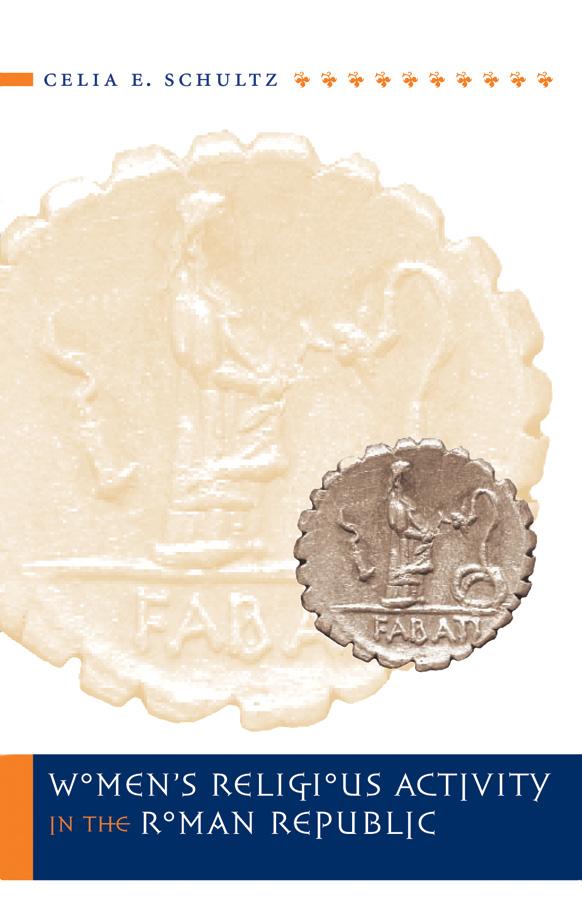
Expanding the discussion of religious participation of women in ancient Rome, Celia E. Schultz demonstrates that in addition to observances of marriage, fertility, and childbirth, there were more — and more important — religious opportunities available to Roman women than are commonly considered.
Based on research in ancient literature, inscriptions, and archaeological remains from the fifth to the first century B.C.E., Schultz’s study shows that women honored gods unaffiliated with domestic matters, including Hercules and Jupiter; they took part in commercial, military, and political rites; they often worshipped alongside men; and they were not confined to the private sphere, the traditional domain of women. The Vestal Virgins did not stand alone but were instead the most prominent members of a group of women who held high-profile religious positions: priestesses of Ceres, Liber, and Venus; the flaminica Dialis and the regina sacrorum; other cult officials; and aristocratic matrons who often took leading roles in religious observances even though they were not priestesses. Schultz argues that women were vital participants — both professional and nonprofessional — in the religion of the Roman Republic and that social and marital status, in addition to gender, were important factors in determining their opportunities for religious participation in the public sphere.
Based on research in ancient literature, inscriptions, and archaeological remains from the fifth to the first century B.C.E., Schultz’s study shows that women honored gods unaffiliated with domestic matters, including Hercules and Jupiter; they took part in commercial, military, and political rites; they often worshipped alongside men; and they were not confined to the private sphere, the traditional domain of women. The Vestal Virgins did not stand alone but were instead the most prominent members of a group of women who held high-profile religious positions: priestesses of Ceres, Liber, and Venus; the flaminica Dialis and the regina sacrorum; other cult officials; and aristocratic matrons who often took leading roles in religious observances even though they were not priestesses. Schultz argues that women were vital participants — both professional and nonprofessional — in the religion of the Roman Republic and that social and marital status, in addition to gender, were important factors in determining their opportunities for religious participation in the public sphere.
Płać wygodnie kartą, Klarną, Apple Pay lub Google Pay. Nie jesteś zadowolony? Zawsze masz 14-dniową gwarancję zwrotu pieniędzy. Więcej przeczytasz w naszych warunkach. Masz pytania? Napisz do nas na hello@memmo.org.
Memmo ułatwia naukę – gdziekolwiek jesteś na świecie. U nas znajdziesz podręczniki i sprytne narzędzia do nauki w jednym miejscu: streszczenia, quizy, podcasty i fiszki. A do tego Ted, Twój kumpel do nauki, który odpowie na wszystko, co Cię nurtuje. Ponad 50 000 studentów już tu się uczy – stworzone, byś uczył się szybciej i mniej stresował.
Może Ci się spodobać
Kup książkę0