
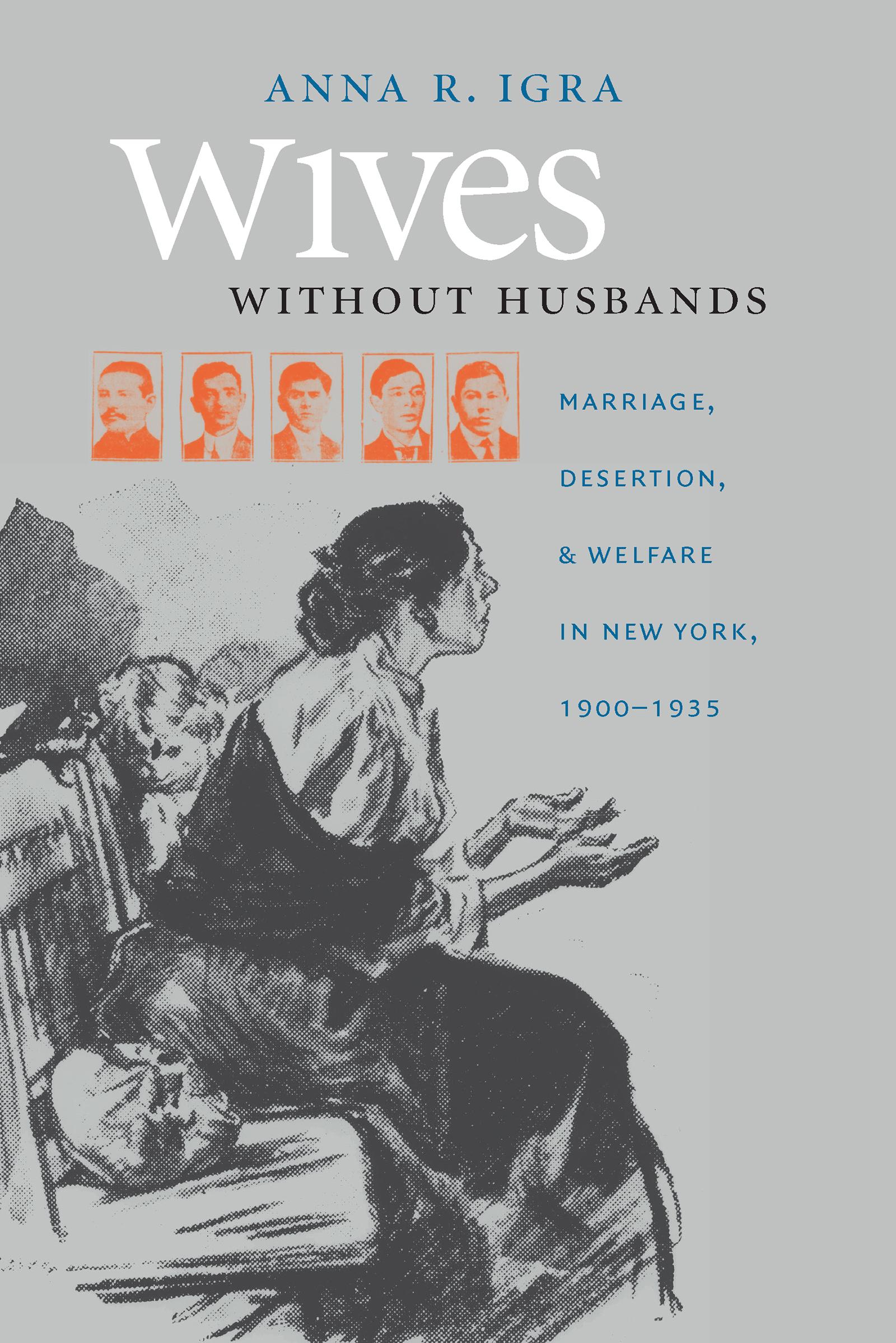
Shedding new light on contemporary campaigns to encourage marriage among welfare recipients and to prosecute “deadbeat dads,” Wives without Husbands traces the efforts of Progressive reformers to make “runaway husbands” support their families. Anna R. Igra investigates the interrelated histories of marriage and welfare policy in the early 1900s, revealing how reformers sought to make marriage the solution to women’s and children’s poverty.
Igra taps a rich trove of case files from the National Desertion Bureau, a Jewish husband-location agency, and follows hundreds of deserted women through the welfare and legal systems of early twentieth-century New York City. She integrates a broad range of topics, including Americanization as a gendered process, breadwinning as a measure of manhood, the relationship between consumer culture and social policy formation, the class dimensions of family law, and the Jewish community as a source of welfare policy innovation. Igra analyzes the history of antidesertion reform from its emergence in social policy debates, through the establishment of domestic relations courts, to Depression relief programs. She shows that early twentieth-century reformers, by attempting to make instrumental use of poor people’s intimate relations, anticipated welfare policies in our own time that promote marriage as an answer to poverty.
Igra taps a rich trove of case files from the National Desertion Bureau, a Jewish husband-location agency, and follows hundreds of deserted women through the welfare and legal systems of early twentieth-century New York City. She integrates a broad range of topics, including Americanization as a gendered process, breadwinning as a measure of manhood, the relationship between consumer culture and social policy formation, the class dimensions of family law, and the Jewish community as a source of welfare policy innovation. Igra analyzes the history of antidesertion reform from its emergence in social policy debates, through the establishment of domestic relations courts, to Depression relief programs. She shows that early twentieth-century reformers, by attempting to make instrumental use of poor people’s intimate relations, anticipated welfare policies in our own time that promote marriage as an answer to poverty.
Płać wygodnie kartą, Klarną, Apple Pay lub Google Pay. Nie jesteś zadowolony? Zawsze masz 14-dniową gwarancję zwrotu pieniędzy. Więcej przeczytasz w naszych warunkach. Masz pytania? Napisz do nas na hello@memmo.org.
Memmo ułatwia naukę – gdziekolwiek jesteś na świecie. U nas znajdziesz podręczniki i sprytne narzędzia do nauki w jednym miejscu: streszczenia, quizy, podcasty i fiszki. A do tego Ted, Twój kumpel do nauki, który odpowie na wszystko, co Cię nurtuje. Ponad 50 000 studentów już tu się uczy – stworzone, byś uczył się szybciej i mniej stresował.
Może Ci się spodobać
Kup książkę0