
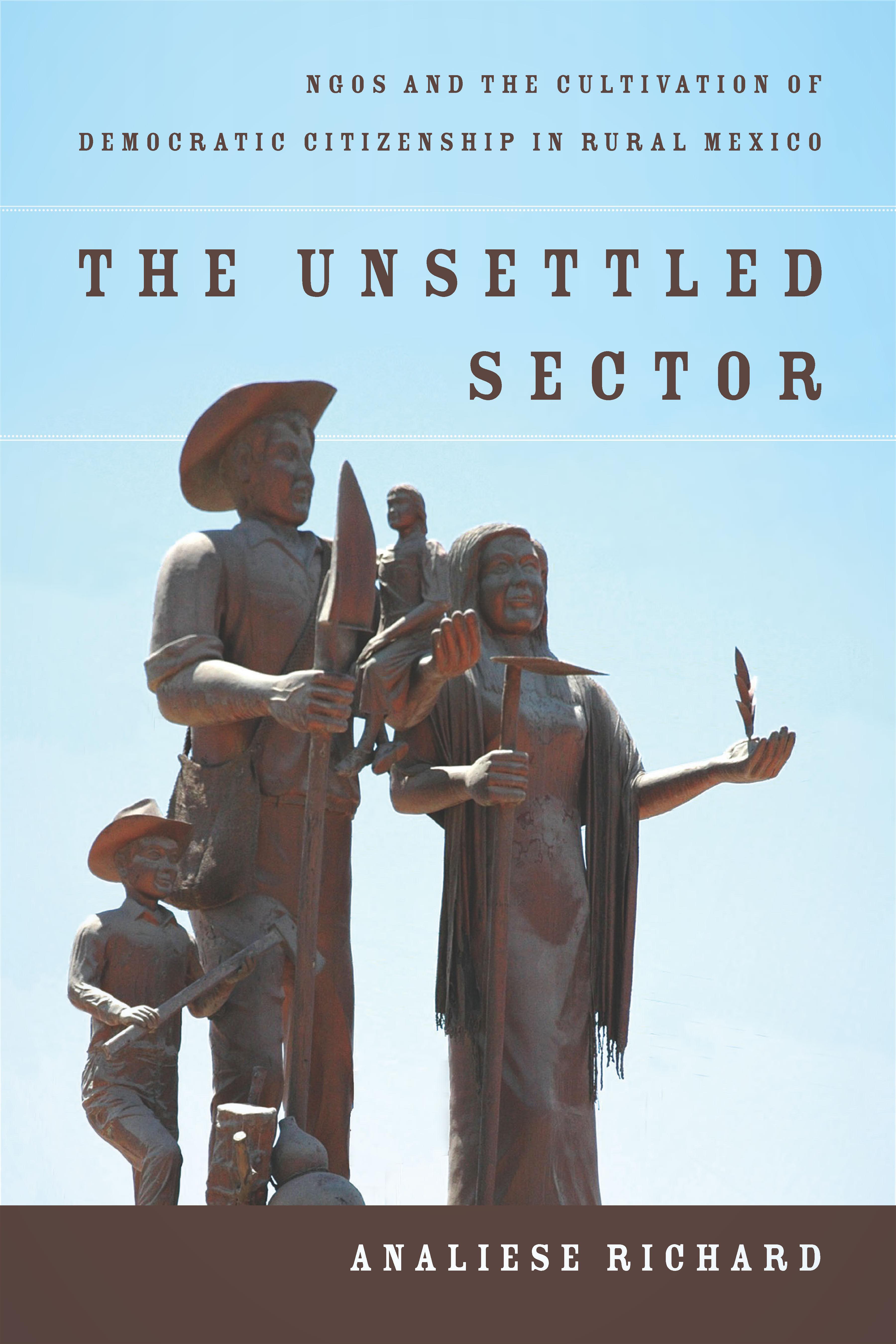
In late twentieth century Mexico, the NGO boom was hailed as an harbinger of social change and democratic transition, with NGOs poised to transform the relationship between states and civil society on a global scale. And yet, great as the expectations were for NGOs to empower the poor and disenfranchised, their work is rooted in much older civic and cultural traditions. Arguably, they are just as much an accomplice in neoliberal governance. Analiese Richard seeks to determine what the growth of NGOs means for the future of citizenship and activism in neoliberal democracies, where a widening chasm between rich and poor threatens democratic ideals and institutions.
Analyzing the growth of NGOs in Tulancingo, Hidalgo, from the 1970s to the present, The Unsettled Sector explores the NGOs' evolving network of relationships with donors, target communities, international partners, state agencies, and political actors. It reaches beyond the campesinos and farmlands of Tulancingo to make sense of the NGO as an institutional form. Richard argues that only if we see NGOs as they are—bridges between formal politics and public morality—can we understand the opportunities and limits for social solidarity and citizenship in an era of neoliberal retrenchment.
Płać wygodnie kartą, Klarną, Apple Pay lub Google Pay. Nie jesteś zadowolony? Zawsze masz 14-dniową gwarancję zwrotu pieniędzy. Więcej przeczytasz w naszych warunkach. Masz pytania? Napisz do nas na hello@memmo.org.
Memmo ułatwia naukę – gdziekolwiek jesteś na świecie. U nas znajdziesz podręczniki i sprytne narzędzia do nauki w jednym miejscu: streszczenia, quizy, podcasty i fiszki. A do tego Ted, Twój kumpel do nauki, który odpowie na wszystko, co Cię nurtuje. Ponad 50 000 studentów już tu się uczy – stworzone, byś uczył się szybciej i mniej stresował.