
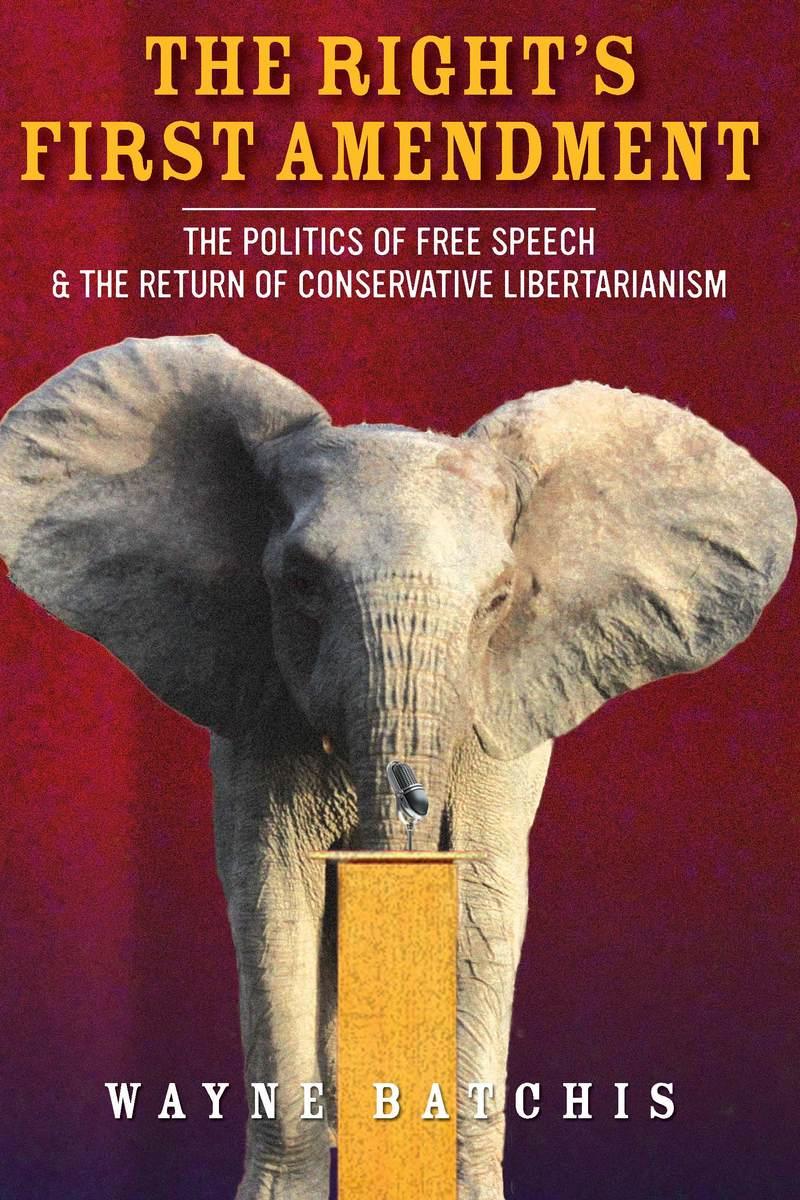
Not so long ago, being aggressively "pro–free speech" was as closely associated with American political liberalism as being pro-choice, pro–affirmative action, or pro–gun control. With little notice, this political dynamic has been shaken to the core. The Right's First Amendment examines how conservatives came to adopt and co-opt constitutional free speech rights.
In the 1960s, free speech on college campuses was seen as a guarantee for social agitators, hippies, and peaceniks. Today, for many conservatives, it represents instead a crucial shield that protects traditionalists from a perceived scourge of political correctness and liberal oversensitivity. Over a similar period, free market conservatives have risen up to embrace a once unknown, but now cherished, liberty: freedom of commercial expression. What do these changes mean for the future of First Amendment interpretation?
Wayne Batchis offers a fresh entry point into these issues by grounding his study in both political and legal scholarship. Surveying six decades of writings from the preeminent conservative publication National Review alongside the evolving constitutional law and ideological predispositions of Supreme Court justices deciding these issues, Batchis asks the conservative political movement to answer to its judicial logic, revealing how this keystone of our civic American beliefs now carries a much more complex and nuanced political identity.
Płać wygodnie kartą, Klarną, Apple Pay lub Google Pay. Nie jesteś zadowolony? Zawsze masz 14-dniową gwarancję zwrotu pieniędzy. Więcej przeczytasz w naszych warunkach. Masz pytania? Napisz do nas na hello@memmo.org.
Memmo ułatwia naukę – gdziekolwiek jesteś na świecie. U nas znajdziesz podręczniki i sprytne narzędzia do nauki w jednym miejscu: streszczenia, quizy, podcasty i fiszki. A do tego Ted, Twój kumpel do nauki, który odpowie na wszystko, co Cię nurtuje. Ponad 50 000 studentów już tu się uczy – stworzone, byś uczył się szybciej i mniej stresował.