
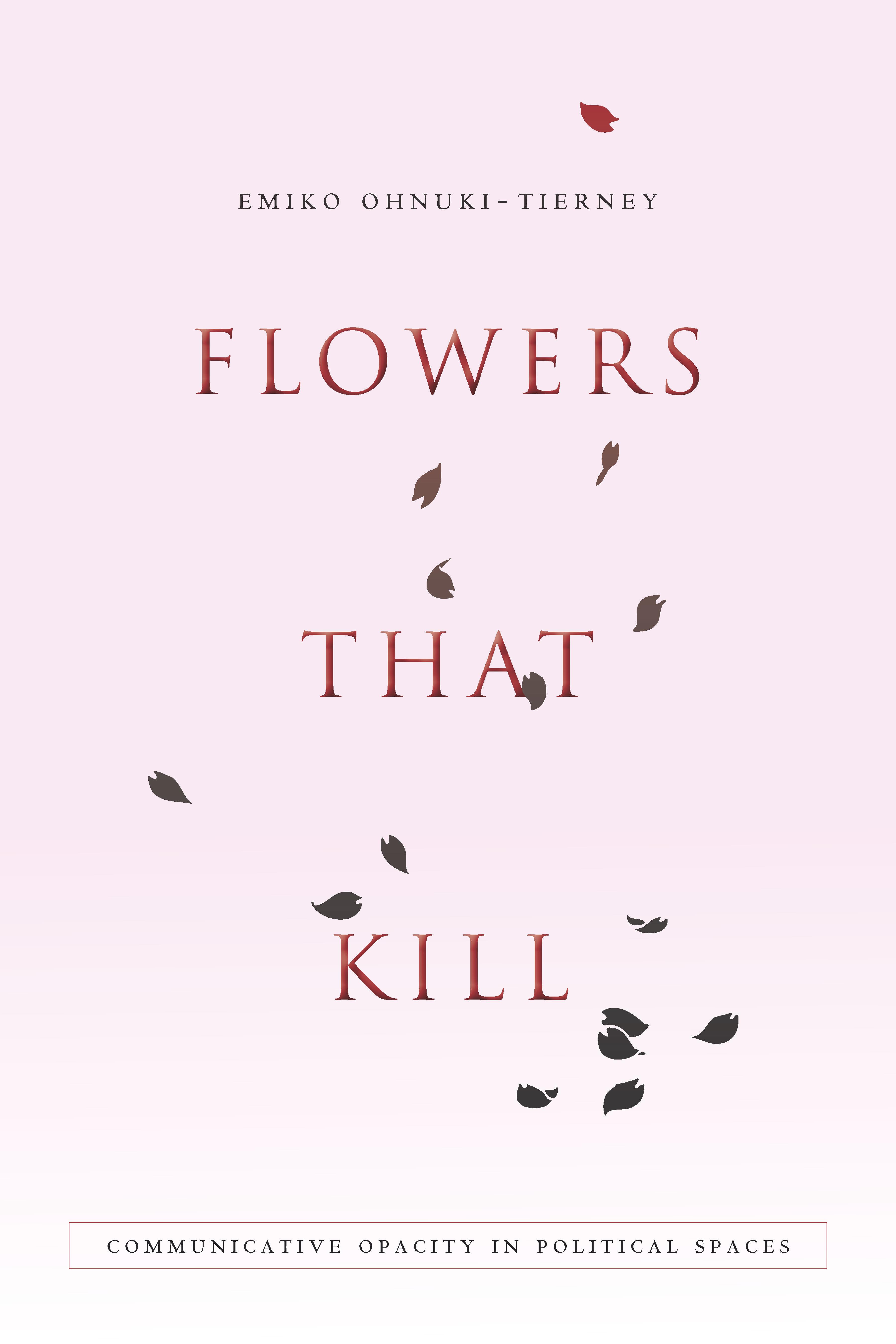
Flowers are beautiful. People often communicate their love, sorrow, and other feelings to each other by offering flowers, like roses. Flowers can also be symbols of collective identity, as cherry blossoms are for the Japanese. But, are they also deceptive? Do people become aware when their meaning changes, perhaps as flowers are deployed by the state and dictators? Did people recognize that the roses they offered to Stalin and Hitler became a propaganda tool? Or were they like the Japanese, who, including the soldiers, did not realize when the state told them to fall like cherry blossoms, it meant their deaths?
Flowers That Kill proposes an entirely new theoretical understanding of the role of quotidian symbols and their political significance to understand how they lead people, if indirectly, to wars, violence, and even self-exclusion and self-destruction precisely because symbolic communication is full of ambiguity and opacity. Using a broad comparative approach, Emiko Ohnuki-Tierney illustrates how the aesthetic and multiple meanings of symbols, and at times symbols without images become possible sources for creating opacity which prevents people from recognizing the shifting meaning of the symbols.
Płać wygodnie kartą, Klarną, Apple Pay lub Google Pay. Nie jesteś zadowolony? Zawsze masz 14-dniową gwarancję zwrotu pieniędzy. Więcej przeczytasz w naszych warunkach. Masz pytania? Napisz do nas na hello@memmo.org.
Memmo ułatwia naukę – gdziekolwiek jesteś na świecie. U nas znajdziesz podręczniki i sprytne narzędzia do nauki w jednym miejscu: streszczenia, quizy, podcasty i fiszki. A do tego Ted, Twój kumpel do nauki, który odpowie na wszystko, co Cię nurtuje. Ponad 50 000 studentów już tu się uczy – stworzone, byś uczył się szybciej i mniej stresował.