
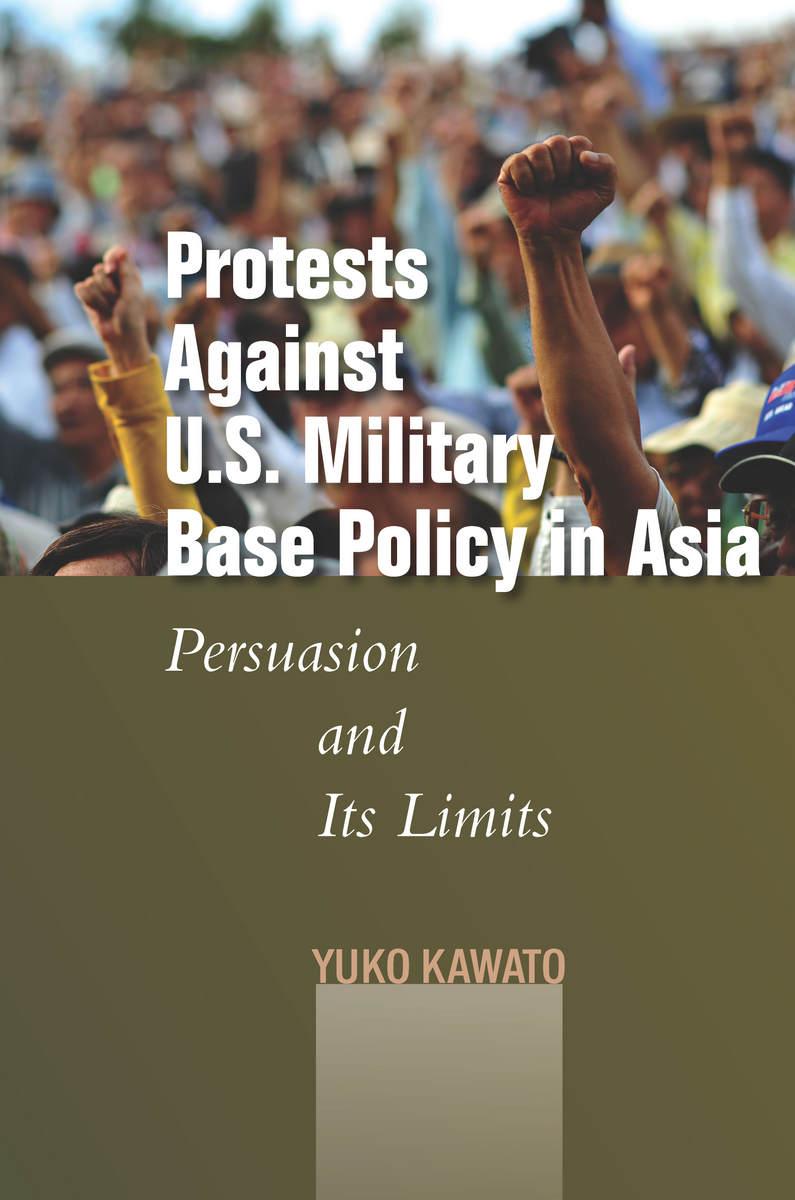
Since the end of World War II, protests against U.S. military base and related policies have occurred in several Asian host countries. How much influence have these protests had on the p;olicy regarding U.S. military bases? What conditions make protests more likely to influence policy? Protests Against U.S. Military Base Policy in Asia answers these questions by examining state response to twelve major protests in Asia since the end of World War II—in the Philippines, Okinawa, and South Korea.
Yuko Kawato lays out the conditions under which protesters' normative arguments can and cannot persuade policy-makers to change base policy, and how protests can still generate some political or military incentives for policy-makers to adjust policy when persuasion fails. Kawato also shows that when policy-makers decide not to change policy, they can offer symbolic concessions to appear norm-abiding and to secure a smoother implementation of policies that protesters oppose. While the findings will be of considerable interest to academics and students, perhaps their largest impact will be on policy makers and activists, for whom Kawato offers recommendations for their future decision-making and actions.
Płać wygodnie kartą, Klarną, Apple Pay lub Google Pay. Nie jesteś zadowolony? Zawsze masz 14-dniową gwarancję zwrotu pieniędzy. Więcej przeczytasz w naszych warunkach. Masz pytania? Napisz do nas na hello@memmo.org.
Memmo ułatwia naukę – gdziekolwiek jesteś na świecie. U nas znajdziesz podręczniki i sprytne narzędzia do nauki w jednym miejscu: streszczenia, quizy, podcasty i fiszki. A do tego Ted, Twój kumpel do nauki, który odpowie na wszystko, co Cię nurtuje. Ponad 50 000 studentów już tu się uczy – stworzone, byś uczył się szybciej i mniej stresował.